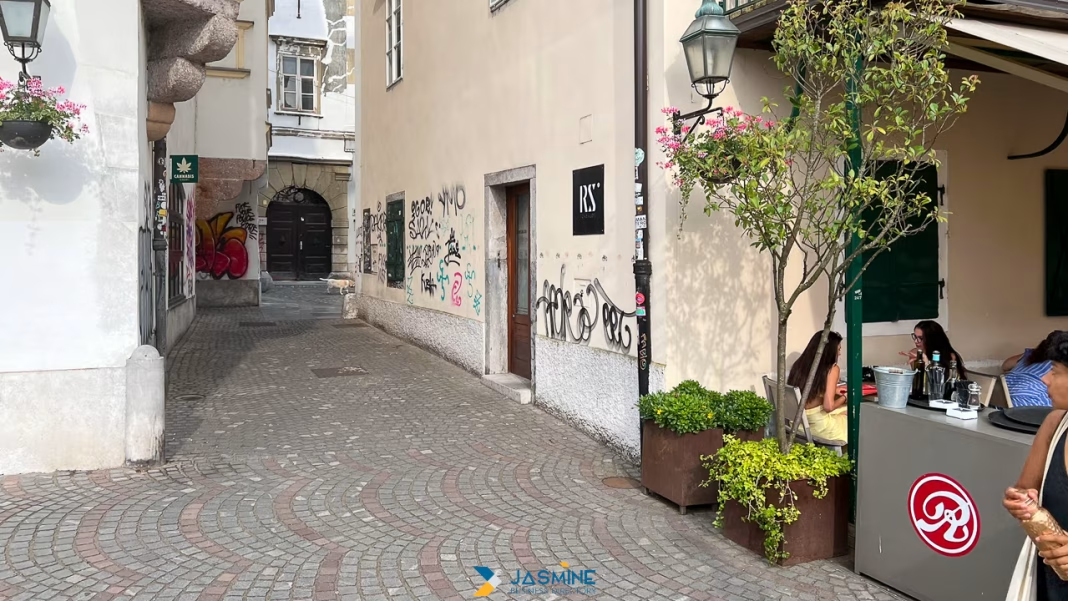
Walking past empty storefronts when your competitors seem to have queues out the door? You’re not alone. Getting customers through your doors takes more than good products these days. It means understanding how foot traffic actually works. This guide shows you how to turn your store from a hidden gem into a place customers can’t resist visiting.
Whether you’re running a boutique cafe, retail shop, or service business, the strategies we’ll cover here work across industries. From improving your physical location to using digital marketing tactics that drive real-world visits, you’ll find practical techniques that successful store owners use to attract more customers.
Store location optimization strategies
Your store’s physical presence is your first and most powerful marketing tool. Think about it: before anyone discovers your customer service or your products, they need to find and notice your store. Location optimization isn’t only about picking the right spot (though that matters); it’s about making the most of every part of your physical presence to draw people in.
Did you know? According to Investopedia’s research on foot traffic, locations with higher foot traffic typically command higher rents, but the investment often pays off through increased sales volume and brand visibility.
My experience with location strategy taught me something counterintuitive: sometimes a slightly less obvious spot with better visibility and parking can beat prime real estate that’s hard to access. It’s not always about being on the busiest street. It’s about being easy to find and reach for your target customers.
High-traffic area analysis
Understanding foot traffic patterns in your area gives you a roadmap. You need to know when people walk by, where they’re coming from, and what draws them to certain areas. This isn’t guesswork; it’s built on data.
Start by running your own foot traffic analysis. Spend time at different points in the day and week observing pedestrian patterns near your location. Note peak hours, demographic trends, and seasonal variations. Are office workers rushing past during lunch hours? Do families stroll by on weekend mornings? Each pattern is an opportunity.
Professional foot traffic analytics tools can give you deeper insight. Recent research on foot traffic analytics shows that retailers using data-driven location strategies see up to 23% higher conversion rates than those relying on intuition alone.
Look at these factors when you analyse high-traffic areas:
- Anchor businesses that draw consistent crowds
- Public transport stops and parking availability
- Seasonal events and their impact on foot traffic
- Competitor locations and their customer flow patterns
- Local demographics and spending habits
Visibility and signage enhancement
Your signage works around the clock, even when you’re not there. It’s your silent salesperson, brand ambassador, and direction guide all at once. Yet many store owners treat signage as an afterthought rather than a planned investment.
Good signage follows the “3-5-7 rule”: customers should be able to identify your business from 3 seconds away, understand what you offer from 5 seconds away, and want to enter within 7 seconds of noticing your store. So your signage needs to be clear, compelling, and consistent with your brand.
Window displays deserve special attention. They market for you around the clock, showing your best products and creating desire even when you’re closed. Change them regularly, monthly at a minimum, so regular passersby have a reason to look again.
Quick Tip: Use lighting strategically. Well-lit signage and window displays are visible from further away and create an inviting atmosphere. LED lighting is cost-effective and allows for creative colour schemes that can match seasonal themes or special promotions.
Don’t forget about digital signage. Electronic displays can show rotating promotions, real-time social media feeds, or even weather-appropriate product suggestions. They work well for businesses that change offerings often or run time-sensitive promotions.
Parking and accessibility improvements
Here’s a harsh truth: good products won’t save you if customers can’t easily reach your store. Parking and accessibility problems quietly cost many owners customers every day without their noticing.
Parking convenience is closely tied to how often people visit. Customers who struggle to find parking once are less likely to return, no matter how good the shopping experience was. If you don’t control your own parking, build relationships with nearby lot owners or validate parking at partner locations.
Accessibility goes beyond legal compliance. It’s about creating a welcoming environment for everyone. Wide doorways, clear pathways, and accessible parking spots aren’t only for wheelchair users; they help parents with pushchairs, elderly customers, and anyone carrying large items.
Consider these accessibility improvements:
- Clear, well-maintained pathways from car parks to your entrance
- Adequate lighting for evening customers
- Easy-to-open doors (automatic if budget allows)
- Clear directional signage from main roads
- Loading zones for quick pickups
Digital marketing for local traffic
The internet hasn’t replaced foot traffic; it has changed how customers discover and choose where to visit. Your digital presence is now the bridge between online discovery and offline visits. Effective digital marketing doesn’t just build brand awareness; it drives measurable foot traffic.
The advantage of digital marketing for physical stores is that you can track it. You can measure how many people found you online and visited in person, which campaigns drive the most foot traffic, and what digital touchpoints influence purchasing decisions. That data turns marketing from guesswork into something you can measure.
Success Story: A local bakery increased foot traffic by 47% in three months by combining Google My Business optimization with targeted social media posts featuring fresh daily specials. They tracked success by asking customers how they heard about specific promotions, revealing that 68% came from their digital efforts.
Local SEO implementation
Local SEO helps you capture customers who are actively searching for businesses like yours in your area. When someone searches “coffee shop near me” or “best bookstore in [your city],” you want to be the first result they see.
The foundation of local SEO starts with consistent NAP (Name, Address, Phone number) information across all online platforms. This consistency tells search engines that your business is legitimate and trustworthy. Any discrepancies, even minor ones like “Street” versus “St,” can confuse algorithms and hurt your rankings.
Location-specific content sets you apart from chain competitors. Write about local events, partner with nearby businesses, and create content that shows your connection to the community. Search engines favour businesses that show genuine local engagement.
Technical local SEO elements include:
- Schema markup for local business information
- Location pages for multi-location businesses
- Local keyword optimization in meta descriptions
- Mobile-friendly website design (important for local searches)
- Fast loading speeds for mobile users
Don’t overlook local link building. Partnerships with local organisations, sponsorships of community events, and collaborations with neighbouring businesses can generate valuable local backlinks that boost your search visibility.
Google My Business optimization
Your Google My Business (GMB) profile is often the first impression a potential customer has of your store. It’s your free digital storefront, complete with photos, reviews, hours, and direct communication tools. Yet many businesses set it up once and never touch it again.
Active GMB management can lift foot traffic sharply. Regular posts about special offers, new products, or events keep your profile fresh. Google rewards active profiles with better visibility in local search results and map listings.
A profile can get someone onto the street outside, and from there the physical sign above your door takes over the job of bringing them in.
Photos matter more than you might think. High-quality images of your products, interior, staff, and customers build a connection before people visit. Update them regularly to reflect seasonal changes, new merchandise, or renovations.
Key Insight: Businesses that post weekly updates to their GMB profile see 70% more clicks and 50% more direction requests compared to inactive profiles. The algorithm favours businesses that demonstrate ongoing engagement with their community.
GMB messaging lets you talk to customers directly and turn inquiries into visits. Enable messaging and respond quickly, ideally within an hour during business hours. Many customers use messaging to ask about product availability or store hours before making the trip.
Managing reviews through GMB builds trust and improves search rankings. Respond to all reviews, positive and negative, professionally and personally. Thank customers for positive feedback and address concerns in negative reviews constructively.
Social media geotargeting
Social media geotargeting lets you reach potential customers within a specific radius of your store. Instead of broadcasting to everyone, you speak directly to people who can actually visit.
Facebook and Instagram’s location-based advertising tools let you target users based on their current location, recent locations, or travel patterns. This works especially well for restaurants, retail stores, and service businesses that depend on local customers.
These tools are just one of many effective local advertising tactics, but few others let you reach someone who is already around the corner.
For geotargeted campaigns, focus on immediacy and local relevance. “Fresh pastries available now,” “Limited time offer today only,” or “Perfect weather for shopping, we’re open until 8!” create urgency that drives immediate action.
Location-based features like Instagram Stories location tags and Facebook check-ins turn your customers into brand ambassadors. Encourage check-ins with small incentives: a discount on their next visit or entry into a monthly prize draw.
| Platform | Best Geotargeting Features | Ideal Content Types | Cost Range |
|---|---|---|---|
| Radius targeting, lookalike audiences | Event promotions, special offers | GBP 1-5 per day | |
| Story ads, location tags | Visual products, behind-scenes | GBP 2-8 per day | |
| Snapchat | Geofilters, snap ads | Youth-focused, trendy content | GBP 3-10 per day |
| TikTok | Location-based hashtags | Entertaining, viral-worthy content | GBP 5-15 per day |
Online review management
Online reviews are the modern version of word-of-mouth, but with wider reach and permanent visibility. Research on marketing techniques shows that 92% of consumers read online reviews before visiting a local business, and businesses with higher ratings see significantly more foot traffic.
It’s better to generate reviews on purpose than to hope customers leave them on their own. Train your staff to ask satisfied customers for reviews at the point of sale. Make it easy with QR codes or direct links to your review platforms.
Respond to reviews quickly and personally. Reply to positive reviews with thanks and a specific mention of what the customer enjoyed. For negative reviews, respond professionally, acknowledge the issue, and offer to resolve it offline. This shows potential customers that you care about satisfaction.
Myth Debunked: Many business owners believe that only perfect 5-star ratings attract customers. Research shows that businesses with ratings between 4.2-4.5 stars often seem more authentic and trustworthy to consumers than those with perfect ratings, which can appear fake or manipulated.
Managing reviews across platforms keeps you visible wherever customers look. Focus on Google Reviews, Facebook, and industry-specific platforms like Yelp for restaurants or TripAdvisor for tourism businesses. Don’t forget about Jasmine Business Directory, which lets businesses collect and showcase customer reviews alongside their directory listing.
Review monitoring tools help you stay on top of new reviews across platforms. Set up Google Alerts for your business name and respond quickly to new feedback. Quick responses show that you’re engaged with your customers and value their opinions.
Community engagement and events
Building genuine connections with your local community creates loyal customers who visit regularly and bring friends and family. Community engagement is good citizenship, but it’s also smart business that generates steady foot traffic through real relationships.
The best community engagement feels natural rather than promotional. When you genuinely care about your neighbourhood and contribute to it, customers notice and respond with loyalty that outlasts price comparisons and convenience.
Local partnerships and collaborations
Well-chosen partnerships with complementary businesses drive traffic to both locations. A bookstore partnering with a coffee shop, a gym collaborating with a health food store, or a clothing boutique working with a beauty salon can share customer bases effectively.
Partnership ideas go beyond obvious matches. Consider collaborating with service providers, professionals, or even competitors for special events. A “shop local” day featuring several businesses can draw larger crowds than individual promotions.
Collaborative marketing extends your reach without a matching rise in costs. Joint social media campaigns, shared advertising expenses, and cross-promotional discounts create more impact than solo efforts.
Hosting community events
Events turn your store from a transactional space into a community gathering place. Regular events give people reasons to visit beyond shopping, and those connections drive repeat visits.
Match event types to your brand and your customers’ interests. Bookstores might host author readings, pet stores could organise adoption days, and clothing stores might offer styling workshops. The key is giving genuine value rather than a thinly veiled sales pitch.
What if you turned your slowest business day into your most popular? Many stores use typically quiet periods for special events, transforming Tuesday afternoons or Sunday mornings into bustling community gatherings that create new traffic patterns.
Promoting events takes several channels. Use social media, local newspapers, community bulletin boards, and partnerships with local organisations to spread the word. Start promoting at least two weeks ahead for larger events.
Seasonal campaigns and promotions
Seasonal marketing builds anticipation and gives customers reasons to visit throughout the year. Research on increasing foot traffic shows that businesses with well-planned seasonal campaigns see up to 35% higher foot traffic during promotional periods than stores without seasonal strategies.
Plan for more than the major holidays. Consider local events, weather patterns, school calendars, and industry-specific seasons. A sporting goods store might focus on different sports through the year, while a garden centre matches planting seasons.
Create seasonal experiences rather than just discounts. Change your store’s appearance, offer seasonal products or services, and train staff to add to the seasonal feel. Customers remember experiences long after they forget price promotions.
Customer experience enhancement
Great customer experience is your most powerful foot traffic generator because it creates advocates who recommend your store to others. Every interaction shapes whether customers return and what they tell their friends about your business.
Customer experience begins before people enter your store and continues long after they leave. From their first online interaction to post-purchase follow-up, every touchpoint influences whether they return and recommend you.
In-store atmosphere and layout
Your store’s atmosphere communicates your brand values and shapes customer behaviour more than most owners realise. Lighting, music, scents, and layout work together to create an environment that either encourages people to explore and buy or makes them want to leave quickly.
Layout affects both traffic flow and sales. Wide aisles hold more customers comfortably, clear sightlines help people navigate, and thoughtful product placement guides customers through your space.
Sensory details engage customers on several levels. Pleasant scents, appropriate background music, comfortable temperatures, and appealing displays create positive associations with your brand that customers remember.
Quick Tip: Use the “decompression zone” concept, the first 10-15 feet inside your entrance should be clutter-free and welcoming. Customers need a moment to adjust from the outside environment and orient themselves in your space.
Staff training for customer engagement
Your staff are your brand ambassadors, customer service reps, and sales team in one. Their interactions with customers directly affect satisfaction, repeat visits, and word-of-mouth recommendations.
Training should cover product knowledge, customer service skills, and brand representation. Staff who answer questions confidently, make helpful recommendations, and handle problems gracefully create experiences that customers remember and share.
Give staff authority to resolve minor issues on the spot rather than requiring manager approval every time. Quick problem resolution often turns a potentially negative experience into a positive one.
Loyalty programs and incentives
Well-designed loyalty programs create regular foot traffic by giving customers reasons to return. The best programs offer genuine value and make customers feel appreciated rather than just tracked.
Loyalty programs go beyond simple punch cards now. Digital programs can track purchase history, send personalised offers, and create tiered benefits that reward your best customers most generously.
Timing matters. Immediate rewards, like a discount on today’s purchase, drive current sales, while future rewards, like points toward free items, encourage return visits. Balance both for the best effect.
Analytics and performance tracking
What gets measured gets improved. Tracking foot traffic and related metrics helps you see what’s working, what isn’t, and where the opportunities are. Without data, you’re deciding on assumptions rather than facts.
Modern tracking tools give insight that was impossible a few years ago. You can measure not just how many people visit, but when they visit, how long they stay, what areas they explore, and what influences their purchases.
Foot traffic measurement tools
Technology has moved foot traffic measurement beyond simple door counters to analytics that give you practical insight. These tools help you understand customer behaviour patterns and improve your operations.
Basic people counters track entry and exit numbers, giving you fundamental data on daily, weekly, and seasonal traffic. More advanced systems use cameras, sensors, or mobile signals to track customer movement within your store.
Heat mapping shows which areas of your store attract the most attention and which are consistently ignored. That information guides layout decisions, product placement, and staff positioning.
| Tool Type | What It Measures | Cost Range | Best For |
|---|---|---|---|
| Door Counters | Basic entry/exit numbers | GBP 50-200 | Small businesses |
| WiFi Analytics | Dwell time, repeat visits | GBP 100-500/month | Medium businesses |
| Camera Systems | Movement patterns, demographics | GBP 500-2000 | Larger stores |
| Mobile Beacons | Location-based engagement | GBP 200-800 | Tech-savvy retailers |
Conversion rate optimization
Foot traffic without sales is just expensive entertainment. Your conversion rate, the percentage of visitors who make purchases, often matters more than raw visitor numbers. Research on boosting retail foot traffic shows that a 1% improvement in conversion rate can affect revenue as much as a 10% increase in foot traffic.
Conversion depends on product availability, pricing clarity, staff assistance, store layout, and checkout effectiveness. Small improvements in each area add up to big overall gains.
A/B testing helps you find what works best for your customers and store type. Test different layouts, promotional strategies, or staff approaches and measure the results objectively.
ROI analysis of traffic generation efforts
Judge every foot traffic initiative by its return on investment. This helps you put resources into the most effective strategies and stop efforts that aren’t producing results.
Work out the full cost of each traffic generation method, including time, materials, staff effort, and opportunity costs. Compare those costs to the extra revenue generated to see which strategies pay off best.
Consider long-term value too. A customer acquisition method might look expensive at first but prove cost-effective once you factor in repeat visits and referrals over time.
Key Insight: The most successful stores track multiple metrics simultaneously, foot traffic, conversion rates, average transaction values, and customer lifetime value. This comprehensive view reveals the true effectiveness of different strategies and guides resource allocation decisions.
Future directions
Retail keeps changing quickly, with new technologies, shifting consumer behaviours, and new marketing channels creating both opportunities and problems for store owners. Staying ahead of these trends positions your business for steady growth in foot traffic and sales.
Technology will keep blurring the lines between online and offline shopping. Augmented reality, mobile payments, personalised in-store experiences, and omnichannel customer journeys are becoming standard expectations rather than novelties.
Sustainability and community connection matter more to consumers, especially younger ones. Stores that show genuine environmental responsibility and community engagement tend to see more customer loyalty and word-of-mouth.
The most successful foot traffic strategies of the future will combine data-driven decisions with real human connections. Technology provides the insight and tools, but genuine customer relationships remain the foundation of steady growth.
Increasing foot traffic is an ongoing process, not a one-time project. Consumer behaviours change, competition evolves, and new opportunities keep appearing. The stores that thrive stay adaptable, customer-focused, and committed to improving every part of their operations.
Start putting these strategies in place one at a time rather than trying everything at once. Choose the approaches that fit your business type, customer base, and resources, then measure results and refine based on what you learn. With consistent effort and a smart strategy, you can turn your store into a place customers seek out and recommend to others.
