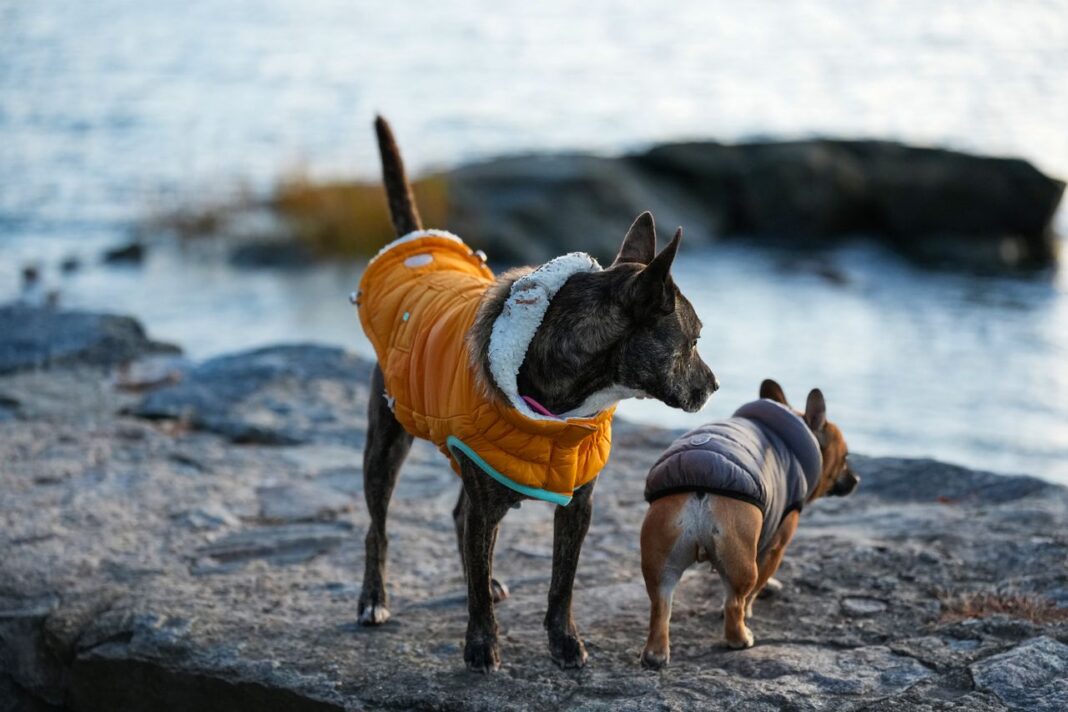
Water activities provide dogs with exercise, mental stimulation and quality time with the family. They also expose them to fatigue, low temperatures, currents, unstable footing and accidental falls. The fact that a dog can swim does not eliminate these dangers. A well-fitted life jacket provides buoyancy, improves visibility and gives owners a secure point of contact. Careful preparation, close supervision and the right equipment allow dogs to participate safely, without putting excessive strain on their bodies.
Why does your dog need a life jacket?
For practical safety guidance, ‘Why Your Dog Needs a Life Jacket’ explains why buoyancy support matters during water activities. Even a confident swimmer can become tired, disoriented or run out of strength before reaching the shore. Body shape, age, respiratory capacity and previous experience all influence performance. Short-snouted breeds may struggle to keep their heads above water, whilst older dogs often lose their stamina more quickly.
Age shows up away from the water too, which is why stiffness and anxiety send owners towards hemp products for dogs and cats, a route that rewards realistic expectations.
Common risks near water
Conditions on the water can change rapidly, even on a calm day. Currents can carry a dog away from the shore, and waves can disrupt its breathing and balance. Boat decks pose risks of falling, slippery steps and contact with moving equipment. Swimming pools present another problem, as vertical walls can prevent an exhausted animal from getting out. Cold water, in turn, accelerates energy loss.
How buoyancy supports the dog
Floating panels keep the dog’s chest and abdomen close to the surface. This position can reduce the effort required to paddle and help maintain a more regular breathing pattern. The reduced effort can delay exhaustion during supervised swimming. Buoyancy is particularly useful for puppies, older dogs, small breeds and dogs with limited stamina. It provides added protection, but is never a substitute for direct supervision.
Visibility helps owners to react
Bright colours make the dog easier to spot against the backdrop of dark water, vegetation, shadows or the boat’s surface. High-contrast material helps to track movement from a jetty or the shore. Visibility matters even more when the dog is behind a boat or enters choppy water. Early detection allows for a quicker response if the dog changes direction, submerges further or shows signs of unusual fatigue.
The grab handle makes retrieval easier
A sturdy handle on the back provides a secure point for guiding or lifting a wet dog. It helps with getting onto the jetty, climbing into the boat and emergency recovery. Gripping the life jacket is safer than grabbing slippery fur or pulling on the collar. When lifting, the body must be supported under the chest and abdomen, and the life jacket must remain secure throughout the movement.
The fit determines performance
A loose-fitting life jacket can twist, shift or allow the dog to slip through a gap. An excessively tight fit can make breathing difficult, restrict movement or irritate the skin. The vest should sit firmly around the torso and neck, without pressing on the throat. Dogs should be able to walk, run and swim naturally whilst wearing it. Check the straps after exercise, as wet fabric may shift position.
Measuring before purchase
Measurements provide a more reliable starting point than weight alone. Owners should note the neck circumference, chest circumference and back length when the manufacturer requests these details. The chest circumference is usually taken around the widest part of the ribcage. The size chart guides the initial choice, and adjustable straps then fine-tune the fit without constricting the airways.
Choosing useful features
Several design features influence safety and comfort. Sufficient foam ensures buoyancy, whilst bright colours improve visibility. Adjustable straps adapt to different body shapes and prevent the life jacket from shifting. Buckles or zips can add stability whilst moving. Some vests include a flotation panel under the head, which helps keep the dog’s snout above water when it gets tired. The best features depend on the dog’s size, condition and the intended activity.
Safe use in water activities
Put the life jacket on before the dog enters the water. A test in shallow water allows owners to check the dog’s body position, breathing and freedom of movement. Short sessions help the dog get used to it without excessive exertion. Continuous supervision remains necessary near currents, jetties, boats and the edges of swimming pools. After use, rinse the life jacket, dry it thoroughly and check for damaged seams and straps.
Situations requiring extra care
Puppies may have poor coordination, and older dogs may tire with little warning. Breeds with flat faces often have restricted airflow during exertion. Joint diseases, heart conditions and low stamina may require shorter sessions or your vet’s approval. Bad weather, strong currents and unfamiliar surroundings increase the risk of injury. A vet can assess whether swimming is suitable for an animal with an existing health condition.
Haddon’s Matrix, applied to a wet dog
The advice in this article may seem like a long list, but it follows a hidden structure formulated in the 1970s by William Haddon Jr., the doctor and engineer who headed the first US road safety agency. Haddon observed that any injury occurs in three phases: before, during and after the energy-releasing event. Each phase can be addressed separately, in terms of the host, the agent and the environment. The resulting table, known in injury epidemiology as the Haddon matrix, is still used today in drowning prevention. The article above ticks almost all the boxes without actually naming it.
The pre-event phase involves taking measurements, conducting a shallow-water test, holding short sessions, obtaining the vet’s approval for a sick dog, and checking the weather. The event phase is the life jacket itself: the buoyancy that keeps the chest afloat, the colour that reduces the time taken to spot the dog, and the panel under the head that keeps the muzzle above water when the animal tires. The post-event phase involves the grab handle, lifting the dog with its body supported, rinsing, and inspecting the seams.
Anyone reading the article with Haddon’s table in mind will also see what is missing: the environment. The slippery jetty, the vertical pool wall and the known current are dealt with by ramps, fences and the choice of location, not by equipment on the dog. Haddon also helps to distinguish between the two forces working against a dog in the water. Fatigue is one; the cold is the other. The lifejacket addresses the first through buoyancy. The second is addressed only by the duration of the session and, to some extent, by the lifejacket’s lining; therefore, the cold water mentioned in the article calls for short sessions, not extra foam.
The matrix has its limitations, as recognised in the literature. It describes, but does not prioritise: it does not state which measure saves more lives per dollar spent. It was designed for road traffic accidents, involving a passive victim, whereas a panicked dog is an active participant who can thwart even the best equipment. Nor does the seller’s integrity feature in the table, although everything that follows depends on it. It remains, however, the clearest way of seeing that the vest covers only one of three phases, and that the preceding phase—the cheapest one—is largely decided at the point of purchase.
The lifejacket has no certificate, so the responsibility for verification falls on the seller
For lifejackets for people, the buyer has a simple benchmark: US Coast Guard approval, with measured buoyancy and defined types. For dog lifejackets, this benchmark is missing. The BoatUS Foundation, the boating safety organisation that has tested such lifejackets with real dogs, states quite plainly that there are no design or performance standards for flotation devices intended for animals. The Coast Guard does not certify them, and they do not bear any buoyancy rating. Nevertheless, on major e-commerce platforms, you can find dog life jackets for $14 advertised as Coast Guard-approved. This claim cannot be true, which makes it a free test: the seller making it has already shown just how much the rest of the product description is worth. The lack of a standard is not an argument against the life jacket. It is an argument for buying from someone who knows it’s missing and says so.
The data on people shows why the mechanics are worth taking seriously even without a standard. The US Coast Guard’s 2024 report, published in July 2025, records the lowest number of recreational boating fatalities in over 50 years. Drowning, however, remained the cause of 76 per cent of these, and 87 per cent of the drowning victims were not wearing a lifejacket. The same report notes an increase in fatalities on stand-up paddleboards – precisely the type of craft on which more and more dog owners are taking their pets. When there is no standard for equipment, the only guidelines are the physics of buoyancy and the integrity of the seller. It is also worth bearing in mind the warning from American water safety training materials regarding lifejackets for people: no lifejacket can prevent all waves from covering the mouth. The article says the same thing in its own words, when it reiterates that a lifejacket is no substitute for supervision.
Consequently, the order of verification is reversed: first the seller, then the product. A reputable seller will state themselves that the life jacket is not certified by any authority. They publish a size chart with the measurements required by the item – neck, chest and back length – and offer returns or exchanges when the size does not fit, as they know that the fit can only be properly assessed on the dog. Buying an item online that needs to fit a living body is precisely the problem described in the analysis of ‘trying before buying’ as the new standard for online retail: what cannot be tried on must be returnable without question. A size chart based solely on weight already tells us something: the article explains why measurements are more reliable than weight, and a manufacturer who does not require them has not designed the waistcoat to fit different body types. Only after these three criteria have been met is it worth comparing the foam, the buckles and the colour.
A newer danger arises precisely in the stage just before this. More and more users are asking a chatbot which jacket to buy. Systems that construct responses from product pages can blithely repeat a claim with non-existent endorsement, because they find it written in dozens of places. The analysis of directories as reliable anchors against AI hallucinations explains the mechanism: an automated response is only as good as the verified sources it draws on, and repeated claims do not become true simply through repetition.
‘Best of’ lists, such as the one linked to in the article itself, are worth reading with one question in mind: does the source explain how it was tested and who is funding it? The difference between lists compiled from affiliate commissions and those with a stated testing method is set side by side in a comparison between aggregator directories and editorial authority, and the conclusion applies to any product ranking: the stated method carries more weight than the position occupied.
The honest boundaries of each tier must be stated. An editorially verified listing confirms that a shop or operator exists, that it can be contacted, that it operates in the category shown, and that it can still be found a season later. It does not certify the buoyancy of a jacket, does not take the place of a shallow-water test, nor does it replace veterinary advice for a dog with a known medical condition. Nor does it indicate whether a retailer is kind to animals, something that can only be revealed by their response to a direct question. Each layer answers a different question, and all together they cost less than a handle that breaks the first time you lift it out of the water.
Where does the adventure actually take place?
The article lists the places – lakes, rivers, swimming pools, boats – but not how you actually get there with a dog. Many beaches, kayak hire firms and jetties have their own rules regarding pets, ranging from outright bans to dedicated packages. This information is usually buried deep within pages of regulations. Mandatory lead use on the jetty, a deposit for the kayak, seasonal bans on certain beaches: every detail alters the day’s plans, and each is hard to come by. A curated category of leisure and sporting activities brings together verified operators organised by type of activity, which shortens the search and leaves time for the question that really matters, asked before setting off: do you accept dogs, and under what conditions? Asking the question in writing also has a secondary benefit: the answer is recorded, and on the day of departure no one can claim that the rule was different.
Boat trips are the situation where the decks, stairs and moving equipment mentioned in the article become a reality for a dog. Operators of sport fishing and boat trips, listed in a dedicated category for fishing and water excursions, usually respond in writing to questions about animals on board, and their response also says a lot about how they treat other passengers.
The home swimming pool remains the most common and most underestimated hazard. The vertical wall that stops an exhausted dog can be overcome with a ramp or steps that the animal learns to use from day one. A pool fence and alarm protect the dog just as effectively as they do children. Specialist firms are listed in a home safety section, which is verified before publication. It is, in Haddon’s terms, the only cell in the matrix that focuses on the environment rather than the dog, and for that very reason the most frequently overlooked.
For the operators themselves, the lesson can be summed up in a single sentence: the policy on animals is information that customers look for before booking, so it is worth publishing it where it is sought, and consistently across all sources. An operator who displays it clearly receives well-prepared customers, who have already tested the waters. One who hides it receives questions on the day of departure and dogs without equipment on deck. The policy changes with the season and the boat, so it’s worth dating it, just like any other information that influences a booking.
Conclusion
A dog life jacket makes water-based recreation safer through buoyancy, visibility and controlled recovery. It can reduce muscular strain, assist vulnerable swimmers and give owners extra time in an emergency. Correct sizing, a secure fit, gradual introduction and constant supervision remain essential on every outing. Once these practices become routine, dogs can enjoy swimming pools, lakes, rivers and boat trips, better protected against fatigue, panic and accidentally drifting away from the shore.
