
What is old often becomes desirable again, and few purchases prove that better than a property in a historic district. You buy a piece of history, and you can offer tenants a rental experience they will not find in a standard building. Buying in a historic district also brings challenges you would not meet with an ordinary property. Handled well, the investment can pay off.
Older homes tend to come with better construction. This is not nostalgic fantasy. Builders in earlier eras worked with higher grades of lumber that were easier to source, and labor was relatively cheap. That combination let builders spend more time on craftsmanship, the kind that is hard to reproduce in a modern house built to a tight budget and schedule.
Historic districts usually have mature trees and established landscaping that a new development cannot fake. The look of an older neighborhood is one of the main reasons buyers seek these streets out in the first place.
Historic homes may qualify for meaningful reductions on property taxes, or for credits tied to preservation and renovation work. Homes in a designated historic district also fall under rules meant to keep the neighborhood’s character intact, which means you are unlikely to wake up to an acid-green house next door because someone found a bargain on hideous paint.
Tax relief runs the other way as well, and an owner who suspects the county has overvalued a home can look into disputing an over-assessed property rather than absorbing the bill.
What the studies actually found
Homes in designated historic districts appreciate more, sometimes much more, than comparable homes outside those districts. Independent studies of local historic districts in New Jersey, Texas, Indiana, Georgia, Colorado, Maryland, North Carolina, South Carolina, Kentucky and Virginia support this. On average, values of historic properties rose 26 percent more than homes without the historic designation. When historic homes come up for sale, they are worth a serious look.
Those same studies found historic neighborhoods to be more stable. Both owners and renters stayed longer than their counterparts in non-historic areas. The bottom line is straightforward: if your heart is set on a historic home, your head does not need to argue.
Distinctive property
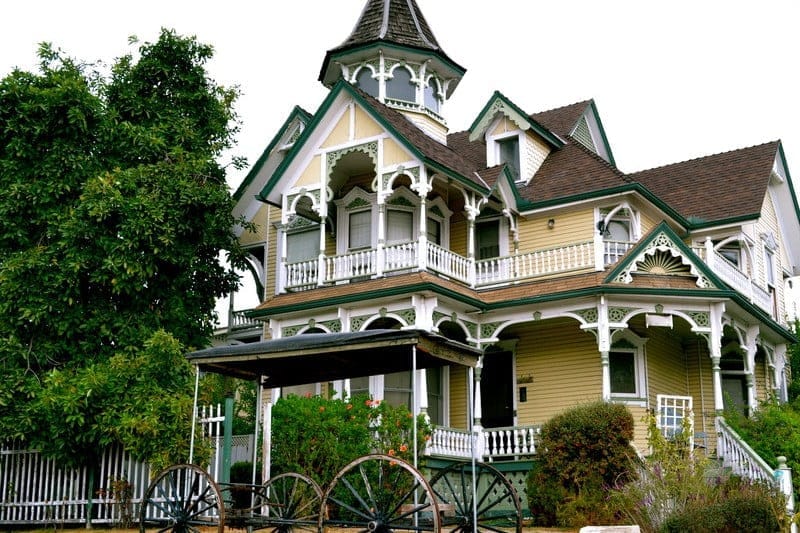
The design and architecture of a historic property can be striking. Some styles have stood for decades or centuries, and the era a house was built in shapes much of its features. You find stained glass windows, colored brickwork, and pocket doors, details that make a property stand out. Well-maintained older houses hold their value over time partly because these features cannot be added later at any reasonable cost. Buyers and renters who care about architectural detail, period paintings, and decorative work from a specific decade are drawn to exactly this. For some tenants, that alone is reason enough to sign a lease. Some people want a week on the beach; others would rather stay in a Victorian house.
This preference matters more than it once did because of how people now shop for a place to stay. Purchase and rental decisions no longer rest on a listing agent’s description alone. In their Harvard Business Review piece “What Marketers Misunderstand About Online Reviews” (2014), Itamar Simonson and Emanuel Rosen argue that marketers consistently underrate how far independent information sources have eroded brand messaging, and that the practical question is which categories reviews now dominate. Short-term rentals are firmly in that group, so a genuinely distinctive property, described honestly and photographed well, competes on more than price.
Tax benefits
Maintaining a property in a historic district carries real responsibility. To encourage investment, local, state, and federal governments have put certain tax benefits and credits in place. You may also qualify for easements. An easement is an agreement between the owner of a historic property and a preservation group under which the owner’s income tax, property tax, or estate tax is reduced. A useful feature of easements is that they last indefinitely, running with the property rather than expiring when you sell. Other benefits may apply depending on where you are, so check with your local and state government before you assume anything. You get to preserve the history and earn tax relief at the same time.
A word of caution belongs here. The same rules that protect the neighborhood’s character also govern what you can change, and approvals for windows, roofing, or exterior color can take time and add cost. Budget for that from the start rather than treating it as a surprise. Restoration work often runs higher per square foot than standard renovation because period materials and skilled trades cost more. The tax incentives exist precisely to offset that gap, so it pays to confirm what you qualify for before you close.
Higher appreciation
A historic property in a historic district is generally worth more than a typical property, often about 26 percent more on average than a comparable home without the designation. The return on investment tends to be higher too. Studies of historic districts in Texas, Maryland, North Carolina, and South Carolina, among others, back this up. Appreciation is not guaranteed in any single market, and location, condition, and timing still decide the outcome, but the long record here is unusually consistent.
Long-term tenants
Tenants in historic districts often stay for years. Longer tenancies reduce vacancy and turnover costs, which is where much of a landlord’s money leaks away. If traditional renting is not your preference, a historic property also does well as a short-term rental, since visitors like to stay in, and sometimes tour, homes with a story.
Whichever route you choose, being found is half the work. Pew Research Center’s “Where People Get Information About Restaurants and Other Local Businesses” (2011) found that Americans rely on the internet ahead of any other source when looking for local businesses, with 38 percent turning to search engines for restaurants, bars, and clubs and 36 percent for other local businesses. A short-term rental competes in that same attention market. Being listed where people actually look, on the major booking platforms and in curated, human-checked directories, does for a property what curb appeal does for a street: it puts your listing in front of the people already searching for exactly what you offer.
So can old be gold? Often, yes, if you go in with clear eyes. Confirm the tax credits and easements you qualify for, price the extra cost of period-correct upkeep into your numbers, and list the property where renters and buyers are looking. Do those three things, and a house with a past can earn its keep for a long time.
