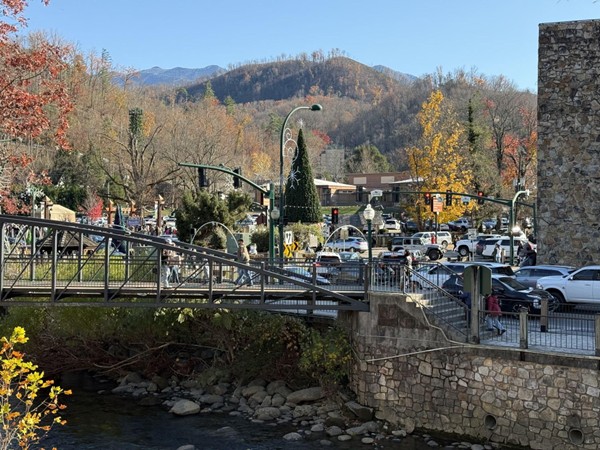
A holiday in Gatlinburg can easily turn into a cycle of driving, parking, waiting and driving again. It’s a strange way to experience a mountain town where restaurants, attractions, shops, picturesque streets and the entrance to the Great Smoky Mountains National Park are all clustered within a fairly compact area.
A better approach is to plan your trip around getting around and to put the long list of things to tick off on the back burner. Choose your accommodation carefully, group activities by area, walk whenever possible and save the car for the experiences that really require it. Your holiday will feel more fulfilling without being more hectic.
Choose accommodation where you can start the day on foot
Where you stay sets the pace of your holiday. If breakfast, shops, entertainment and transport are within easy reach of your room, you won’t have to start every outing by looking for the car and getting stuck in traffic. This flexibility is particularly helpful when members of a group want to do different things.
When choosing a Gatlinburg hotel near downtown attractions, consider more than just the distance as the crow flies. Look at walking routes, access to the trolley (the city’s tourist bus), nearby restaurants and how easily you can pop back to your room during the day.
Sidney James Mountain Lodge is centrally located, next to a mountain stream, within walking distance of restaurants, shops and attractions. It has a trolley stop right outside and both indoor and outdoor swimming pools for breaks between outings.
A convenient base makes short trips possible. You can pop out for a coffee, go back to fetch a jacket, do an hour’s shopping or take a break without every change of plan meaning another car journey.
How a visitor forms a mental map of a city
In 1960, urban planner Kevin Lynch published The Image of the City, after asking residents of Boston, Jersey City and Los Angeles to draw their city from memory and describe the routes they take. He found that people construct their mental map from five types of elements: paths, edges, neighbourhoods, nodes and landmarks. For most of those interviewed, paths were the dominant element, which explains why a route travelled on foot reveals more than the distance in a straight line. A city that is easy to navigate is one in which these elements are interconnected, whilst a visitor who has not yet familiarised themselves with them relies on signposts and their car.
Gatlinburg is easy to navigate using this model, as the Parkway is the main route, the traffic lights numbered from 1 to 10 serve as landmarks, and the entrance to the national park, at traffic light 10, marks the southern boundary. The hub of the transport system is the transit centre near the aquarium, where the trolleybus routes converge. Anyone who notes these few points in advance can judge an address for themselves: a hotel on the Parkway and one on a sloping side street may be the same distance apart on the map but very different distances on foot.
Lynch’s study has limitations, which the author later acknowledged. The samples were small, comprising a few dozen people, almost all of whom were educated locals, and a tourist’s mental map forms more quickly and is less precise than that of a local. The model remains a good way to prepare for a visit, though it does not guarantee that a pavement exists along the entire route.
On a city map, the visitor marks out their accommodation, the transport hub and the park entrance, then measures the walking time between them in minutes. With these points established, any new destination – be it a restaurant or an attraction – falls into place relative to them, and the question of whether it is nearby is answered in terms of walking time.
Break the city centre down into smaller outings
Trying to cover the whole city centre in one massive outing can turn a pleasant area into an endurance test. It’s better to split it into small sections, depending on what your group fancies.
One outing might focus on the shops and a stop for something sweet, whilst another might centre on an attraction followed by dinner. An evening stroll can be an activity in its own right, especially when no one is rushing off to their next booking.
Splitting the day up gives families more control over their energy levels. Young children may be full of energy in the morning and exhausted after lunch; older travellers appreciate a break between activities; and couples sometimes prefer simply to linger. The breathing space in the schedule makes unplanned discoveries possible, and these often distinguish a memorable holiday from one that’s merely efficient.
Save the car for the mountains
Great Smoky Mountains National Park calls for a different planning strategy to the city centre. Rather than driving repeatedly over short distances through town, save your driving time for trailheads, scenic routes, picnic areas and other places where the car is actually useful.
Before you set off, decide what sort of day in the mountains you want. A family looking for a gentle outing in the countryside needs a different plan to hikers preparing for a few hours on the trail. Check the park’s official information for the weather, daylight hours, road conditions and seasonal closures. Take water, suitable footwear, layered clothing and something to eat, even for short outings, as conditions in the mountains can be very different from those in the city.
Above all, don’t try to cram too many of the park’s major attractions into a single day. A more leisurely visit gives you time to take in the mountain, whereas rushing turns the viewpoints into mere tick-box items.
Parking in the park, walking in and places to leave your car
The park had 11,527,939 visits in 2025, according to the National Park Service – more than double that of the next national park in the rankings – so the car parks at the trailheads fill up early. Since March 2023, any car parked for more than 15 minutes in the park requires a parking permit, sold on a daily, weekly or annual basis.
The park also has a car-free entrance: the Gatlinburg Trail starts at the southern edge of the town and leads, over approximately two miles, to the Sugarlands Visitor Centre. It is one of the few trails in the park where dogs and bicycles are permitted. For a family looking for an easy outing in the countryside, the trail links the two halves of their holiday – the town and the mountains – without them having to move their car from the hotel car park.
Those visiting for just a day can make use of free park-and-ride facilities at the visitor centre, about two miles north of the town centre, and near the town hall on Route 321. From there, the journey continues by trolley, and the hassle of finding a parking space on the Parkway is no longer an issue.
Make the trolley part of your plan
Public transport can be more than just a fallback option for those who don’t want to drive. In a busy destination, it takes the recurring question of where to park next time completely off the table.
Check the trolley routes before your trip and find the stops near the places you’ve already planned to visit. It might make sense to walk one way and take the trolley back, or to use it on an evening when nobody fancies dealing with the car.
Allow for some extra time and don’t plan connections too tightly. Holiday transport works best when the pressure is off, and having yet another timetable to keep track of only adds to it.
You don’t need to use the car for every outing. Walking, the tram and driving can each play a different role during the same holiday.
Why information about the trolley varies from one source to another
Anyone spending a few minutes looking for information about the Gatlinburg trolley will find fares and routes that don’t match up. One guide mentions 50 cents per journey, another a $2 daily pass, whilst the town’s official tourism website states that the service is free on most routes. One guide describes a route that goes into the national park, whilst another states that none of the routes leave the town.
The pages were written in different years. The older ones have remained online. The system began in 1980 with six vehicles and has grown to over twenty, covering approximately 50 miles of routes, according to the Tennessee State Tourism Office, and fares have changed over time. Visitors have only one source they can rely on: the city’s transport page, checked in the week before departure.
An up-to-date page will show the date it was last updated and name the service operator, with a link to their website. When two sources contradict each other, the one closest to the operator takes precedence, and a phone call to the visitor centre clears up the rest.
Any information about an unfamiliar place has the same weakness, whether it’s a restaurant’s opening hours or the distance from the hotel to the city centre. An old page looks just as reliable as one updated yesterday. Two questions distinguish a good source from a poor one: who is responsible for the information and when was it last checked? The Jasmine Directory blog describes the signs of a well-maintained listing, and contact details that differ from one site to another are at the top of the list.
Choose restaurants by area
Travellers often make lists of restaurants without checking where they are in relation to the rest of their itinerary. The result is unnecessary trips back and forth across the city, simply because a particular meal has been scheduled for a specific day.
It’s better to keep a short list of appealing options in several different areas. When you get hungry, choose a place that suits the area you’re already in.
Not every meal needs to be a big event. A quick breakfast leaves more time for a morning out and about, whilst a simple lunch might be just the thing between two attractions. Save the long meals for evenings when sitting down to eat and slowing down are part of the plan.
There’s still room for discoveries. A restaurant you spot whilst out and about might turn out to be a better choice than one you picked weeks in advance from home.
It’s difficult to compile a list by area using a search box, which only responds to names you already know. A map or a list organised by category works the other way round: it shows what’s around a particular spot, including places you haven’t read about anywhere. For each area of the city centre, I note down two or three places, with their opening hours checked, before setting off. The list is easiest to finalise the evening before each day, when you already know which part of the city the group will be in.
What you can check about accommodation before booking
The phrase ‘close to the centre’ has no fixed definition, and every hotel uses it as it sees fit. There are, however, a few things you can check from home. The exact address, plotted on a map with the walking route to the Parkway, shows the distance in minutes and the gradient. Street-level images show whether there is a pavement all the way and how well-lit it is in the evening. The nearest trolleybus stop appears on the city’s transport map, and the state tourist office notes that all vehicles are accessible to people with disabilities.
A user-edited business directory helps with the next step: finding out what options are available. In the Jasmine Directory, accommodation providers are listed under the ‘Accommodation’ category, each with its own website, and an editor checks the website before the listing is published.
The hotel’s claims can also be cross-checked against independent sources. A trolley stop listed in front of the building must appear on the route map, and the distance to restaurants can be given in minutes’ walk to a named landmark, such as a traffic light on the Parkway. A hotel confident in its location will answer such a question straight away.
The listing confirms that the establishment exists, that it is a place to stay, and that it can be found again at the same address. Just how quiet the room facing the street is, and just how long the walk back seems in the evening with a sleeping child in your arms, are things you’ll only find out from reviews and by visiting in person. Reviews from recent months are more revealing than older ones, as a hotel’s management can change from one season to the next.
Plan a midday break
One of the surest ways to make a holiday exhausting is to leave your room after breakfast and refuse to return until bedtime. A midday break makes a world of difference. After a few hours of walking or sightseeing, head back to your accommodation for an hour. The children can rest, the adults can charge their phones, everyone can get changed, and the group can decide what else they fancy doing.
This break prevents that afternoon slump, the one that makes people skip dinner or drag themselves through an attraction they no longer want to see. A well-rested group often enjoys fewer planned hours more and finds it easier to stay out late, when the evening has something to suit everyone’s tastes.
Give your evenings a different pace
If the day is devoted to the mountains and active attractions, the evenings can be deliberately left to take a slower pace. Gatlinburg lends itself to this, as an evening here doesn’t require a complicated plan: a stroll through town, a few shops, a dessert, some live music if you happen to hear it from somewhere, or a leisurely dinner.
Don’t treat the evening as a time to cram in everything you missed earlier. If an activity didn’t fit in, it can be moved to another day or simply dropped from the plan.
Holidays are more relaxing when unfinished to-do lists aren’t seen as failures. The aim is to enjoy the place, and ticking off the entire list adds nothing to that. Evenings that follow their own rhythm also provide a contrast to the active mornings in the mountains.
What a hotel or restaurant stands to gain from accurate information
A visitor walking around chooses from what’s within easy reach – in other words, what they know exists and is open. A restaurant with incorrect opening hours in a listing loses precisely this customer: the one who, feeling peckish, is looking for somewhere to eat in the area they’re already in and doesn’t have a car at the door to try somewhere else.
For a business in a city with millions of visitors a year, the basic information is limited and easily outdated: the address with the nearest landmark, seasonal opening hours, the walking distance to the Parkway in minutes, and the trolley stop. Visitors build their own map from this data, and each piece of information changes less frequently than the menu. A quick check at the start of each season, carried out on all the websites where the business is listed, takes very little time.
The category under which the business is listed matters just as much as the details themselves, because a cabin that calls itself a ‘lodge’ or a restaurant that calls itself a ‘smokehouse’ will only be found by those who know the name, whilst a first-time visitor is looking for accommodation or a meal. Being listed under the right category and in the right region brings it to the attention of those who haven’t heard of it yet.
Those planning a trip from afar rely on such details more than a local would. The Jasmine Directory blog has an article on organising a group outing to Gatlinburg, written for those who want to avoid the usual hassles of such a trip.
Leave half a day free
The smartest part of a plan for Gatlinburg might be the part where nothing is written down. Keep at least one morning or afternoon free. By the middle of the trip, you’ll know what’s worth spending that time on. Perhaps everyone wants to return to a favourite spot, or the weather finally clears up for a trip to the mountains. You might discover an attraction once you’ve arrived, or decide that the best option is a quiet afternoon.
Having some free time also gives you a buffer against changes in the weather, tired children, delayed meals or activities that take longer than you thought. This flexibility makes walking more than just a transport strategy, as it changes the rhythm of your whole holiday.
Rather than constantly moving the car and rushing between bookings, you start to use the proximity to your advantage. You pop out on foot for a quick errand, head back when you need a break, drive when the mountains beckon, take the trolley when it’s easier, and change your plans when something better comes along.
Gatlinburg has plenty to fill a holiday with, but there’s no need to pack every hour. A carefully chosen base and a more relaxed, geographically sensible plan give you time to enjoy where you are.
