
Key takeaways
- Medically supervised detox provides round-the-clock care and management of withdrawal symptoms, which keeps the process as safe as possible.
- Treatment is personalized around a person’s health status and history of substance use.
- Emotional and psychological support is a central part of the process, not an afterthought.
- Detox is only the first step in a longer course of addiction care and recovery.
Deciding to address substance dependence is a real turning point. The first phase, medically supervised detox, gives you professional support that improves comfort and outcomes. It manages both the physical and psychological effects of stopping a substance, which makes it far safer than trying to detox alone. Entering a supervised program gives you structure, oversight, and attention to your emotional health, and it builds a foundation the rest of recovery can stand on. If you are weighing your options, browsing a curated listing such as detox in Boulder, Colorado is a sensible way to start comparing programs and making informed choices.
Knowing what to expect lowers anxiety and replaces uncertainty with a sense of control. The process centers on continuous care from trained medical staff who watch withdrawal symptoms and respond to your specific health concerns. No two experiences are identical, because each is shaped by substance use history, general health, and emotional needs. With treatment tailored to you, you get the best chance at a smoother detox and a steady move into ongoing care. Physical stabilization is only part of it, though. The early days of recovery can be emotionally rough.
Patients often move through fear, sadness, hope, and relief in the same day. Good programs treat the psychological side of withdrawal alongside the physical symptoms, offering guidance, counseling, and a calm setting. What follows is a plain overview of medically supervised detox: the main stages, the symptoms people commonly face, and why emotional support matters. It is written for anyone thinking about detox and for the family members and friends who support them. For evidence-based information on detoxification and recovery, see the resource from the National Institutes of Health.
Understanding medically supervised detox
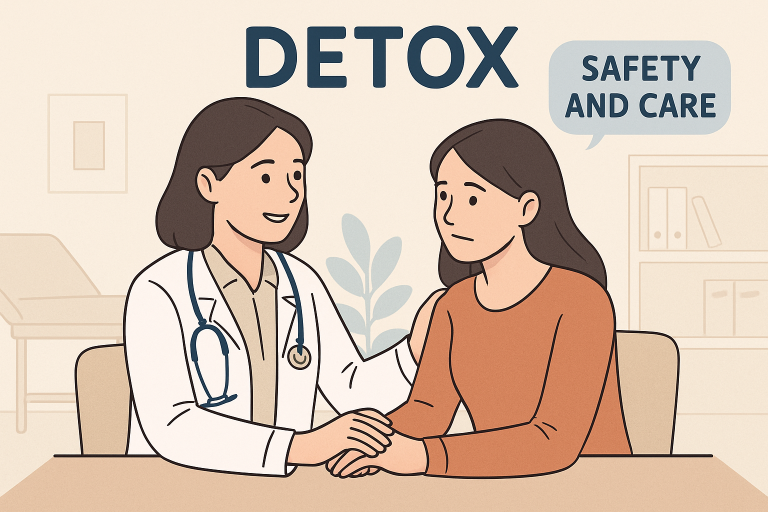
Detox in a clinical setting means you are under constant care while your body adjusts to the absence of drugs or alcohol. Medical teams assess your health, track withdrawal symptoms, and step in with treatment when it is needed. Every plan is built for the individual and accounts for the specific substance used, how long and how heavily it was used, any co-occurring medical or mental health conditions, and personal preferences. This structure cuts health risks sharply and supports a cleaner handoff to the next stages of recovery.
For many people that next stage is an immersive program, so the case for residential rehab as the next step deserves attention before the handoff, not after.
It helps to understand why professional oversight matters more here than in many other health decisions. Withdrawal is not a fixed timeline. The way alcohol leaves the body differs from opioids, which differ again from benzodiazepines, and a clinician adjusts the plan as symptoms change hour by hour. That adaptability is the reason a supervised program can respond to a spike in blood pressure or a sudden seizure risk before it becomes an emergency.
The detox process
The process begins with assessment. Medical professionals carry out a full evaluation of anyone entering a program, reviewing medical history, mapping patterns of substance use, and identifying mental health concerns. Stabilization follows. During this phase patients receive medications or therapeutic support to ease withdrawal symptoms, manage cravings, and settle emotional distress, with doctors, nurses, and mental health staff on hand throughout.
Detox is a starting point, so before discharge each person receives counseling and referrals for further inpatient or outpatient treatment. Planning for continued therapy and support groups is essential, because it helps prevent relapse and gets at the causes behind the addiction. Common withdrawal symptoms can be difficult and, in some cases, dangerous: anxiety, depression, nausea, vomiting, insomnia, muscle pain, and, in severe cases, seizures. Because these vary so much by substance, duration of use, and individual health, medical supervision is what makes symptom management, complication prevention, and fast intervention possible.
Why medical supervision matters
Quitting substances “cold turkey” can be life-threatening. Alcohol, benzodiazepines, and opioids in particular can trigger seizures, heart complications, or severe psychological distress if withdrawal is not managed. Delirium tremens, a serious complication of alcohol withdrawal, shows how quickly an unsupervised detox can turn dangerous. Supervised facilities are set up to provide medications that control symptoms and to deliver emergency care when it is needed. Having skilled healthcare providers present each day gives both reassurance and genuine protection.
Emotional and psychological support
Detox is not only physical healing. It is often emotionally charged, as patients face fears, regrets, and worry about the changes ahead. Programs build in therapy, counseling, and contact with peers so people can work through what they feel and start developing coping skills. This kind of support keeps patients engaged with their treatment and helps them move on to the next stages.
The value of hearing from others who have been through it is not just anecdotal. Robert Cialdini’s principle of social proof, described in Influence, New and Expanded: The Psychology of Persuasion (2021), holds that people work out what is correct partly by observing what others believe is correct. In a detox setting, seeing peers cope with the same symptoms can reduce the sense of isolation that often fuels relapse. The same principle explains why reviews and firsthand accounts carry so much weight when families are choosing a program in the first place.
Choosing and evaluating a program
Before any of this begins, someone has to find a suitable facility, and that search is rarely simple. People increasingly start online. According to Pew Research Center’s Where People Get Information About Restaurants and Other Local Businesses (2011), Americans looking for information on local businesses turn to search engines ahead of any other source. The problem is that a search results page is not a neutral map of everything available, and quality is hard to judge from an ad or a headline alone.
This is where curated, human-reviewed listings and honest reviews earn their place. When you evaluate a detox program, look for verifiable licensing and accreditation, clear information about the medical staff on site, a described process for assessment and stabilization, and a concrete plan for what happens after discharge. Ask how the program handles co-occurring mental health conditions, and read what former patients and families say. Being able to compare several credible options side by side, rather than clicking the first result, is what leads to a better-informed decision.
Transitioning to further treatment
Finishing detox marks the start of the longer recovery process, not the finish line. Patients are encouraged to continue in a structured setting, whether through inpatient rehab, outpatient services, or ongoing therapy. These next steps matter because detox on its own does not resolve the psychological and behavioral patterns tied to addiction. Continued support helps people build resilience, learn new coping strategies, and lower the chance of relapse.
Of those options, residential programs offer the most structure, and the Michigan-focused look at residential rehab and durable recovery explains what that round-the-clock setting adds after detox.
A realistic starting point
Understanding how a medically supervised detox program works gives real footing to people facing addiction and to those who care about them. With a capable team, carefully managed withdrawal, and emotional care built into the process, detox becomes a manageable and hopeful beginning. If you are considering detox or still comparing options, the practical move is to shortlist two or three accredited programs, confirm their credentials, and ask each one what your care will look like on day one and after discharge. With professional guidance and steady support that follows, lasting recovery is a reachable goal.
