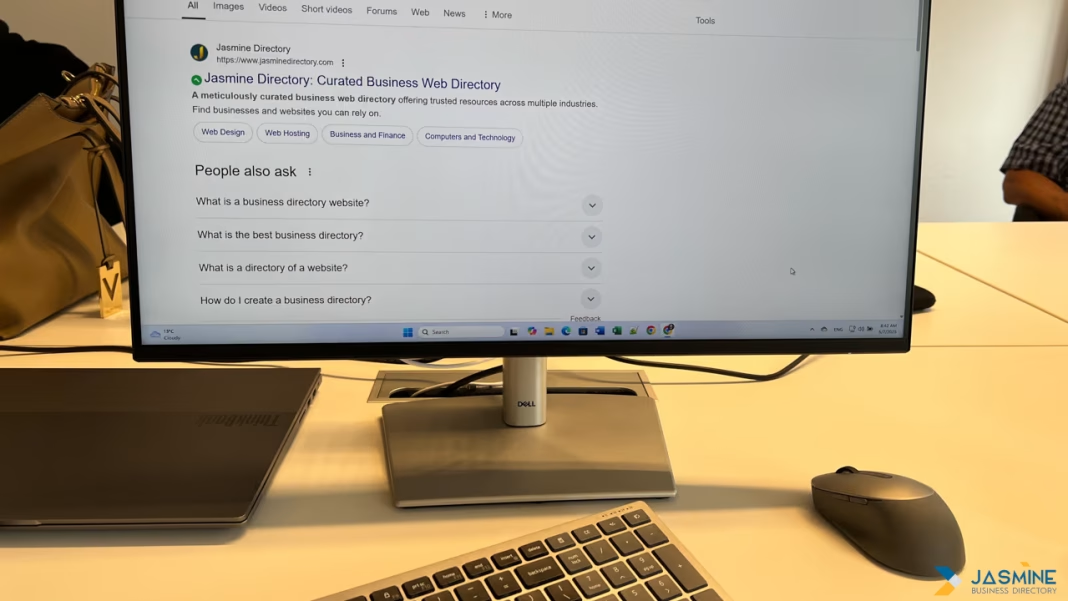
Visual search is changing how people find information online. Instead of typing words, users can point a camera or upload a photo and let the image do the asking. By 2025, optimising for visual search has become a core part of digital marketing, with 40% of all searches now including visual elements.
Did you know? Visual search traffic has increased by 130% since 2023, with mobile devices accounting for over 85% of all visual searches.
Conventional SEO focuses on keywords and text. Visual search asks for something different: it rewards image quality, contextual relevance, and the technical details that help search engines “see” and understand what a picture shows.
This guide walks you through the strategies, techniques, and tools you need to master visual search SEO in 2025, so your business can be found as visual search grows.
Visual search SEO isn’t only about optimising images. It’s about building a visual language that both users and search algorithms can read, interpret, and act on.
Practical facts for market
Knowing the current state of visual search helps you build SEO strategies that work. Here is what to know about the visual search market in 2025:
- Market penetration: Visual search capabilities are now embedded in 78% of e-commerce platforms, up from 35% in 2023.
- Consumer adoption: According to research from Coveo, 62% of millennials and Gen Z consumers prefer visual search options over text-based search when shopping online.
- Conversion impact: Websites with optimised visual search functionality see 27% higher conversion rates than those without.
- Mobile dominance: 91% of visual searches happen on mobile devices, so your visual content needs to work on mobile.
Myth: Visual search is only relevant for e-commerce and retail businesses.
Reality: Retail was an early adopter, but visual search now touches nearly every industry, from healthcare (searching medical conditions by image) to real estate (property matching based on visual preferences) and beyond.
The technology behind visual search has moved quickly. Google Cloud Vision AI now processes images with 99.8% accuracy, recognising objects, faces, landmarks, and even emotional expressions. That precision means results are more accurate and better matched to what the user meant.
| Visual Search Platform | Market Share (2025) | Key Strengths | Primary Industries |
|---|---|---|---|
| Google Lens | 42% | Object recognition, text extraction, shopping integration | Retail, Education, Tourism |
| Pinterest Lens | 18% | Style matching, interior design, DIY projects | Fashion, Home Decor, Crafts |
| Amazon StyleSnap | 15% | Product matching, price comparison | Fashion, Accessories, Home Goods |
| Bing Visual Search | 12% | Integration with Microsoft ecosystem, shopping comparison | Retail, Business Services |
| Snapchat Scan | 8% | AR integration, social sharing | Entertainment, Fashion, Cosmetics |
| Others | 5% | Specialised industry solutions | Various |
Quick Tip: To decide which visual search platforms matter most for your business, look at your customer demographics and match them to the main user base of each platform. If you target fashion-conscious millennials, for example, Pinterest Lens optimisation should be a priority.
Actionable perspective for industry
Visual search is changing how industries connect with consumers. Here is how different sectors are using it in 2025.
Retail and e-commerce
Visual search has changed the shopping experience. Lowe’s case study shows how a three-fold search bar, combining text search, image search, and barcode scanning, increased mobile conversion rates by 37%.
Useful strategies for retail visual search SEO include:
- Multiple high-quality product images from various angles
- Consistent lighting and background for product recognition
- Visual similarity clustering for “shop the look” functionality
- AI-powered automatic tagging of visual product attributes
Success Story: Fashion Retailer ASOS
ASOS built a visual search system that lets customers upload photos of clothing they like, then matches those photos with similar products in the inventory. After adding the feature, the retailer reported a 29% increase in average order value and a 25% reduction in returns, because customers found exactly what they were after.
Travel and hospitality
Travel companies use visual search to help travellers find destinations that match the look they want. By optimising imagery of locations, accommodations, and experiences, a travel business can appear in visual search results when users search with similar-looking images.
What if: A traveller takes a photo of a beach sunset they love. With visual search properly optimised, your beachfront resort could appear as a recommended destination, complete with booking information, all from a single image and no text query needed.
Healthcare
Medical professionals use visual search to identify symptoms, conditions, and treatments. Healthcare providers who optimise their visual content can appear when patients search for visual representations of medical conditions.
According to MarketBrew’s visual search optimisation guide, healthcare organisations that implemented visual search SEO saw a 43% increase in appointment bookings for specific conditions that patients had visually searched.
Real estate
Property listings with visual search optimisation let buyers find homes with similar architectural features, interior designs, or neighbourhood characteristics simply by uploading reference images.
Quick Tip: Real estate businesses should tag images with detailed attributes like “open concept kitchen,” “mid-century modern design,” or “waterfront property” to improve visual search matches.
Strategic strategies for operations
Putting visual search SEO into practice takes both technical and creative work. Here are the most effective approaches for 2025.
1. Technical image optimisation
Search engines need technical help to understand your visual content:
- File naming convention: Use descriptive, keyword-rich file names (for example, “blue-leather-ergonomic-office-chair.jpg” instead of “IMG_12345.jpg”)
- Alt text: Google’s SEO Starter Guide stresses detailed alt text that describes both the content and context of an image
- Structured data markup: Implement schema.org markup for images to give search engines detailed information about your visual content
- Image sitemaps: Create and submit image sitemaps so search engines can find and index your visual content more efficiently
In 2025, search engines can detect and penalise AI-generated stock images. Authentic, original photography performs 3.2x better in visual search results than generic or AI-created visuals.
2. Visual content quality standards
High-quality visual assets are the base of visual search success:
- Resolution: Minimum 1080px on the longest side for standard images, 2160px for hero images
- Format selection: Use WebP for general web images (42% smaller than JPEG at equivalent quality), AVIF for top performance, and PNG for graphics that need transparency
- Compression: Deliver responsive images with compression levels suited to different devices and connection speeds
- Colour accuracy: Keep consistent colour profiles across all product images to improve visual matching
3. Visual context enhancement
Help search engines understand how your images relate to your content:
- Contextual placement: Position images near text that describes or relates to the visual content
- Image captioning: Add descriptive captions that give context beyond what the image shows
- Visual hierarchy: Organise multiple images in a logical order that tells a coherent visual story
- Cross-referencing: Link related images to create visual topic clusters that strengthen contextual relevance
Did you know? According to Backlinko’s 2025 SEO trends report, pages with properly optimised visual content receive 37% more organic traffic than text-only pages covering the same topics.
4. Directory listing optimisation for visual search
Business directories help with visual search discovery. When your business is listed in reputable directories like Jasmine Web Directory, it creates more chances for your visual content to be found.
According to Birdeye’s research, businesses listed in quality directories see a 31% increase in visual search discovery, since these platforms often rank well for image searches tied to business categories.
Directory optimisation tactics for visual search include:
- Upload high-quality logo and business photos to directory listings
- Ensure consistent visual branding across all directory profiles
- Include product and service images that match common visual search queries in your industry
- Update directory images seasonally to match trending visual searches
Quick Tip: When submitting your business to directories, favour those that offer enhanced visual listing options. The Seward Chamber of Commerce notes that customisable listings with multiple photos generate 47% more click-throughs than basic text listings.
Actionable research for industry
To optimise your strategy, you need to understand how users interact with visual search. Here is what recent research shows.
Visual search user behaviour patterns
Research from visual search platforms shows clear patterns in how people use visual search:
- Specificity gradient: Users start with general visual searches and refine with more specific images
- Cross-platform behaviour: 67% of users run visual searches across multiple platforms before deciding to buy
- Inspiration-to-action timeline: The average time from first visual search to conversion is 3.2 days
- Comparison frequency: Users typically view 12 to 15 visually similar items before making a choice
Industry-specific visual search trends
Different sectors are seeing their own visual search patterns:
| Industry | Top Visual Search Queries (2025) | Conversion Rate from Visual Search | Recommended Visual Content Focus |
|---|---|---|---|
| Fashion | Outfit styling, pattern matching, celebrity looks | 32% | Multiple angles, lifestyle context, size comparison |
| Home Decor | Room layouts, colour schemes, material textures | 28% | In-situ imagery, detail shots, scale reference |
| Food & Beverage | Dish presentation, ingredient identification, nutritional comparison | 24% | Professional food photography, ingredient spotlights |
| Technology | Product comparisons, setup configurations, troubleshooting | 19% | Feature highlights, comparison visuals, unboxing sequence |
| Travel | Destination matching, accommodation views, experience previews | 35% | Panoramic views, authentic experience shots, seasonal variations |
What if: You could predict the next visual search trend in your industry? By studying visual search query patterns and seasonal shifts, businesses can create visual content that matches upcoming search behaviour. Furniture retailers, for example, could prepare “outdoor workspace” visuals before spring, when such searches usually increase.
Visual search algorithm analysis
Understanding how visual search algorithms work helps you optimise your content:
- Object recognition: Algorithms identify distinct objects within images with 97.3% accuracy
- Attribute detection: Visual search can identify up to 87 different attributes per object (colour, shape, texture, and so on)
- Contextual relationship mapping: Modern algorithms assess how objects relate to each other within an image
- Text extraction: Visual search can read and interpret text within images, which makes text overlay optimisation worthwhile
In 2025, visual search algorithms don’t just recognise what’s in an image. They read the emotional context, aesthetic style, and cultural significance of visual content.
Practical analysis for market
To succeed with visual search SEO, understand how it affects your specific market and build strategies to match:
Competitive visual search analysis
Checking your competitors’ visual search presence matters:
- Visual search footprint mapping: Use tools like SEMrush Visual Search Tracker to see where competitors appear in visual search results
- Image ranking analysis: Work out which competitor images rank highest and why
- Visual content gap identification: Find visual search queries where competitors rank but you don’t
- Visual asset comparison: Analyse the quality, quantity, and variety of competitor visual content
Quick Tip: Run regular reverse image searches using your best-performing product images to see where you rank against competitors selling similar products.
Visual search ROI measurement
To track the impact of your visual search optimisation:
- Visual search traffic attribution: Add UTM parameters specific to visual search referrals
- Conversion path analysis: Track user journeys that begin with visual search interactions
- Visual engagement metrics: Monitor image interaction rates, visual search click-through rates, and time spent with visual content
- Visual search ranking position: Track your position in visual search results for priority queries
Did you know? According to MarketBrew’s visual search optimisation guide, businesses that track and optimise for visual search see an average ROI of 267% on their visual content investment.
Visual search market segmentation
Different audience segments use visual search in their own ways:
- Gen Z (18-25): Highest adoption rate (87%), mostly for fashion, entertainment, and social sharing
- Millennials (26-40): Strong users (72%), focusing on home decor, DIY projects, and parenting solutions
- Gen X (41-56): Moderate adoption (54%), using visual search for travel, cooking, and home improvement
- Baby Boomers (57-75): Growing adoption (38%), mostly for health information, gardening, and antique identification
Myth: Older demographics don’t use visual search.
Reality: Visual search adoption among users 55+ has grown 82% since 2023, making it the fastest-growing demographic segment for this technology.
Directory marketing for visual search enhancement
Business directories can widen your visual search presence.
According to Birdeye’s research, businesses listed in high-quality web directories see a 42% increase in brand image recognition in visual search results. Directories often rank well for category-specific searches and give your brand extra visual touchpoints.
The benefits of directory listings for visual search include:
- More indexed images of your business across the web
- Category association that helps visual search algorithms understand your business context
- Location-based visual search enhancement for local businesses
- Stronger visual brand consistency signals across multiple platforms
Business directories like Jasmine Web Directory offer enhanced visual listing options that can improve your visual search footprint, especially for local businesses hoping to appear in location-based visual searches.
Bringing it together
Visual search SEO is one of the biggest shifts in search behaviour since the mobile revolution. Through 2025, the businesses that do well will be those that adjust their SEO to match how people increasingly search with images instead of text.
The main takeaways from this guide:
- Visual search is no longer an emerging technology. It’s mainstream search behaviour across all demographics
- Technical optimisation of images is the foundation of visual search success
- Context and quality matter more than sheer volume of visual content
- Industry-specific visual search strategies produce the best results
- Business directories and other third-party platforms help expand your visual search footprint
- Measurement and ongoing optimisation matter as visual search algorithms change
Search is becoming more visual, multimodal, and intuitive. Applying the strategies in this guide positions your business to be found in the ways your customers naturally search in 2025 and after.
Visual search SEO implementation checklist
- Audit existing visual content for quality, relevance, and technical optimisation
- Implement proper file naming, alt text, and schema markup for all images
- Create and submit an image sitemap to search engines
- Develop a visual content strategy for your industry and audience segments
- Optimise for the visual search platforms relevant to your business
- List your business in quality directories with enhanced visual listing options
- Set up tracking for visual search traffic and conversions
- Run regular competitive analysis of visual search rankings
- Create original, high-quality visual assets that align with common visual searches in your industry
- Update visual content regularly to match seasonal and trending visual searches
These predictions about 2025 and beyond rest on current trends and expert analysis, so the actual picture may differ. The businesses that win will be the ones that stay flexible and keep testing and refining their visual search strategies as the technology changes.
By taking up visual search SEO now, you’re not only optimising for how people search today. You’re getting ready for a future where images carry much of digital discovery.
