Key takeaways
- Combining PPC and CRO improves both the quality of your traffic and how well it converts.
- Pairing targeted advertising with a better user experience produces steady ROI.
- Practical steps help businesses use their data, test variations, and keep messaging consistent.
- Real results include large gains in return on ad spend and drops in cost per acquisition.
Understanding PPC and CRO
Digital marketing depends on two things: attracting visitors and getting them to act. For most businesses, Pay-Per-Click (PPC) advertising is a direct route to targeted traffic. Conversion Rate Optimization (CRO) works on the other side, refining what happens after users land on your site. A/B testing conversion strategies help here by giving you evidence to keep improving performance.
With PPC, you pay each time someone clicks your ad, which buys immediate placement in search results or social feeds. CRO uses analytics and behavioral data to raise conversion rates on your key pages. Used together, they do more than move numbers; they turn visitors into leads and customers.
If you are new to combining the two, it helps to know what each one does well. PPC lets you segment audiences by demographics, intent, and interests. CRO builds on that by removing friction and delivering on the promises your ads make.
Once paid channels bring visitors in, your landing pages and site experience need to earn trust and engagement. A system that uses both approaches makes your marketing more resilient and adaptable.
Beyond A/B testing, full-funnel digital marketing strategies can strengthen results further, giving you one view of the customer from awareness through conversion.
The synergy between PPC and CRO
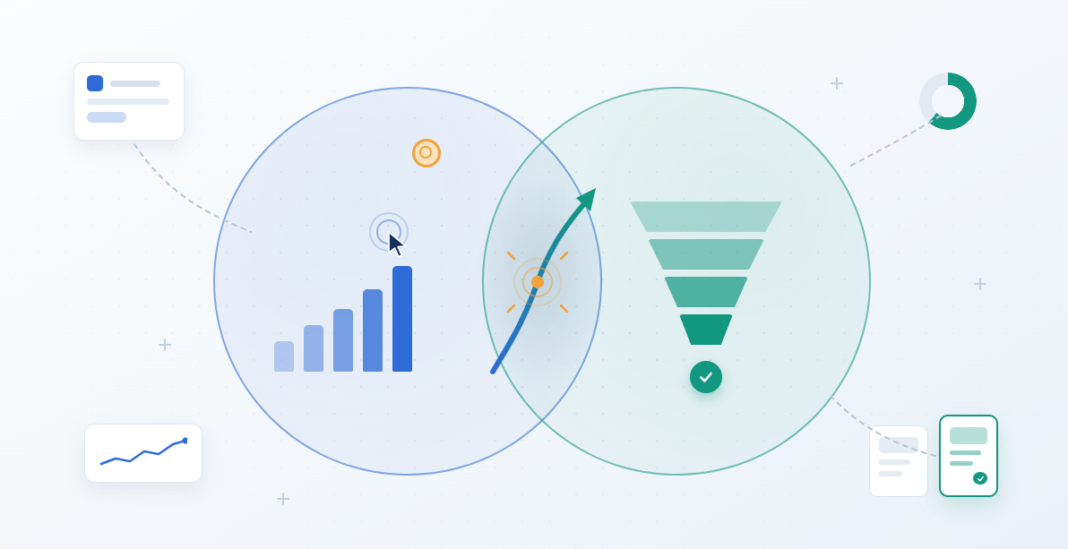
Integrating PPC and CRO compounds your growth. Driving targeted traffic is half the job; getting that traffic to convert is the other half. Combine the precision of PPC with a CRO mindset and you build a feedback loop fed by real user data.
Say a PPC ad targeting specific keywords brings in valuable traffic. CRO analysis of behavior on the landing page tells you whether visitors find what they expect, hit frustration, or follow through on the call to action. That data supports ongoing adjustments, so your ad budget works harder and your landing pages get more persuasive.
This matters most in competitive industries. Ad costs are rising and organic reach faces more obstacles, so businesses need every advantage to get value from each dollar. According to Search Engine Journal, companies that align PPC and CRO tend to see significant and sustained increases in conversion rates.
Combining the two also helps as digital marketing keeps changing. New advertising channels appear and consumer expectations shift, and businesses that watch both paid performance and on-site experience can adapt quickly. Video ads or dynamic search ads, for example, may appeal to different audiences or need their own landing experiences. Treat PPC and CRO as parallel, repeating processes and you can act on new opportunities faster.
When the PPC and CRO teams work together, they also catch gaps that stay hidden when the work is siloed. Feedback from CRO experiments can shape ad creative, and ad results can shape the next experiment, so the messaging stays fresh and matched to what users want. That alignment supports single campaigns and builds brand trust over time.
Benefits of integrating PPC and CRO
- Enhanced user experience: PPC performance shows which keywords, ads, and audiences resonate most with your prospects. Act on that and you can adjust your site’s messaging, design, and functionality to meet user needs better.
- Improved Quality Score: Google’s Quality Score rewards relevant ads with lower costs and better positions. When your landing pages match the messaging in your ads, both engagement and Quality Score can improve.
- Data-driven decisions: The extra data from integrated strategies lets you make more precise adjustments, so you waste less and iterate with more confidence.
- Lower cost per acquisition (CPA): The better your site converts, the less you spend per sale or lead. CRO techniques paired with PPC insights often cut CPA sharply, which makes campaigns more profitable.
- Scalability: Once you find and fix conversion bottlenecks, raising PPC budgets carries less risk and does more, which Forbes has noted can drive rapid growth.
- High adaptability: Integrated strategies make it easier to pivot when the market changes, whether that is seasonal variation or a shift in consumer behavior. With systems in place to monitor how PPC spend and conversion results connect, you can react faster than competitors and either seize opportunities or contain costs during downturns.
- Cross-channel optimization: Insights from PPC and CRO can improve your other marketing too. Once you know which messages and offers drive the most engagement, you can reuse them in email, organic social, and content. Sharing data across channels keeps messaging consistent at every touchpoint.
Steps to integrate PPC and CRO
- Analyze PPC data: Find the keywords, ads, and audience segments driving engaged traffic. Use that detail to set CRO goals, focusing on which landing pages need work and what users expect to find there.
- Optimize landing pages: Each PPC campaign should link to a relevant, high-converting landing page. Make headlines, visuals, and calls to action match the promise in your ads. Cut needless friction and simplify navigation.
- Conduct A/B testing: Run controlled A/B or multivariate tests to see which designs, copy, or calls to action work best. Update your approach based on the results, not on assumptions or preferences.
- Align messaging: The path from ad click to conversion should feel of a piece. Use the same language, tone, and offers in your ad copy and your landing pages to reinforce trust.
- Monitor and iterate: Keep watching. Review analytics, conversion rates, and campaign data regularly, and let that guide your updates. Digital marketing is continuous improvement.
- Collaborate across departments: Get PPC managers, CRO strategists, designers, and copywriters working together. Review results as a group, form new hypotheses, and share what reduces friction in the customer journey or sparks a new ad angle.
- Use user feedback: Gather qualitative data from PPC visitors through surveys, chatbots, and exit-intent polls. Direct feedback sometimes reveals problems analytics miss, like confusing form fields or an unclear value proposition.
Real-world example
Take a nutrition and health e-commerce brand that adopted an integrated PPC and CRO strategy. By reworking their paid search campaigns and optimizing each landing page for conversion, the brand saw a 790% increase in return on ad spend (ROAS) and cut cost per acquisition by 82%. Ongoing A/B testing and audience analysis helped them fine-tune both the ads and the user experience. You can read more about this change in this case study. It shows what happens when you align paid traffic acquisition with on-site improvements and measure the results.
Another case involves a SaaS company whose growth stalled despite steady spending on search ads. Their landing page failed to address key user concerns and did not match the ad messaging, so the PPC and CRO teams worked together on the friction points. Heat mapping and session recordings surfaced a confusing signup process and inconsistent language between the ads and the landing content. They simplified the signup form, unified the messaging, and tested different incentive offers, and the next quarter free trial signups rose 45% while cost per lead dropped 33%. The lesson is that paid acquisition and on-site optimization need to work closely if you want the most from your marketing spend.
Conclusion
Combining PPC and CRO is a proven way to get real marketing results. Treat them as complementary rather than separate and you gain higher conversion rates and steadier growth in a competitive market. This approach is adaptable, evidence-based, and focused on users, and it turns digital spending into revenue that lasts. Keep optimizing and keep the PPC and CRO teams talking to get the most value and stay current with where digital marketing is going.
As channels change and competition for attention grows, don’t let paid advertising run separately from website optimization. Businesses that review their messaging, test new ideas, and analyze results across both areas can pivot quickly and act on new opportunities. The best organizations treat PPC and CRO as two engines driving customer acquisition, loyalty, and profit rather than isolated tactics. Whether you are just starting or refining mature campaigns, integrating the two makes every marketing dollar count.
