You can start your day with your usual chores: making breakfast, watering the flowers, going for a short walk. When you feel safe, you can tackle any activity with greater confidence. However, a medical emergency or a fall can happen without warning, and precious time can be lost before the emergency services arrive if help isn’t dispatched straight away.
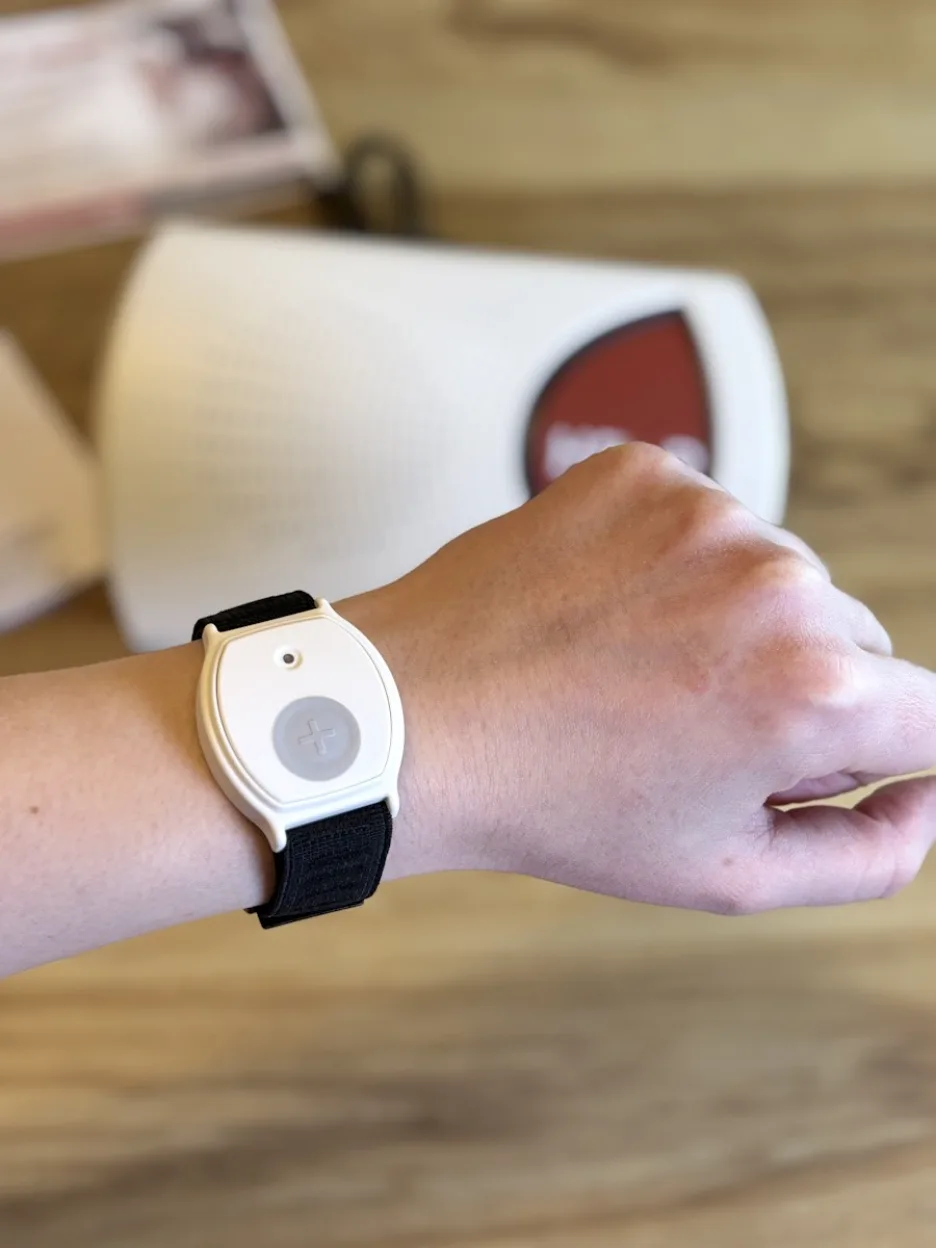
A medical alert bracelet provides a simple link to trained monitoring professionals whenever you need assistance. Features such as the one-touch emergency button, two-way voice communication and automatic fall detection work together to give you added peace of mind throughout the day, so you can get on with your daily routine. The following sections take a closer look at the benefits of wearing such a wristband every day and explain how its features help you stay safe whilst living independently.
1. Confidence through everyday safety
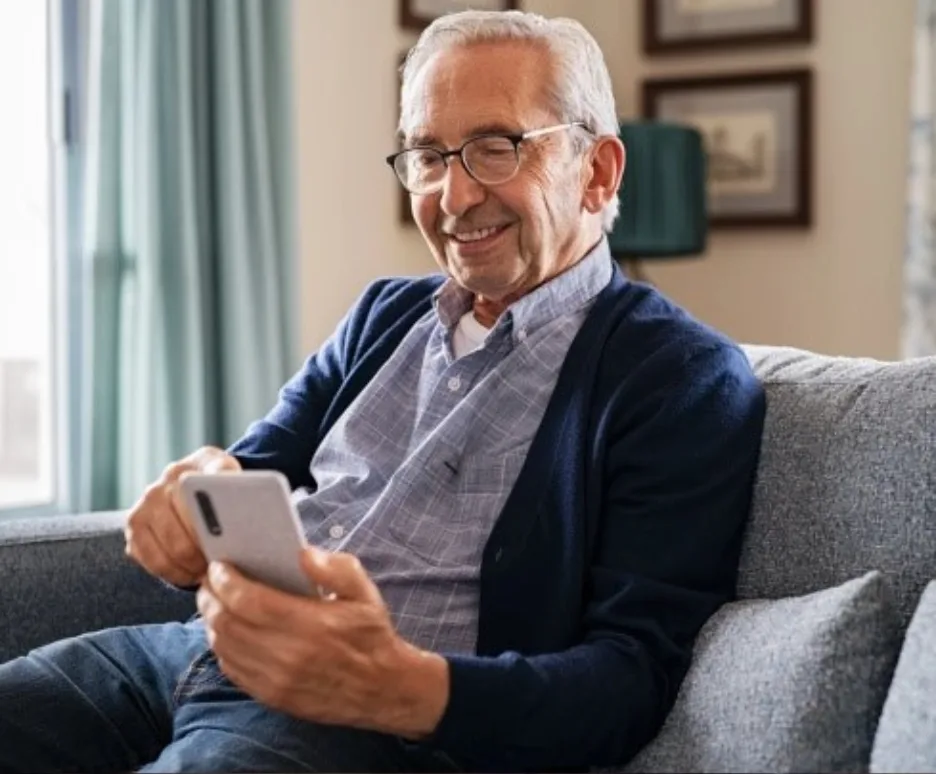
Every day becomes easier when help is close at hand. Knowing that you have a simple way to call for assistance makes it easier to enjoy your usual activities without constantly worrying about unforeseen situations. This sense of security allows you to focus on the day ahead, rather than on how you would react to an emergency.
The single emergency button, two-way voice communication and fall detection all work together to create this sense of security. A Life Assure medical alert bracelet for seniors is an example of a device that combines these features, making it easier to connect with monitoring professionals in an emergency. Whether you’re at home or out and about, the bracelet keeps help close at hand, just a press of a button away.
2. Faster emergency assistance
Medical emergencies often require immediate action. With a medical alert bracelet, a single button quickly connects you to a monitoring centre staffed by trained professionals. Thanks to the built-in voice communication feature, you can explain the situation without having to search for a phone.
Once the monitoring centre receives the alert, emergency assistance is organised according to your needs. If the bracelet also has GPS tracking, your location can be transmitted if necessary. Together, voice and location data minimise delays in critical situations: whilst you deal with the emergency, the professionals coordinate the appropriate response.
3. Extra protection against unexpected falls
Falls can happen whilst you’re walking around the house, doing household chores or enjoying time outdoors. At such times, getting up or reaching the telephone isn’t always possible. Automatic fall detection – a whole field of research covered in the literature on fall detection – adds an extra layer of safety: it sends an alert even if you can no longer press the button.
Once the monitoring centre is alerted, staff respond immediately, and assistance is organised according to the situation. A rapid response is all the more important as accidents do not always leave time for a call. Even if you are disoriented or find it difficult to move after a fall, the system can initiate the response process on its own, where this function is available.
4. A comfortable design makes everyday wear easier
You’re more likely to wear the device day in, day out, especially if you find it comfortable. The lightweight construction allows a wearable to fit naturally into everyday life, without getting in the way. Water-resistant materials keep the system working in the shower or outdoors in the rain.
Different ways of wearing it add flexibility: as well as on a wristband, many systems can be worn as a pendant or clipped onto a belt, so there’s a suitable option for every routine. A comfortable design encourages you to keep the device with you all day, rather than leaving it on the table or on charge, and unexpected situations don’t follow a schedule.
5. Daily support for independent living
Living independently becomes easier when emergency help is available round the clock. Continuous monitoring gives you access to trained professionals at any time, whether an emergency arises during the day or at night. Because assistance remains accessible even when you’re out and about, running errands, going for walks and visiting friends and family become more convenient.
This protection goes with you wherever you go. Whether you’re visiting friends, doing the shopping or taking a stroll around the neighbourhood, you know that help is close at hand, so you can stay active with greater peace of mind.
The chain of survival begins before the call
Since 1991, emergency medicine has had an image that has become a guiding principle for how lives are saved. Richard Cummins and his colleagues published the concept of the chain of survival at that time, under the auspices of the American Heart Association: four links that must be connected in sequence – early access to the emergency services, early resuscitation, early defibrillation, and early advanced care. The phrase caught on precisely because it speaks an uncomfortable truth: a chain is only as strong as its weakest link, and the weakest link is usually the first one – the call that is not made or is made too late.
The two-way voice system also does something that is rarely praised: it filters. Not every press of a button is a genuine emergency, and the operator who asks questions and listens distinguishes a false alarm from a real crisis, which protects both the wearer from unnecessary interventions and the emergency services from making fruitless journeys. In a system where every minute of dispatch time costs money, this filtering is in itself a service, not a luxury.
A medical alert bracelet works precisely on that link. The button shortens the time it takes to reach the telephone, the two-way voice link shortens the need for explanations, and the location feature shortens the time spent searching for the address. Automatic fall detection covers the most difficult scenario, where the first link can no longer be closed by itself, as the person who has fallen is unable to make a call at all.
The device does not treat anything; it merely shifts the point at which the chain is triggered. Research into falls, moreover, emphasises the problem of prolonged immobility: the longer a person remains on the floor without help, the greater the risk of complications, ranging from dehydration to pressure sores, whilst the fear of another fall then reduces mobility and increases precisely the risk it is trying to avoid. Breaking this first link quickly breaks the cycle at its starting point.
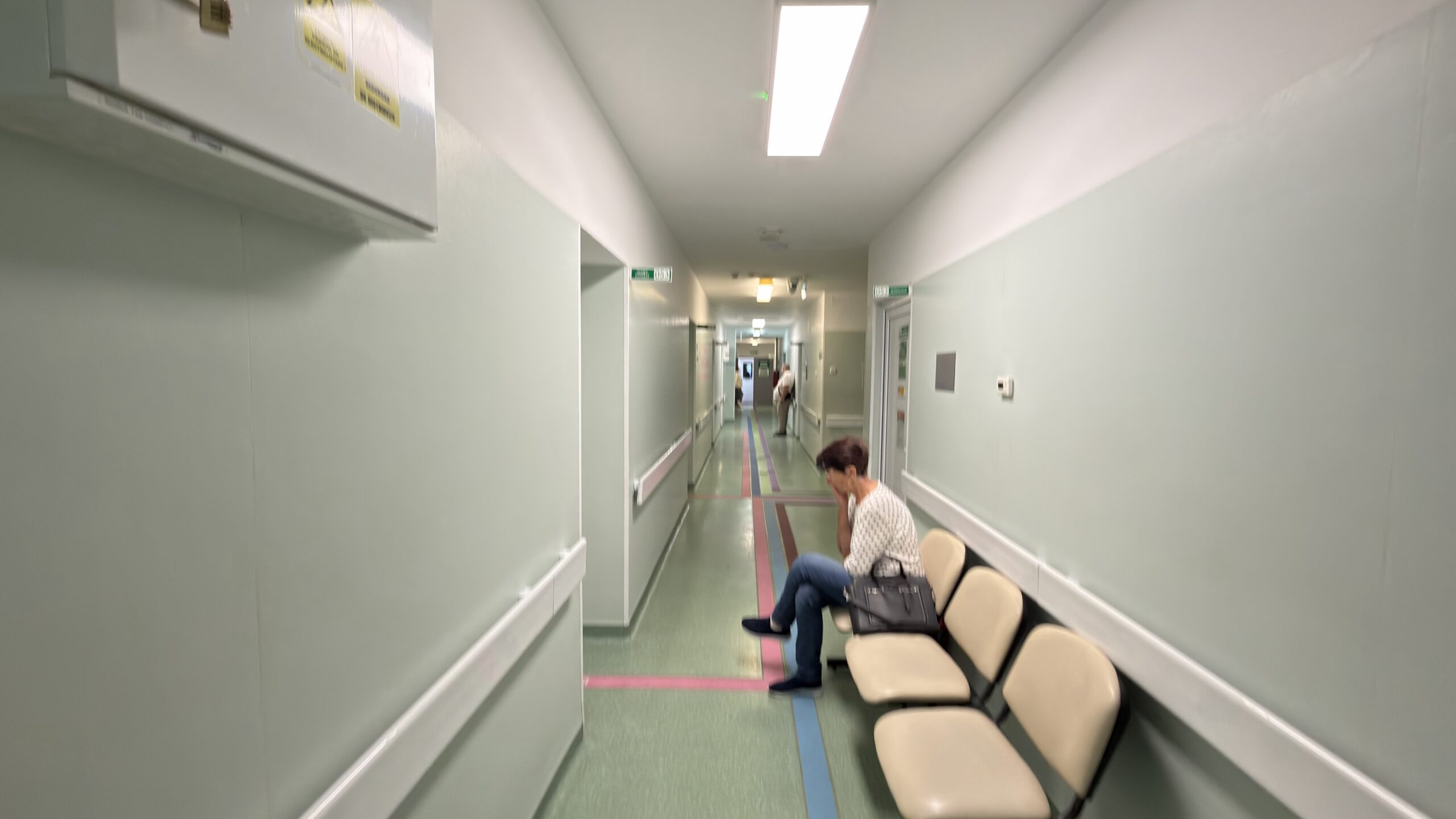
The figures show why the stakes for that first link are rising. The US Centres for Disease Control and Prevention (CDC) report that over 14 million adults aged 65 and over – that is, one in four – report at least one fall a year. Falls are also the leading cause of injury and injury-related death in this age group. The fall-related death rate rose by 21 per cent between 2018 and 2024, from 64.7 to 78.4 per 100,000 older people. Approximately 37 per cent of falls result in an injury requiring medical care or limiting activity for at least one day. Not every fall is an emergency; many are, and the difference is often decided in the first few minutes. Added to these are around 3.6 million A&E visits and around one million hospital admissions per year, all due to falls.
The model has its limitations, as acknowledged by the very doctors who use it. It was designed for cardiac arrest, where every minute without intervention drastically reduces the chances of survival, and it describes more of a theoretical framework than the ongoing reality of clinical care. The links are not equal, and strengthening one does not compensate for the absence of another: the wristband starts the chain, but does not complete it. It remains, however, the clearest argument for a device worn at all times, because the only link the wearer controls is the very first one.
The person who chooses the system is often not the one who wears it
The article above is addressed to the wearer. However, the decision to buy often lies with someone else: a son or daughter living in another city or country who is looking for a solution for a parent from afar. This situation, with care shared across time zones and budgets, has its own unique dynamics, described in detail in a guide for families living apart. It changes the nature of the choice: the person paying does not feel the device on their wrist, and the person wearing it has not compared the options.
Choosing a device from a distance requires the same checks as any service you cannot try out beforehand, in the following order. Existence and category come first: does the company actually exist, does it have a registered office and reliable contact details, and does it genuinely sell medical alert systems, or is it simply reselling someone else’s subscription under a different name? Next come the questions to be asked in writing: who owns the monitoring centre and where is it based; what happens to the call if the main line goes down. Then there’s the financial side: how long the contract lasts, how much it costs after the promotional period, and how to cancel it.
This is also where the difference between monitored systems and those that simply ring a family member is clarified: the latter cost less, but shift the entire first line of defence onto a relative’s phone, which may be switched off at three in the morning. It can be a reasonable choice; it just needs to be made consciously, not out of confusion between products that look the same. A company that answers all questions in writing, without beating about the bush, has already passed the first test. Only then comes the practical test: wearing the device for a few weeks, with a confirmed right of return before payment and the monthly button test – which reputable suppliers recommend themselves, as it checks the entire chain from the wrist to the control centre.
You don’t have to start from scratch. A curated category of medical equipment and consumables brings together suppliers who have been verified by a human editor prior to publication, with a functional website and genuine business activity in the stated field. This filter eliminates the most obvious pitfalls right from the start. For the actual purchase, online shops in the healthcare sector have their own verified section for healthcare products, which is particularly useful when the order is placed from a country other than the parent’s.
It is equally important to state clearly what the bracelet cannot do. It shortens the response time to a fall, but it does not prevent falls altogether. Prevention starts at home: lighting, handrails, door thresholds and secured carpets, all of which should be maintained with the same care as the device itself, whilst specialist firms can be found in a dedicated category for home safety. The CDC, in fact, links the reduction in risk to precisely these factors, plus a review of medication and balance exercises, discussed with a doctor. The wristband and a safe home operate as different links in the same chain.
The information on the wristband becomes outdated just like any other record
An alert device transmits, either directly or via the monitoring centre, a set of information: emergency contacts, medication, medical conditions, allergies. This information was correct on the day it was set up. However, medication changes, and contacts change their numbers. Out-of-date information provided in good faith during an emergency can be worse than no information at all. Checking the data in the account requires the same discipline as daily exercise and has specific triggers: any change in medication, discharge from hospital, a move, or a change of telephone number within the family. In between, a routine check once every few months, noted in the family calendar alongside doctor’s appointments, covers the rest.
This rule has an exact counterpart in the corporate world, where published data about a business deteriorates just as silently and only becomes apparent upon the first genuine search; an analysis of the accuracy of business listings illustrates the mechanism in full. The coincidence is no accident: in both cases, a published record speaks on behalf of someone who is not present to correct it. On a wristband, the absent party is the wearer in crisis; in a directory, it is the company the customer has never seen. Both are worth exactly as much as their last update.
The same care should be taken with the sources the family consults before making a purchase. An online search for alarm systems mainly brings up affiliate rankings, paid on commission by the firms they praise. The difference between such aggregators and editorially verified sources is documented point by point in a comparison between aggregator directories and editorial authority. Its practical conclusion can be summed up in a single sentence: whoever profits from clicks is not a neutral witness. The test takes ten seconds: a source that lists competitors, displays its criteria and dates its reviews is worth reading; a ranking where every button leads to the same shop has disqualified itself.
Finally, the honest boundaries of each tier. An editorially verified listing confirms that a supplier exists, can be contacted, operates in the category shown, and can still be found a year from now. It does not certify the medical device, does not guarantee response times, and does not replace either the opinions of the health authorities in each country or the advice of the doctor who knows the patient. Each link answers a different question. There remains one link that is not mentioned in any brochure: acceptance.
The device only works when worn, and a system chosen without the wearer’s input often ends up in a drawer. A parent’s involvement in the choice – from the shape of the device to the colour of the strap – carries more weight for daily wear than any technical feature. A family that goes through the checks in the correct order makes an informed purchase, and the wearer gets exactly what the article above promises: an ordinary day, with help just a button press away.
Conclusion
Together, these benefits make everyday life safer and help you remain independent. A medical alert bracelet offers a simple way to stay connected to emergency assistance in unforeseen situations. The single button, two-way voice communication, automatic fall detection, GPS tracking, water resistance and continuous monitoring all enhance your daily safety, allowing you to go about your routine with greater confidence. By understanding these benefits before making your choice, you can select the system that best suits your lifestyle, keeping you safe whilst living independently.
