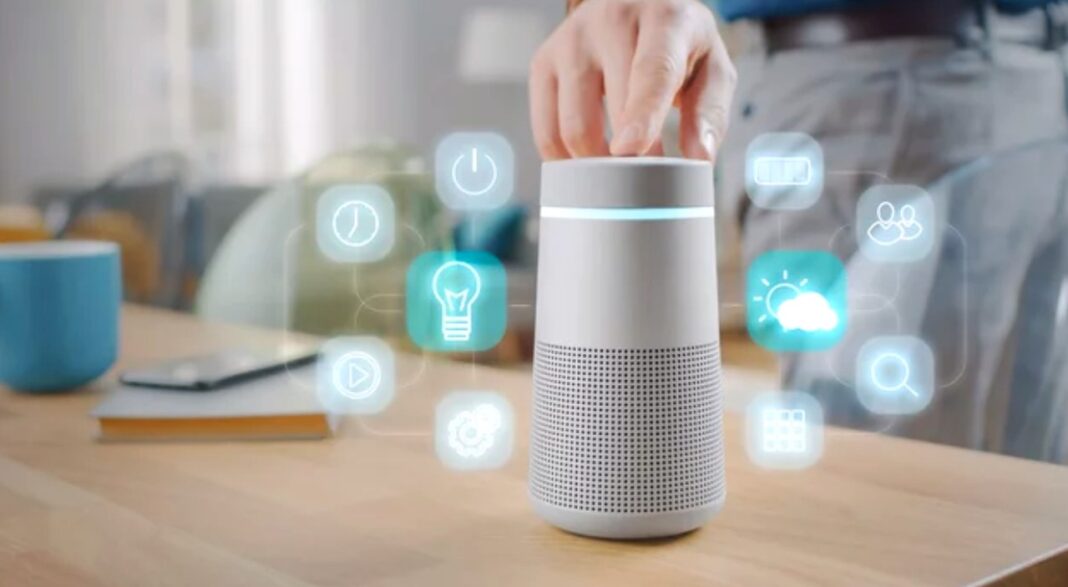
You’re about to see how your brand can sound as distinctive as it looks. This article covers voice-first audio branding, from building sonic identities that stick in people’s minds to improving your presence on smart speakers and hearables. You’ll pick up practical strategies for developing audio logos, designing voice personalities, and creating Alexa skills that people actually want to use. Whether you’re marketing to someone wearing AirPods on their morning commute or speaking to their Google Assistant at home, this guide shows you how to make your brand heard in the most literal way possible.
The shift to voice-activated devices isn’t coming. It’s already here. Smart speakers sit in over 35% of UK households, and hearables have become as common as smartphones. Yet most brands still treat audio as an afterthought, slapping generic jingles onto their content and calling it a day. That’s like showing up to a party wearing someone else’s clothes and wondering why nobody remembers you.
Voice-first audio branding fundamentals
Audio branding isn’t just about having a catchy tune. It’s about creating a complete sensory experience that people recognize instantly, whether they’re asking Alexa for a weather update or listening to a podcast through their Bose earbuds. Think about Intel’s five-note bong or Netflix’s “ta-dum.” These aren’t accidents. They’re carefully engineered pieces of sound.
The challenge with voice-first platforms is that you’re working within tight constraints. You have seconds, sometimes just milliseconds, to make an impression before someone moves on. No visual cues to help. No fancy graphics. Just pure sound.
My work with audio branding started when a client asked me to help them develop a voice strategy for their smart speaker app. They’d spent six figures on visual branding but hadn’t given a second thought to how they’d sound. When we tested their initial voice persona, users described it as “creepy” and “too robotic.” The voice you choose matters just as much as your logo.
Sonic identity architecture
Building a sonic identity starts with understanding what your brand stands for. Are you playful or serious? Inventive or traditional? Fast-paced or contemplative? These aren’t just marketing buzzwords. They translate directly into audio traits like tempo, pitch, instrumentation, and rhythm.
According to research on Maple’s voice AI system, creating a sub-brand for research departments lets companies experiment with sound wave typography systems that fit their innovation goals. This way, brands can test different sonic elements without diluting their main brand identity.
Did you know? Sonic branding can increase brand recall by up to 96% compared to visual branding alone. When people hear a familiar sound, their brain processes it 10 times faster than visual information.
Your sonic identity should include several layers:
- Core audio signature (your primary sound identifier)
- Voice personality guidelines (tone, accent, speaking style)
- Ambient soundscapes (background audio for apps and experiences)
- Interaction sounds (confirmations, errors, transitions)
- Musical themes (longer compositions for various contexts)
The key is consistency. Bose’s Audio Design Language shows how a cohesive audio system works across home theater and multi-speaker setups. They’ve built a recognizable audio logo that appears in their marketing and product experiences, so the brand is identifiable through sound alone.
Audio logo development
An audio logo, sometimes called a sonic logo or audio mnemonic, is usually a 1-5 second sound that represents your brand. It’s harder to create than you’d think. You need something memorable but not annoying, distinctive but not jarring, simple but not generic.
Your audio logo also needs to work across multiple contexts. It should sound good when compressed for voice assistants, clear enough to recognize through cheap smartphone speakers, and refined enough for high-end hearables. That’s a tall order.
Start by considering your brand’s emotional territory. What feeling do you want to evoke? Security? Excitement? Trust? Luxury? Each emotion has sonic correlates. Lower frequencies convey stability and trust. Higher frequencies suggest energy and innovation. Harmonic complexity implies sophistication, while simplicity communicates accessibility.
Quick Tip: Test your audio logo at different volumes and through various devices before finalizing it. What sounds perfect through studio monitors might be muddy through a smart speaker or completely lost through phone earbuds.
The technical specs matter too. For smart speakers, aim for frequencies between 200Hz and 4kHz, where most devices perform best. Avoid extreme low-end or high-end frequencies that might get lost in compression or playback limits. Keep your dynamic range moderate. Too quiet and it’ll disappear, too loud and it’ll distort.
Length matters. Three seconds is the sweet spot for most uses. Shorter than that and you can’t establish enough musical content to be memorable. Longer and you risk annoying people who hear it repeatedly. Think of it like a handshake: long enough to be meaningful, short enough to be polite.
Voice personality design
When your brand speaks, what does it sound like? This isn’t a philosophical question. It’s a practical one that needs specific answers. Voice personality design shapes everything from word choice to speaking pace to emotional inflection.
Research on brand voice development finds that companies with a strong, consistent brand voice see measurable increases in conversion rates. The same holds for audio and voice interfaces: consistency builds trust and recognition.
Your voice personality should match your target audience’s expectations and preferences. A financial services company might choose a calm, authoritative voice with measured pacing. A fitness brand might choose an energetic, motivating tone with faster delivery. A children’s educational app needs a friendly, patient voice that doesn’t talk down to kids.
Consider these dimensions when designing your voice personality:
- Gender and age perception
- Accent and regional characteristics
- Speaking pace and rhythm
- Pitch range and variation
- Emotional expressiveness
- Vocabulary complexity and style
- Humor and personality quirks
What if your brand could sound different for different contexts? Some companies are experimenting with adaptive voice personalities that adjust based on user preferences, time of day, or interaction context. Imagine a banking app that sounds more formal during business hours but friendlier and more casual in the evening.
The technical work matters as much as the creative vision. Modern text-to-speech systems offer plenty of customization options, but you need to document everything. Create a voice style guide with phonetic spellings for brand terms, preferred pronunciations for common words, and examples of appropriate emotional tones for different scenarios.
Brand consistency across audio touchpoints
You know what’s worse than having no audio brand? Having three different audio brands that conflict with each other. I’ve seen companies use one voice for their Alexa skill, a completely different one for their phone system, and yet another for their podcast ads. It’s like wearing a tuxedo jacket with swim trunks.
Brand consistency across audio touchpoints takes systematic planning and documentation. Every place your brand makes sound, whether smart speakers, hearables, phone systems, videos, podcasts, or in-store audio, should feel like it comes from the same source.
This doesn’t mean everything sounds identical. Your audio logo might be orchestral in a TV commercial but simplified to a synthesizer version for a smart speaker notification. The key is keeping recognizable elements: the same melodic contour, similar instrumentation choices, consistent rhythmic patterns.
Brand voice research shows that companies benefit a lot from a distinctive tone of voice that stays consistent across all channels. This applies beyond written content to audio experiences.
| Touchpoint | Audio Elements | Technical Considerations | Consistency Factors |
|---|---|---|---|
| Smart Speakers | Voice responses, audio logos, skill sounds | Mono audio, compressed formats, 16kHz sample rate | Voice personality, response patterns, sonic signature |
| Hearables | Notification sounds, spatial audio, voice prompts | Stereo/spatial audio, high fidelity, low latency | Sound design language, notification hierarchy |
| Phone Systems | Hold music, IVR prompts, voicemail greetings | Narrow resources, 8kHz sample rate, high compression | Voice personality, musical themes |
| Podcast Ads | Audio logos, voiceovers, sonic branding | Stereo audio, various playback environments | Tone of voice, brand messaging, audio signature |
Create an audio brand guide that’s as detailed as your visual brand guide. Include audio files of approved sounds, specs for implementation, guidelines for voice talent selection, and examples of both correct and incorrect usage. Make it available to everyone who creates audio content for your brand, from your in-house team to external agencies and partners.
The payoff for this consistency is huge. When someone hears your audio logo in a podcast ad and then meets the same sonic signature when they use your Alexa skill, it reinforces recognition and builds trust. It’s the audio equivalent of seeing the same logo across different media: it signals professionalism and attention to detail.
Smart speaker platform optimization
Smart speakers change how people interact with technology and brands. No screens. No clicks. Just conversation. This changes everything about how you approach marketing and user experience.
The smart speaker market is dominated by Amazon Echo (Alexa), Google Home (Google Assistant), and Apple HomePod (Siri), and each platform has its own quirks, capabilities, and user demographics. You can’t just create one experience and expect it to work everywhere. Each platform needs specific optimization.
User behavior on smart speakers differs sharply from other digital platforms. People use shorter queries, expect faster responses, and abandon interactions quickly if they don’t get what they want. The average voice interaction lasts under 30 seconds. You need to deliver value immediately or lose the user.
Smart speaker users often interact while multitasking: cooking, getting ready in the morning, working out, or winding down before bed. Your audio experience needs to work for people who aren’t giving it their full attention.
Alexa skills branding strategy
Developing an Alexa skill isn’t just about function. It’s about creating a branded experience that people want to return to. The skill name, invocation phrase, and interaction model all shape your brand presence on the platform.
Your skill name needs to be memorable and easy to say. Avoid complicated words, unusual spellings, or anything that might be misheard. “Daily Fitness Coach” works better than “Personalized Whole Wellness Optimization Assistant.” People need to remember it and say it naturally.
The invocation phrase, what users say to launch your skill, deserves careful thought. It should include your brand name when possible but stay natural in conversation. “Alexa, open Daily Fitness Coach” flows better than “Alexa, ask the Daily Fitness Coaching Application to begin.”
Success Story: A meditation app saw a 300% increase in daily active users after redesigning their Alexa skill with a stronger brand voice. They replaced generic meditation instructions with a distinctive personality that matched their app’s friendly, non-judgmental tone. Users reported feeling more connected to the brand and were more likely to subscribe to the premium version.
The interaction design should reflect your brand personality. A playful brand might use humor and casual language. A professional services brand might be more formal and direct. But everyone should be conversational, because people are literally having a conversation with your brand.
Audio quality matters enormously. Alexa supports SSML (Speech Synthesis Markup Language) that lets you control pacing, emphasis, and prosody. Use it. A well-crafted SSML response sounds natural and engaging. A plain text response sounds robotic and generic.
Consider creating custom audio content rather than relying only on text-to-speech. Pre-recorded audio from a professional voice actor keeps better quality and consistency than synthesized speech, especially for frequently used responses or your audio branding elements.
Google Assistant action development
Google Assistant actions offer different opportunities and challenges compared to Alexa skills. The platform integrates more deeply with Google’s ecosystem, allowing rich responses that include visual cards on devices with screens, integration with Google Calendar and Gmail, and strong natural language understanding.
Google’s Dialogflow, the platform behind Assistant actions, uses machine learning to understand user intent, so you can create more flexible, conversational experiences. Instead of requiring exact phrases, you can train the system to understand variations and context.
Brand consistency on Google Assistant needs attention to both voice and visual elements. Many Assistant devices have screens (smart displays, phones, tablets), so your brand experience should work across voice-only and multimodal interactions. Your audio branding should complement any visual elements without depending on them.
The tone and personality you set for Google Assistant should feel native to the platform while keeping your brand identity. Google users tend to expect slightly more sophisticated interactions. They’re often asking complex questions or requesting multi-step tasks. Your responses should be helpful and thorough without being verbose.
Response time matters. Google Assistant users expect fast answers. If your action takes more than 2-3 seconds to respond, you’ll see high abandonment rates. Fine-tune your backend systems and use progressive responses (acknowledging the request while processing) to keep users engaged.
Key Insight: Users interact with Google Assistant differently throughout the day. Morning queries tend to be brief and information-focused. Evening interactions are longer and more exploratory. Design your action to adapt to these usage patterns.
Voice search optimization techniques
Voice search optimization differs from traditional SEO. People speak differently than they type. They use complete sentences, ask questions naturally, and expect direct answers. “What’s the weather like today?” instead of “weather today.”
Your content needs to answer questions conversationally. Featured snippets and position zero results dominate voice search, since Google Assistant and Alexa pull answers from these prominent results. Structure your content to answer common questions in your industry directly.
Long-tail conversational keywords matter more. Instead of optimizing for “pizza delivery,” you need to rank for “where can I get pizza delivered near me right now?” The queries are longer and more specific, matching natural speech patterns.
Local optimization matters more for voice search. Many voice queries have local intent: people asking about nearby businesses, services, or information. Make sure your business is properly listed in local directories, including Jasmine Business Directory, which helps improve your visibility in voice search results for location-based queries.
Research on tone of voice finds that brands with a distinctive, consistent voice enjoy better recognition across all channels, including voice search results. When your content sounds like your brand, users recognize and trust it more readily.
Schema markup matters for voice search. Structured data helps search engines understand your content and pull relevant information for voice responses. Add FAQ schema, local business schema, and review schema to improve your chances of being featured in voice search results.
Page speed affects voice search rankings even more than traditional search. Voice assistants favor fast-loading pages because users expect immediate answers. If your site takes 5 seconds to load, you won’t appear in voice search results regardless of content quality.
| Voice Search Factor | Traditional SEO | Voice SEO Approach |
|---|---|---|
| Query Length | 1-3 words average | 5-10 words average |
| Query Format | Keywords and phrases | Complete questions |
| Result Format | List of options | Single answer (position zero) |
| Local Intent | Some queries | Majority of queries |
| Page Speed | Important ranking factor | Vital ranking factor |
Myth Debunked: Many marketers believe voice search will completely replace typed search. Reality check: voice and typed search serve different needs and contexts. People use voice search for quick facts and local information while they’re multitasking. They use typed search for research, comparison shopping, and complex queries. Both will coexist, serving complementary purposes.
Mobile optimization is non-negotiable for voice search. Most voice searches happen on mobile devices, and the results need to work on small screens. Your content should be scannable, with clear headings, short paragraphs, and mobile-friendly formatting.
Natural language processing means you need to think about semantic relationships, not just keywords. Create content clusters around topics, linking related articles together. This helps search engines understand the depth and breadth of your knowledge, making you more likely to be cited in voice responses.
Hearables and personal audio devices
Hearables, smart wireless earbuds with advanced audio features, are the next frontier for audio branding. These devices sit in people’s ears for hours each day, giving you an intimate channel for brand communication that didn’t exist a decade ago.
The hearables market has exploded. According to Qualcomm’s research on smart audio technology, advanced audio features now let wireless headphones and smart speakers deliver excellent sound quality while keeping long battery life. This technical capability opens new options for detailed audio branding.
Unlike smart speakers, hearables are personal devices. The audio experience is private, immersive, and often happens during activities like commuting, exercising, or working. Your brand’s audio presence here needs to respect the intimate nature of the medium.
Spatial audio branding opportunities
Spatial audio, 3D sound that creates a sense of direction and space, changes how brands can communicate through hearables. Instead of flat, stereo sound, you can create immersive audio experiences where sounds appear to come from specific locations around the listener.
This technology enables new forms of audio storytelling and brand experiences. A travel brand could create spatial audio tours where historical information appears to come from the direction of landmarks. A fitness brand could use spatial audio cues to motivate users during workouts, with encouragement seeming to come from a coach running alongside them.
The technical requirements for spatial audio branding are more demanding than traditional stereo audio. You need to consider head tracking, room acoustics simulation, and binaural rendering. But the payoff is an audio experience that feels magical and memorable.
Voice enhancement and noise cancellation
Modern hearables include capable voice enhancement and noise cancellation features. According to Bosch Sensortec’s research on hearable technology, some accelerometers work as body sound sensors for bone-conducted voice, with smart voice enhancement filters that remove distracting noises during phone calls.
For brands, this means your audio content needs to work with these enhancement features, not against them. Audio that sounds great in a quiet studio might sound strange when processed through adaptive noise cancellation. Test your audio branding elements through actual hearable devices to make sure they keep quality and recognition.
The intimate nature of hearables also means users are more sensitive to audio quality issues. Distortion, compression artifacts, or harsh frequencies that might be tolerable through a smart speaker become annoying when delivered directly into someone’s ear canal. Invest in high-quality audio production for hearable-specific content.
Notification design for hearables
Notifications through hearables need a completely different design approach than visual notifications. You can’t just play a generic beep. Users wearing earbuds all day will quickly disable notifications if they’re annoying or intrusive.
Your notification sounds should be brief (under 1 second), distinctive enough to be recognized but subtle enough not to startle, and varied enough that users can tell different types of notifications apart without looking at their phone.
Consider the context in which people wear hearables. Someone listening to music doesn’t want their experience interrupted by a jarring notification. Design notifications that blend with the current audio context: ducking the music momentarily, using similar tonality, and fading in and out smoothly.
Haptic feedback in hearables (subtle vibrations) can complement audio notifications, giving an extra sensory cue that doesn’t rely on sound alone. This is especially useful in noisy environments where audio notifications might be missed.
Content strategy for voice-activated platforms
Creating content for voice-activated platforms means rethinking everything you know about digital content. You’re not writing web copy or blog posts. You’re scripting conversations. The rules are different, and the skills required are different.
Voice content needs to be conversational, not written. Read your content aloud. If it sounds awkward or unnatural when spoken, rewrite it. Use contractions. Vary sentence length. Include natural pauses. Write how people actually talk, not how they write.
Brevity matters even more. People’s attention spans for audio content are shorter than for visual content. Get to the point quickly, deliver value immediately, and don’t waste time with preambles or unnecessary context.
Interactive audio experiences
The best voice-activated content isn’t just informational. It’s interactive. Games, quizzes, choose-your-own-adventure stories, and skill-building exercises all work well on voice platforms because they engage users actively rather than passively.
Interactive audio experiences should include clear navigation cues. Users can’t see a menu or buttons, so you need to tell them what options are available and how to proceed. “You can say ‘start over,’ ‘skip ahead,’ or ‘exit’ at any time” gives users control and reduces frustration.
Error handling is key. When users say something your system doesn’t understand, the response should be helpful and friendly, not robotic and frustrating. “Sorry, I didn’t catch that. You can ask me about our products, find a store location, or speak to customer service” is better than “Invalid input. Please try again.”
Podcast integration and audio content marketing
Podcasts are a huge opportunity for audio branding. With over 400 million podcast listeners globally, the medium gives you an engaged, attentive audience that’s actively choosing to consume audio content.
Your podcast presence should reflect your brand’s audio identity. Whether you’re creating your own podcast, advertising on existing shows, or getting featured as a guest, keep consistency with your established voice personality and sonic branding elements.
Podcast ads work differently than other advertising formats. The best podcast ads sound like natural extensions of the show, not interruptions. Host-read ads that incorporate the host’s personality and speaking style while conveying your brand message perform much better than pre-produced spots that feel generic.
Consider creating branded podcasts as content marketing tools. A financial services company might produce a podcast about personal finance tips. A software company might create a show about productivity and workflow. The key is providing genuine value, not thinly veiled sales pitches.
Audio analytics and performance measurement
Measuring success on voice-activated platforms takes different metrics than traditional digital marketing. Page views and click-through rates don’t exist. Instead, you’re tracking engagement metrics like session length, completion rates, repeat usage, and voice interaction patterns.
Smart speaker platforms provide analytics tools, but they’re limited compared to web analytics. You’ll see how many users invoked your skill, how long they engaged, and where they dropped off, but you won’t get detailed demographic information or user journey mapping.
A/B testing voice experiences is possible but tricky. You can test different response variations, voice personalities, or interaction flows, but you need larger sample sizes than visual A/B tests because voice interactions are more variable and context-dependent.
User feedback matters. Since quantitative data is limited, qualitative feedback through reviews, ratings, and direct user research gives you the insights you need into what’s working and what needs improvement.
| Metric | What It Measures | Why It Matters |
|---|---|---|
| Session Length | Average time users engage with your voice experience | Indicates content value and engagement quality |
| Completion Rate | Percentage of users who finish intended interactions | Shows whether your UX is intuitive and valuable |
| Repeat Usage | How often users return to your skill or action | Measures long-term value and habit formation |
| Error Rate | Frequency of misunderstood commands or failed interactions | Identifies areas where UX needs improvement |
| User Ratings | Qualitative feedback from users | Provides insight into satisfaction and areas for improvement |
Technical implementation and audio production
The technical side of audio branding isn’t glamorous, but it’s what separates professional implementations from amateur ones. Audio file formats, compression settings, sample rates, and bit depths all affect how your brand sounds across different platforms.
For smart speakers, you’ll usually work with MP3 or AAC files at 48kbps to 128kbps. Higher bitrates don’t provide noticeable quality improvements because the speakers themselves have limited frequency response and dynamic range. Focus on clarity in the mid-range frequencies where speech occurs.
Hearables support higher quality audio, up to 320kbps MP3 or lossless formats like FLAC. If you’re creating content specifically for premium hearables, take advantage of this with higher production values and more sophisticated audio design.
Recording and production standards
Professional audio production for voice branding takes proper recording environments, quality microphones, and skilled voice talent. You can’t fake good audio. Cheap equipment and poor recording spaces create noise, reverb, and frequency issues that undermine your brand.
Voice talent selection matters enormously. The voice becomes your brand’s personality, so choose carefully. Consider not just vocal quality but also acting ability, consistency, and availability for future recordings. You’ll need this person for updates and new content.
Audio editing should be subtle and natural. Over-processed audio sounds artificial and off-putting. Light compression, de-essing, and EQ are fine, but avoid heavy effects that make voices sound unnatural or robotic.
Platform-specific optimization
Each platform has specific technical requirements and limits. Alexa requires skills to use SSML for voice customization. Google Assistant actions can include visual cards and rich responses. Apple’s Siri has more limited third-party integration but deep iOS ecosystem integration.
Test extensively across platforms and devices. Your audio might sound perfect on an Echo Studio but muddy on a basic Echo Dot. It might work well on a Google Home Max but get lost on a phone’s built-in speaker. Test everything in real-world conditions, not just in your studio.
Latency matters more than you might think. Delays between user commands and system responses feel awkward and break the conversational flow. Fine-tune your backend systems to respond quickly, and use progressive responses (acknowledging the command immediately while processing) when complex operations take time.
Accessibility considerations
Voice-first platforms are inherently more accessible than visual interfaces for people with vision impairments, but they create challenges for people with hearing impairments or speech difficulties. Consider how your audio branding works for users with different abilities.
Provide visual alternatives where possible. Many smart speakers have screens, and hearables connect to phones with visual interfaces. Your audio content should work standalone, but visual supplements can improve accessibility and comprehension.
Speech recognition accuracy varies across accents, dialects, and speech patterns. Test your voice experiences with diverse users to make sure they work for people who speak differently than your development team.
Consider offering adjustable speech rates and volume normalization. Some users need slower speech to process information, while others prefer faster delivery. Providing options improves accessibility and user satisfaction.
Conclusion: future directions
Audio branding is no longer optional. It’s a core part of modern brand strategy. As voice-activated devices become more common and capable, brands that invest in distinctive sonic identities and well-tuned voice experiences will hold a real competitive edge.
The technology keeps moving fast. AI-powered voice synthesis is becoming hard to tell apart from human speech. Spatial audio is moving from premium hearables to mainstream devices. Voice recognition accuracy improves constantly, enabling more natural and complex interactions.
Emerging technologies like voice biometrics will enable personalized audio experiences that adapt to individual users. Imagine your brand’s voice assistant remembering your preferences, adjusting its personality to match your mood, or offering relevant information based on your history.
The integration of voice with other technologies, including augmented reality, wearables, automotive systems, and IoT devices, will create new touchpoints where audio branding matters. Your brand might speak to users through their car’s audio system, their smart glasses, or their connected appliances.
Looking Ahead: The brands that succeed in voice-first platforms will be those that treat audio as a primary brand expression, not an afterthought. Start building your sonic identity now, test extensively, iterate based on user feedback, and stay current with platform capabilities.
The shift to voice-activated platforms is a return to our most natural form of communication: conversation. Brands that embrace this shift authentically, creating genuine value through voice experiences rather than just repurposing existing content, will build stronger connections with their audiences.
Your action plan should start with auditing your current audio touchpoints. Where does your brand make sound today? Is it consistent? Does it reflect your brand personality? From there, develop a full audio branding strategy, create guidelines and assets, and roll them out systematically across platforms.
The future of branding is sonic. The question isn’t whether your brand will take part in voice-activated platforms. It’s whether you’ll do it strategically with a distinctive audio identity, or haphazardly with generic sounds that nobody remembers. The brands that answer this question correctly today will lead the voice-first world of tomorrow.
