Key takeaways
- Unique fabric patterns can noticeably improve how a room looks and feels.
- Mixing patterns takes a deliberate approach if you want the result to hold together.
- Following current trends gives you fresh ideas and helps you sidestep common mistakes.
Refreshing a room often starts with the smallest details. One of the easiest ways to change how an interior feels is to experiment with fabric patterns. Whether you are reworking a familiar lounge or furnishing a new space from scratch, distinctive textiles let you show your personality and set a mood.
If you want inspiration and a strong range to choose from, top online fabric store Canada carries a broad assortment suited to most decorating needs.
The right pattern adds visual interest and pulls a room together. Bold geometrics, quiet stripes, and everything in between define a space and set the tone, whether you want it calm for relaxing or lively for guests. A single well-chosen pattern can change how a room feels and how you use it, in both modern and traditional settings.
As tastes shift, the appetite for creative, sustainable decor keeps growing. Newer fabric trends lean toward originality, comfort, and lower environmental impact, which makes it easier to match your aesthetic with your values. Choosing and combining patterns thoughtfully keeps a home current, and paying attention to what is working now helps you avoid clashing colors or combinations that overwhelm the eye. Balancing pattern with texture and color gives you a room that both pleases and lasts.
Art nouveau revival
Art nouveau patterns are drawing interest again. They are built on flowing lines and organic motifs, often stylized botanical and natural forms. Used with restraint, art nouveau fabrics bring a touch of old-world luxury to a modern room, and they read as subtle when you pair them with neutrals or minimalist accessories.
Designers keep reworking these classical patterns in contemporary palettes, so you can suggest elegance without crowding a space. The appeal is partly historical and partly a preference for craft and something that does not look mass-produced.
Geometric patterns
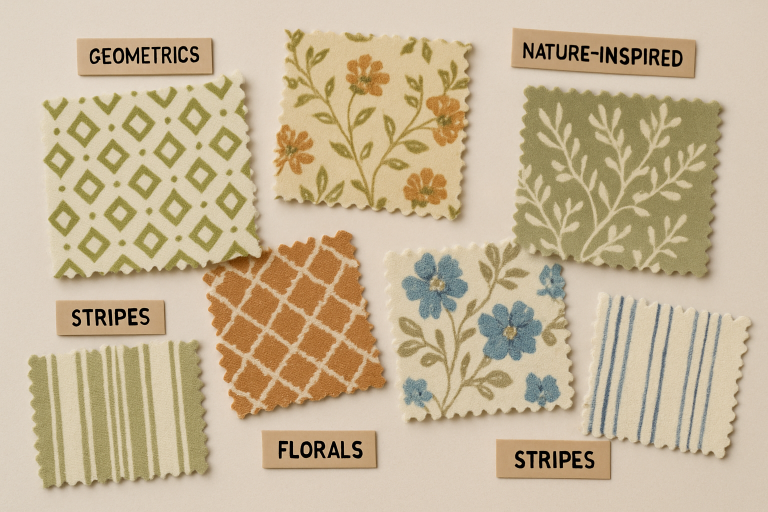
Few patterns are as flexible as geometrics. They run from bold, large-scale shapes to tight tessellations, and they add energy and movement to living rooms, bedrooms, and hallways alike. Put them on rugs and cushions for visual punctuation, or upholster a statement piece for a sharper, more modern look.
Geometric prints adjust easily to different color schemes and styles, whether you favor retro, Scandinavian, or something ultra-contemporary. They are a reliable way to break up a monochrome room, adding interest without losing cohesion.
Heritage prints
Heritage prints cover long-established patterns such as tartan, damask, paisley, and vintage florals. They carry familiarity and warmth, and they anchor a room with a sense of history. Used with care, they do not feel dated.
You can bring them up to date by choosing contemporary colorways or setting them against sleek, modern pieces. A tartan throw on a plain sofa, or a damask pillow on a current accent chair, adds depth and a sense of continuity. That mix of old and new tends to feel considered and welcoming.
Animal and nature prints
Designers and homeowners keep looking to the natural world for ideas. Animal and nature prints bring vitality and calm into a space. Whether you like bold leopard spots, jungle leaves, or delicate floral vines, these prints can make a statement or quietly reinforce a nature-led theme.
Use them in moderation on accent chairs or curtains, or layer them lightly with neutrals for a calming effect. Their lasting appeal means they suit both adventurous and understated rooms.
Stripes
Stripes fit almost any style. Thick, candy-colored bands can energize a room, while fine pinstripes read as more formal. The direction matters too: vertical stripes add height, horizontal ones widen a wall, and both can create a sense of symmetry.
Use striped drapery to frame windows, or a striped area rug to anchor a seating arrangement. Part of the reason stripes stay popular is that they slot into both classic and ultramodern settings with almost no friction.
Layering patterns
Layering is where mixing patterns gets interesting, and where it most often goes wrong. The combinations that work usually share a color palette and differ in scale: a large floral next to a tight geometric, or a solid paired with subtle stripes.
Start with an anchor pattern, then build with secondary designs, keeping at least one dominant color running through the whole scheme. That single thread is what prevents visual chaos. Many designers suggest starting small, layering patterned throw pillows first, before you commit to bold fabric on larger pieces or several patterns in one room.
Hard surfaces can take the anchor role just as well, and travertine in a modern bathroom often sets the warm color note that towels and blinds answer to.
How people find the fabrics and rooms they like
Before most people buy anything for the home, they look at what other people chose. Pew Research Center’s Online Shopping and E-Commerce (2016) found that 82% of U.S. adults at least sometimes read customer ratings or reviews before a first-time purchase, and 40% say they always or almost always do. Fabric is a category where that habit runs deep, because a swatch on a screen rarely tells you how a textile drapes, wears, or holds color.
That is also why the source of a pattern matters. When you buy from a retailer or maker that is easy to find, listed in curated places, and backed by reviews you can read, you are relying on other buyers to fill the gaps a photo leaves open. A good listing and honest feedback do some of the quality-checking for you before a bolt of fabric ever reaches your sofa.
Sustainable fabrics
Eco-conscious materials now sit near the front of textile innovation. Organic cotton, linen, bamboo, and hemp are responsible choices, and they also bring their own tactile quality and surface pattern to a room.
These fabrics complement most decor, adding texture and a quiet richness while letting you make an informed choice about what goes into your home. The widening selection of sustainably produced textiles makes it practical to pair style with better sourcing, so a greener household does not mean a duller one.
Putting it together
Curating fabric patterns is a flexible, high-impact way to change how a home looks. Combine them thoughtfully, whether they draw on history, nature, or sustainable materials, and you can build interiors that feel both current and durable.
Experiment with mixing designs and textures, but keep an eye on color harmony and proportion as you go. Start with one anchor pattern and a shared color, add layers slowly, and check each new fabric against what you already have. Done that way, the room ends up feeling like yours rather than a showroom.
