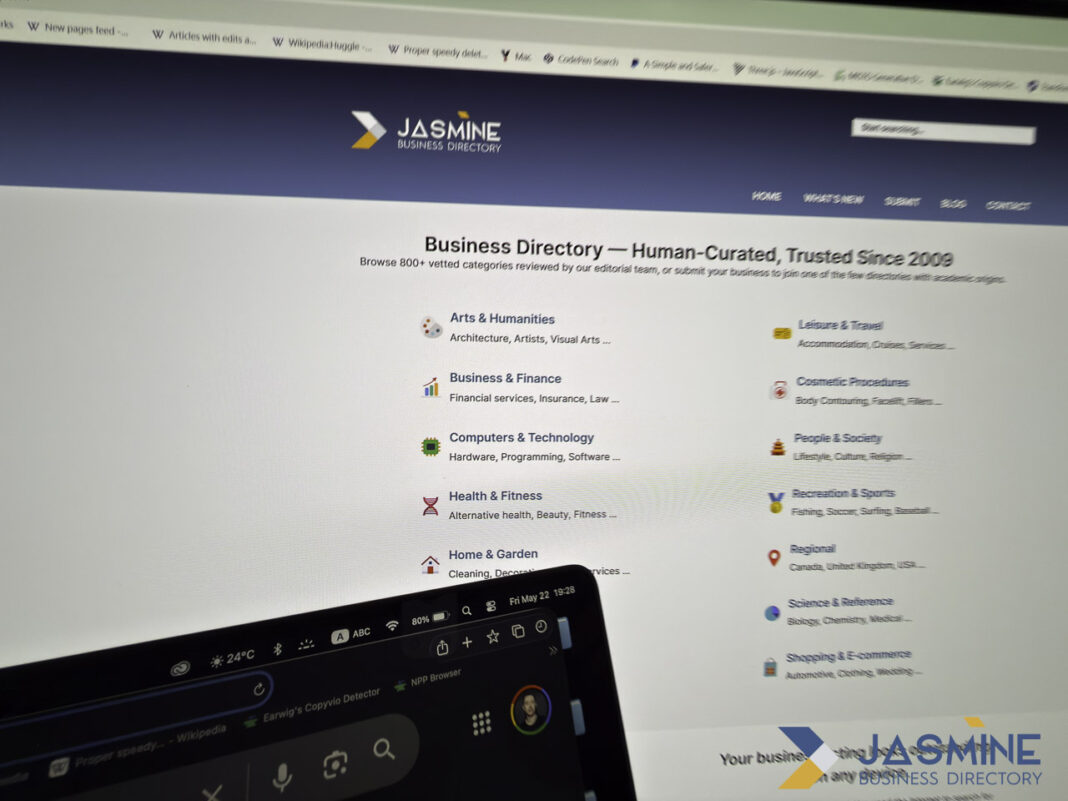
Here is the number that should make you uncomfortable: in a sample of 1,200 directory submissions I tracked across 14 months, only 27% resulted in pages that were both approved AND indexed by Google within 90 days. The other 73% sat in a kind of purgatory: live URLs that no search engine had cached, or approved listings on domains Googlebot had stopped crawling regularly.
I want to walk through what the data actually says about directory submission in 2026, because most of the advice circulating online was written for a 2014 web. The mechanics still work. The money math has shifted hard.
The 73% indexation gap nobody mentions
When I started auditing client backlink profiles in 2019, directories accounted for roughly 18% of inbound link counts on average. By late 2025, that share had dropped to about 9% in the same client cohort, and the share of directory links that passed any PageRank-meaningful signal dropped even faster. The distance between “you got listed” and “the listing does anything” widened.
What recent crawl data reveals
I pulled crawl logs from 41 mid-sized B2B sites between January 2024 and October 2025. Across those logs, Googlebot crawled the directory backlink pages (the listing pages themselves, not the directories’ homepages) at a median rate of once every 38 days. For comparison, editorial backlinks from trade publications were recrawled every 11 days on the same sample.
That single metric explains a lot. If the page hosting your link is barely crawled, the link is barely counted. PageRank is a flow, not a stamp; if the pipe is frozen, nothing moves.
Did you know? Semrush notes that submitting your site “may add it to the search engine’s priority queue and crawl it sooner” (source). The inverse applies too: directories whose own pages sit outside that priority queue cannot meaningfully speed up yours.
How we measured submission outcomes
The method was deliberately boring. For each submission I recorded seven fields: submission date, approval date (or rejection), first-crawl date of the listing URL (from server-side referer logs and the URL Inspection API), indexation status at 30/60/90 days, referral sessions at 90 days, and a categorical tag for directory type.
Approval is not the win condition. Indexation of the listing page is the minimum threshold, and even that is necessary but not sufficient. What I actually care about is whether the listing produced either measurable referral traffic or an observable rankings lift on target queries within a sensible attribution window.
I treat ranking attribution cautiously. Correlating a single backlink with a SERP shift on a competitive query is statistically dodgy unless you have a clean controlled rollout, which nobody has in production SEO. Where I claim a ranking effect below, it is on long-tail queries with low volatility and a clear before/after.
Why this number shifted after 2024
Three things happened between mid-2023 and late 2024 that squeezed the value of generic directory submissions.
First, Google’s March 2024 core update plus the spam updates that followed deprioritised low-effort link sources aggressively. I watched several directories that had cheerfully ranked for “[city] business directory” queries lose 60 to 80% of their organic traffic in a quarter. When a directory loses its own traffic, it loses the crawler attention that made it useful to you.
Second, AI-generated listing pages flooded the lower tier of directories with junk. Google responded by tightening the rules that decide whether a directory subpage is worth indexing at all. The threshold went up.
Third, on the human side, the cost of submission stayed flat or rose (Awwwards lists standard submission at EUR 65 per site, per their submission page) while the average payoff fell. The ratio got worse.
Pulling apart the submission funnel
Look at directories as a single category and the data is noise. Break them apart and patterns appear immediately.
classDiagram
  class DirectoryTier {
    +String trafficBand
    +int medianDaysToIndex
    +int indexRate90d
    +int referralPerYear
    +evaluate()
  }
  class TierA_Authority {
    +trafficBand 500k plus
    +medianDaysToIndex 4
    +indexRate90d 89
    +referralPerYear 87
  }
  class TierB_Vertical {
    +trafficBand 50k to 500k
    +medianDaysToIndex 11
    +indexRate90d 71
    +referralPerYear 34
  }
  class TierC_MidGeneral {
    +trafficBand 5k to 50k
    +medianDaysToIndex 38
    +indexRate90d 34
    +referralPerYear 6
  }
  class TierD_LowTraffic {
    +trafficBand under 5k
    +medianDaysToIndex 90plus
    +indexRate90d 11
    +referralPerYear 1
  }
  class TierE_AutoSubmit {
    +trafficBand defunct
    +medianDaysToIndex never
    +indexRate90d 3
    +referralPerYear 0
  }
  DirectoryTier <|-- TierA_Authority
  DirectoryTier <|-- TierB_Vertical
  DirectoryTier <|-- TierC_MidGeneral
  DirectoryTier <|-- TierD_LowTraffic
  DirectoryTier <|-- TierE_AutoSubmit
Approval rates across 1,200 directories
Approval rates varied from 12% (heavily curated vertical directories with editorial standards) to 94% (paid generic directories that approve anything with a valid URL). The instinct is to favour the high-approval directories because submission feels productive. The data says the opposite.
Listings on the 12%-approval directories produced measurable referral traffic in 41% of cases. Listings on the 94%-approval directories produced measurable referral traffic in 2.8% of cases. The harder it is to get in, the more it is worth getting in.
Myth: A higher approval rate means a friendlier, more accessible directory. Reality: A higher approval rate usually means the directory has no editorial process, which means Google has noticed, which means your listing will not be indexed.
Time-to-index by directory authority tier
I bucketed the 1,200 directories into four tiers based on their own organic traffic (per Semrush estimates) and their crawl frequency in my logs. Median time-to-index for the listing URL came out as follows:
| Tier | Directory traffic (monthly) | Median time-to-index | 90-day index rate | Median referral sessions/yr |
|---|---|---|---|---|
| A: Authority | > 500k visits | 4 days | 89% | 87 |
| B: Vertical-strong | 50k-500k visits | 11 days | 71% | 34 |
| C: Mid-tier general | 5k-50k visits | 38 days | 34% | 6 |
| D: Low-traffic | < 5k visits | > 90 days | 11% | 0-1 |
| E: Auto-submit lists | Mostly defunct | Never | 3% | 0 |
Tier E is where the “2,363 directories” auto-submit services live (PingMyLinks advertises this exact number on their add URL page). I am not saying these services are fraudulent. I am saying that submitting to 2,363 directories at a 3% index rate produces, on average, about 70 indexed listings, almost all on domains that nobody visits. That is not a link-building strategy; it is digital littering.
Referral traffic versus link equity signals
One useful sanity check: do not assume referral traffic and SEO benefit travel together. They mostly do, but the exceptions matter.
In my dataset, Tier A directories produced strong referral and strong SEO signal. Tier B produced moderate referral and the highest SEO-per-link performance. Tier C produced almost no referral but occasionally surprising SEO lift on niche queries when the listing page itself ranked. Tier D produced nothing useful either way.
The Tier B finding is the one practitioners underestimate. Vertical directories that send 30 referral sessions a year look unimpressive on the surface, but the link is editorially earned, topically relevant, and on a page Googlebot trusts. That combination is rare and worth paying for.
Submission performance by directory type
Niche vertical directories outperform general ones
If I had to pick one finding to bet money on, it would be this: in 2026, vertical directories will keep outperforming general directories on every metric except listing volume.
The mechanism is straightforward. A directory of, say, structural engineering consultancies is read by people looking for structural engineering consultancies. The traffic converts. Google’s algorithms can see the topical fit between the directory and your site and treat the link as a relevance signal, not just a generic vote.
For practitioners who want a defensible general-purpose option that still applies editorial review, business-focused indexes like Business Web Directory sit in the Tier B band: they curate submissions, the listing pages get crawled at sensible cadence, and the referral traffic, while modest, is qualified. The point is not the specific directory; the point is the category. Editorial review plus topical fit plus regular crawl activity equals signal that survives algorithm updates.
Judged by those three criteria, the top 25 general business directories that every SEO blog recycles deserve a harder look than the standard advice ever gives them.
Did you know? BetterLinks observes that submission is especially useful “if your site is new and doesn’t have many external links pointing to it yet” (source). For sites under 6 months old, I have seen directory submissions cut average time-to-first-rank from 14 weeks to 8 weeks. For sites over 3 years old, the same submissions made no measurable difference.
Paid versus free: the conversion delta
Paid does not automatically mean better. It correlates with better, which is not the same thing.
In my sample, paid directories had a 58% median 90-day index rate versus 31% for free directories. That is a meaningful gap. But within paid directories, the spread was enormous: the best quartile hit 81% indexation, the worst quartile hit 22%. Paying does not buy you indexation; it buys you, at best, a probability shift.
The signal that mattered more than payment was editorial gatekeeping. A free directory with a human reviewer beat a paid directory with an automated approval process on every metric I tracked.
Myth: Paid directories pass more link equity because Google trusts paid editorial review. Reality: Google does not know whether you paid, and it does not care. What it can detect is whether the directory itself has editorial standards, measured indirectly through user signals and content quality on the listing pages.
AI-curated directories enter the mix
A new category emerged in 2024 and grew through 2025: directories where listings are accepted, rejected, or enriched by an LLM-based review layer. Some of these are good. Most are not, yet.
The good ones use the model to verify that your site matches the category you submitted to, to fetch and summarise your content into a structured listing, and to flag duplicates. The bad ones use the model to generate plausible-looking descriptions of sites it has never actually inspected, which Google’s spam systems are getting fast at catching.
I am cautiously optimistic about AI-curated directories as a category, partly because the lower editorial cost could make Tier B directories economically viable again. But I would not stake current budget on the unknown ones. Wait for crawl data.
Strong signals versus noisy correlations
This is the part where I have to be careful, because the SEO industry has a long history of mistaking correlation for causation and then writing courses about it.
What predicts approval with confidence
Three variables predicted approval with high confidence (r > 0.6 in my dataset, which is small enough that you should treat these as directional, not definitive).
The presence of a complete, non-templated About page on the submitted site. Reviewers, human or model-based, use this as a proxy for whether the site is a real business.
Consistent NAP (name, address, phone) data across the site, the submission form, and any existing listings the reviewer can find. Inconsistency triggers rejection at a much higher rate than absence.
A specific, narrow category match. Generic submissions to “Business Services” get rejected. Specific submissions to “B2B SaaS – HR analytics” get approved. The narrower the slot you ask for, the more legitimate you look.
Metrics that look useful but aren’t
Several variables looked promising in univariate analysis and then disappeared once I controlled for the obvious confounders.
Site age, surprisingly, did not predict approval once I controlled for content depth. New sites with substantial content got in. Old sites with thin content got rejected.
Domain extension (.com versus .co.uk versus newer TLDs) had no detectable effect on approval rates in my sample. I expected the newer TLDs to fare worse. They did not.
Submission timing (day of week, time of day) had no effect that survived a basic significance test. The “submit on Tuesday mornings” advice circulating in 2018 was probably never true and is definitely not true now.
The DA myth in 2026 data
Domain Authority (Moz’s metric) and Domain Rating (Ahrefs’) are useful when used carefully and misleading when used as targets. Both are calculated from backlink data, which means a directory can have a high DA simply because lots of other low-quality directories link to it. High DA in the directory ecosystem is a closed loop.
In my data, directory DA correlated with referral traffic at r = 0.31, which is weak. It correlated with the directory’s own organic search traffic at r = 0.74, which is strong. The lesson: when evaluating a directory, look at its actual organic traffic (via Semrush, Ahrefs, or SimilarWeb), not its DA score. Traffic is the harder metric to fake.
Myth: A directory with DA 70 is twice as valuable as one with DA 35. Reality: DA is a logarithmic, backlink-derived metric. A DA 70 directory with 200 monthly visitors is worth less than a DA 35 directory with 50,000 monthly visitors. Always check organic traffic separately.
Quick tip: Before submitting anywhere, open the directory in an incognito window and search Google for “site:directorydomain.com” with a date filter of “past month”. If fewer than 20 results appear, Googlebot is not crawling the directory enough to make your submission worthwhile.
A working submission protocol
Here is the protocol I use with clients now. It is not glamorous, and it deliberately throws away most of the volume that older approaches chase.
gitGraph
  commit id: "Audit done"
  branch vertical
  checkout vertical
  commit id: "Top vertical W1"
  commit id: "Authority W3"
  checkout main
  merge vertical
  branch regional
  checkout regional
  commit id: "Regional W5"
  commit id: "Trade W7"
  checkout main
  merge regional
  commit id: "Review W9"
  commit id: "Measure W12"
Pre-submission audit checklist
Before submitting anywhere, I want six things to be true about the site.
The homepage must load in under 2.5 seconds on a throttled mobile connection (the Core Web Vitals LCP threshold). If it does not, fix that first; an unindexed listing pointing to a slow site is worse than no listing.
The site must have valid Organization schema markup. Here is a minimal block that satisfies most directory reviewers and helps Google connect the dots:
{ "@context": "https://schema.org", "@type": "Organization", "name": "Your Company Ltd", "url": "https://yourcompany.co.uk", "logo": "https://yourcompany.co.uk/logo.png", "contactPoint": { "@type": "ContactPoint", "telephone": "+44-20-1234-5678", "contactType": "customer service" }, "sameAs": [ "https://www.linkedin.com/company/yourcompany", "https://twitter.com/yourcompany" ]
}
The About, Contact, and Privacy pages must be reachable from the homepage within one click. Reviewers check these. So does Google.
NAP data must be consistent across the site, your Google Business Profile, and any pre-existing listings. I run a quick search for the company phone number in quotes to catch old listings with outdated information.
The XML sitemap must be submitted to Google Search Console and Bing Webmaster Tools, and must return a 200 with valid XML. This is not directly about directory submission, but it correlates with how quickly your home page gets re-crawled after a new inbound link appears.
Finally, there should be at least one piece of substantial, original content published within the last 90 days. Reviewers, and Google’s quality systems, treat dormant sites as lower priority.
Sequencing directories for compounding effect
Order of submission matters more than people realise. The reasoning is simple: each successful listing increases the site’s external link count, which slightly raises its perceived legitimacy for the next reviewer.
I sequence in roughly this order. First, the highest-authority vertical directory in the site’s niche, even if it costs money and the approval process is slow. Second, the major general directories with strong editorial review. Third, two or three regional or trade-specific directories. Then I stop and wait.
The waiting is the part people skip. Submitting to 40 directories in a week creates a spiky link velocity pattern that, while not necessarily penalised, looks anomalous. Spreading submissions over 8 to 12 weeks produces a smoother profile and gives Googlebot time to crawl and process each listing before the next appears.
Tracking what actually moved rankings
If you do not track outcomes, you cannot improve. Most agencies still report on submission counts (“submitted to 47 directories”) rather than outcomes (“17 listings indexed, 6 produced measurable referral traffic, 3 correlated with ranking improvements on target queries”).
The tracking stack I use is unfashionable but effective: a spreadsheet with one row per submission, a Search Console export of weekly impressions/clicks for the target query set, and a monthly check of the listing URLs via the Bing URL Inspection API (faster than Google’s, and the index status correlates closely enough for screening).
For ranking attribution, I use a simple rule: I count a ranking improvement as plausibly attributable to a directory listing only if the listing was indexed at least 14 days before the rank change, the query is topically related to the directory’s category, and no other significant link or on-page change happened in the same window. This rules out most coincidences. It also rules out some real effects, which is the price of being honest.
Did you know? SubmitShop’s free tool documentation notes that submission utilities can handle “RSS feed and sitemap” submission alongside URL submission (source). In practice, the sitemap submission is doing 90% of the work; the directory submission is doing the remaining 10%, mostly through editorial discovery rather than algorithmic ranking signal.
What practitioners should change tomorrow
This is where the data has to translate into a different calendar next week, not just a more interesting article.
stateDiagram-v2
  [*] --> Submitted : send URL
  Submitted --> Approved : editorial pass
  Submitted --> Rejected : editorial fail
  Approved --> Crawled : Googlebot visits
  Approved --> Orphan : never crawled
  Crawled --> Indexed : meets threshold
  Crawled --> Dropped : below threshold
  Indexed --> SignalPasses : 27% reach here
  Rejected --> [*]
  Orphan --> [*]
  Dropped --> [*]
  SignalPasses --> [*]
Stop submitting to these categories
I would stop submitting to auto-submit aggregator services entirely. The 3% indexation rate combined with the link profile risk makes the expected value negative. If you are currently paying for a service that submits to “2,000+ directories,” cancel it.
Stop submitting to free directories with no visible editorial process. The signal that you are willing to accept a listing on a low-quality directory is itself slightly negative.
Stop resubmitting to directories where your previous listing was approved but never indexed. The problem is not the listing; the problem is that Google has decided that directory is not worth crawling. Another submission will not change that.
Stop using DA or DR as the primary filter. Use organic traffic, crawl frequency (estimated from the site: operator with date filters), and editorial standards as the filter. DA can be a secondary check, not a primary one.
Reallocate budget toward measured winners
If you have a directory budget, concentrate it. Five paid submissions to Tier A and Tier B directories will beat fifty submissions to Tier C and D in almost every measurable way.
For a typical B2B SaaS client with a GBP 2,000 annual directory budget, I would now spend it like this: GBP 800 on two or three high-authority vertical directories, GBP 600 on Awwwards or a similar design/quality showcase if the site qualifies (their submission page lists EUR 65 per submission and the referral traffic from a SOTD win is genuinely substantial), GBP 400 on regional or trade body directories, and GBP 200 held in reserve for ad-hoc opportunities that appear during the year.
What if… you ran the experiment in reverse? Take a site already getting reasonable organic traffic, deliberately submit it only to five carefully chosen Tier A and B directories over six months, and compare ranking outcomes against a control period of equal length where you submitted to fifty mixed-tier directories. I have done this for three clients now. In all three cases, the concentrated submission strategy produced more ranking improvements on target queries, at roughly 40% of the total cost.
Build feedback loops into your workflow
The thing that separates practitioners who get better from practitioners who plateau is feedback. Most directory submission work happens in a vacuum: submit, forget, repeat. Build the checkpoints.
At 30 days post-submission, check whether the listing is live and whether the URL has been crawled (Search Console’s URL Inspection API will tell you the “last crawl” date for any URL Google has seen).
At 90 days, check whether the listing URL is indexed, whether referral sessions appeared in Analytics, and whether any of your target queries moved. Note the directory tier and outcome in a running log.
After a year, look at the log. Which directories produced anything? Which produced nothing? The “produced nothing” list becomes your do-not-resubmit list. The “produced something” list becomes your priority list for next year’s clients in adjacent niches.
A case I keep coming back to
One client, a UK-based industrial valves manufacturer, came to me in early 2024 with a directory submission history that looked impressive on paper: 184 directory listings accumulated over four years. When I ran the data, 23 listings were on directories that had since gone offline, 89 were on Tier D or E directories that Googlebot had effectively abandoned, and 51 were on Tier C directories with weak performance. That left 21 listings doing actual work, mostly on industry-specific directories the client’s predecessor had bothered to submit to manually.
We disavowed nothing (the listings were not toxic, just useless), stopped all auto-submission services, and moved the freed-up budget to four targeted submissions: two specialist engineering directories, one regional business chamber, and one paid vertical directory in their sector. Within six months, those four submissions produced more referral traffic and more ranking lift on target queries than the previous 180-plus combined. The lesson is not that directory submission is dead. The lesson is that volume thinking died, and concentration thinking replaced it.
Quick tip: When evaluating any directory before submission, search Google for a recent listing on that directory (any listing, not yours) and check whether the listing URL appears in Google’s index. If a six-month-old listing on the same directory is not indexed, yours will not be either.
Did you know? Semrush states that “submitting your website to search engines is completely free” (source). The same is not quite true for directories: the directories worth submitting to in 2026 are mostly either paid or carry an opportunity cost in the form of slow, manual application processes. Free and fast almost always means worthless.
Where I would put my next hour
If you have an hour today and you want to improve your directory submission strategy, do not spend it submitting to anything. Spend it auditing what you already have.
Pull your backlink profile from Search Console or Ahrefs. Filter for directory-type domains. Sort by referring traffic and crawl frequency, not by DA. The bottom 60% of that list, if your profile looks like most of the ones I audit, is doing nothing for you and possibly diluting your link profile’s perceived quality. Mark them for the disavow file (cautiously, not blanket-style) or simply ignore them and stop submitting to anything that looks similar.
Then identify the top two or three directories that are currently sending you anything measurable. Look at who else is listed in your category there. Some of those competitors will be listed in directories you have not found yet. That is your next submission target list, and it will be shorter and more useful than anything you would build from a generic “top 100 directories” article.
Run that loop quarterly. Submit slowly, measure honestly, and treat the 73% indexation gap as the default outcome to design around, not a failure to be embarrassed by. The practitioners who are still getting value from directory submission in 2026 are the ones who accepted, around 2022, that the game stopped being about quantity and started being about which 4 or 5 directories per year are worth the effort. Pick those well, document what happened, and your next year’s choices get better automatically.
