
Key takeaways
- Automated workflows cut the time spent on repetitive tasks, which frees staff for higher-value work.
- Bringing AI into legal processes improves accuracy and reduces human error.
- Clients get faster service and clearer visibility into where their matters stand.
- Firms that adopt automation early tend to stand out in a crowded market.
Why firms are automating
The legal profession runs on detailed documentation, hard deadlines, and complex procedures. As caseloads grow and client expectations change, firms want ways to work faster without giving up accuracy or compliance. Automation has become a practical answer. It helps legal teams handle repetitive administrative tasks, cut manual errors, and keep internal processes consistent. From document generation to case tracking and deadline management, automated systems are reshaping how daily operations run behind the scenes.
One driver of this shift is the adoption of legal workflow software, which standardizes procedures and centralizes information across teams. When a firm maps out each step of a process, tasks move forward in an organized, timely way. Automated notifications, task assignments, and digital approvals make accountability clearer and collaboration easier. Lawyers then spend more of their time on strategic analysis and client communication instead of routine paperwork.
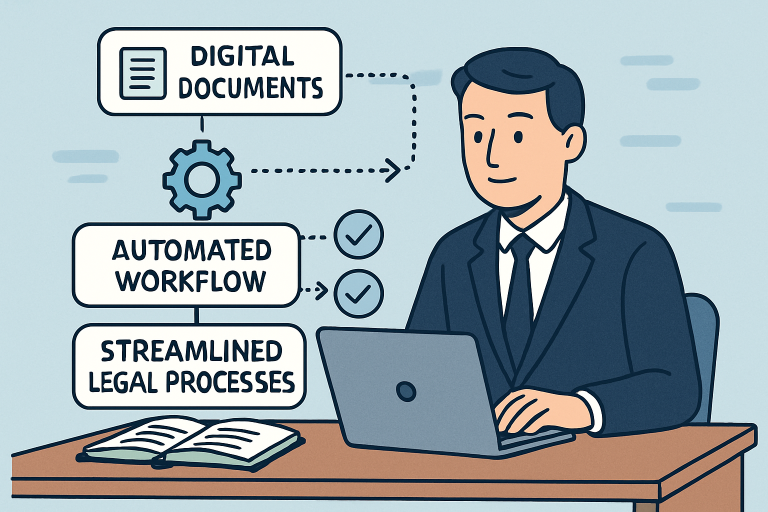
Enhancing efficiency through automation
Automated workflows change how firms handle routine but essential tasks. Document review, case management, and scheduling can all be streamlined with AI-assisted tools that process information quickly and accurately. A contract review tool, for instance, can flag inconsistencies or missing clauses in seconds rather than hours, so attorneys spend more time on the substance of a case.
Removing redundant administrative work from the daily agenda lets attorneys focus on meaningful client work and on the arguments that actually decide a matter. That environment supports higher-quality service and reduces the fatigue that comes with grinding through manual paperwork day after day.
Improving accuracy and reducing errors
In legal work, details matter and accuracy is not optional. Automated tools follow precise rules and logic, which narrows the margin for common mistakes in document drafting, database management, and compliance monitoring. That precision counts, because even a small error can carry real consequences for clients and firms.
Automation keeps each step reliable, from data entry through signatures. Firms that adopt digital workflow tools not only avoid errors but also catch discrepancies that might slip through during rushed, high-volume periods. Consider a busy period around a filing deadline, when several documents move through review at once. A system that checks for missing signatures or inconsistent client details before a document leaves the office prevents the kind of oversight that later becomes a dispute. That preventive habit builds trust and lowers the risk of costly corrections.
Property transactions carry the same paperwork risk, and how coordinators are reshaping real estate transactions starts with precisely this sort of check before anything reaches a closing table.
Boosting client satisfaction
Clients expect timely updates, fast turnaround, and processes they can actually see. Automated workflows help you meet those expectations. Case management platforms, client portals, and automated notifications tell clients exactly where their matters stand, which removes the guesswork and anxiety that come with waiting for a manual update.
Predictable, proactive communication builds confidence and loyalty, which is the basis for long-term relationships. The same efficiencies can make legal services more affordable, a point that matters to individuals and business clients alike.
Client confidence also depends on how easily people can find and vet your firm in the first place. Before anyone signs an engagement letter, they read what others have said. In its 2026 Local Consumer Review Survey, BrightLocal found that 31% of consumers would only consider a local business with an average rating of 4.5 stars or higher, up from 17% the year before, and that Google remained the most used platform for reading local business reviews at 71%. A firm that responds quickly and communicates clearly tends to earn the reviews that clear that bar, and being listed in curated, human-checked places gives prospective clients a trustworthy starting point for their research.
Gaining a competitive edge
In a crowded market, standing out is worth real effort. Firms that invest in automation often deliver more reliable outcomes and do it faster. A reputation for efficient, accurate work draws clients who value a smooth experience, and firms that embrace workflow automation are frequently seen as forward-looking, which appeals to both clients and promising legal talent.
Presenting your practice as capable and technically adept improves both its appeal and its staying power. As more firms move to automated systems, clients will come to expect digital-first service, so adopting early is a strategic advantage rather than a novelty.
Implementing automated workflows in your practice
Assess your needs
Start by identifying the tasks that eat the most time. Finding bottlenecks in document generation, client intake, or billing gives you a map of where automation pays off first.
Choose the right tools
Pick software that fits your firm’s structure, services, and client base. Look for platforms that integrate with what you already use and that you can customize to your requirements.
Train your team
Invest in thorough training. When people understand the system and feel confident using it, adoption goes faster. Clear documentation and support from your technology partner smooth the transition considerably.
Monitor and optimize
Keep evaluating efficiency and act on user feedback to refine your workflows. Like any technology, these systems need regular review and updates to stay effective and to justify their cost.
Overcoming challenges in adoption
Moving to automated workflows can bring hurdles: resistance to change, upfront costs, or worries about data security. Open communication helps address staff apprehension and shows how automation can make daily work easier and less tedious. Demonstrating quick wins and measurable benefits is the surest way to build support.
When you evaluate software, favor providers with strong security credentials and clear privacy policies. Most current legal workflow tools meet or exceed industry standards for encryption and data protection, which safeguards sensitive client information and firm records. Ask vendors direct questions about where data is stored, who can access it, and how breaches are handled, and treat vague answers as a warning sign.
The future of legal automation
Bringing automation into the legal profession into everyday practice reflects a lasting change, not a passing trend. The tools ahead will be more adaptable and more capable of handling nuance. Firms that adapt early will be ready to serve clients with speed and accuracy, and the systems they build now will keep paying off as expectations rise.
Conclusion
Automated workflows are remaking legal work by streamlining operations, improving accuracy, and producing better outcomes for clients. The firms that do well will be the ones willing to adapt and lead. A practical first step is to pick one high-volume task, automate it well, measure the result, and use that win to bring the rest of the team along.
