
There comes a time when any small firm will have many different contracts to look after on a daily basis. These include service agreements, supplier contracts, client proposals, and other renewals. When such documents are stored in email inboxes, file folders, and personal computers, it is hard to keep everything organized. Unexpected charges may occur due to late renewals, whereas old agreements may make people wonder about price and delivery details.
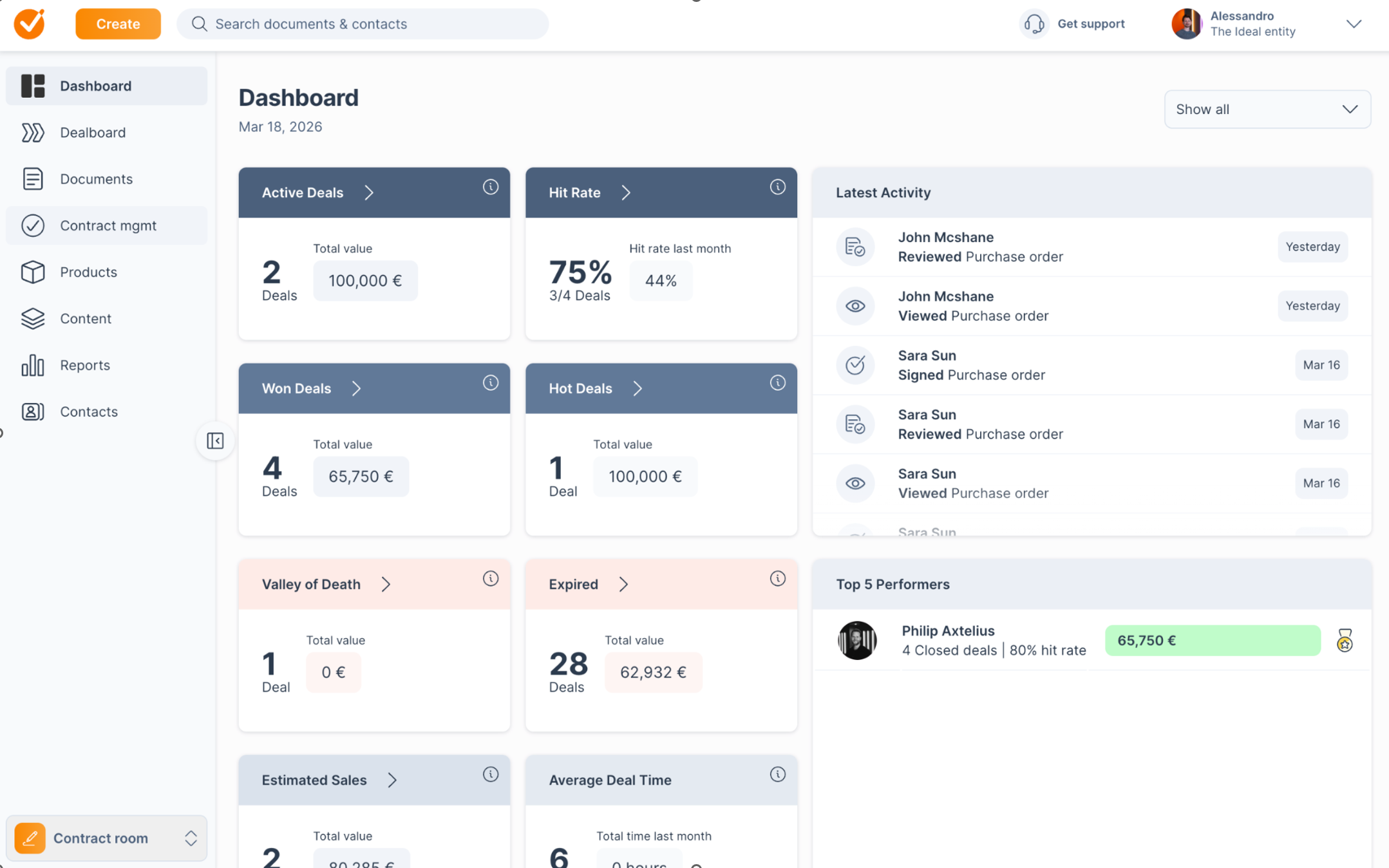
The amount of companies that start to manage their contracts via spreadsheets and cloud-based storage is huge. Such a method works until the company has enough contracts and employees working with them. In this case, contract management software can be used by a team for the organization of contracts, monitoring of activities related to these documents, and managing their key steps.
Importance of Organizing Contracts
The relevance of a contract does not disappear after the signing by two sides. There are various terms that demand some actions during the whole duration of the contract period. There are payment periods, service conditions, notification period, renewal date, etc., that influence the work of the firm.
There are various contracts between the marketing company and fifteen of its clients with terms of services, payment and termination of a contract. If some additional actions should be provided for a client, then the account manager must consult a contract to establish the cost.
Disorganized data cause difficulties for people as employees can be interrupted from work. It will cause waste of time. The same situation occurs in relationships between a firm and its suppliers. There may be contracts with the firms providing shipping services, packaging, software maintenance, etc.
An organized contract provides internal transparency, and employees know about obligations and changes in the contract.
Characteristics that Enable Contract Work on a Day-to-Day Basis
Contract management systems provide various tools based on their target users. Whereas some focus on documentation storage and reminder functions, others offer solutions for drafting, approvals, e-signatures, and reporting.
The table below shows how common features address practical issues.
| Feature | Business purpose | Practical example |
| Centralized storage | Keeps agreements accessible | A sales manager retrieves a signed customer contract |
| Document templates | Standardizes recurring agreements | An agency prepares monthly service contracts |
| Approval workflows | Assigns responsibility for reviews | A manager approves updated payment terms |
| Electronic signatures | Supports digital signing | A client signs a service agreement remotely |
| Renewal reminders | Tracks approaching deadlines | A supplier contract expires in 30 days |
| Version tracking | Records document changes | Employees identify the latest approved contract |
| Access permissions | Controls document visibility | Financial terms remain available to authorized staff |
| Contract reporting | Provides oversight of active agreements | Management reviews upcoming renewals |
The appropriate application should also mirror the manner in which the employees manage contracts. A business organization dealing with a couple of contracts on a monthly basis will require features such as document storage, approval tracking, and reminders. A business organization managing thousands of suppliers may need reporting and integration of the contracts with accounting or procurement applications.
There are certain functionalities that should not be neglected in the software evaluation process:
- Search and filters: Contracts should be locatable by customers, vendors, dates, or status of the document.
- Reminders: All relevant personnel should be informed prior to reaching deadlines.
- Permissions: Some contracts must be made accessible only to certain employees.
- Audit trails: The employee needs to track all changes and actions taken.
However, features are useless when they are rarely used by the employees. Complex processes are normally conducive to the reversion to attachments in emails and manual files.
Creating a Contract Workflow that Will Be Adhered to by Employees
Implementing contract management software requires preparation. The first step includes uploading already existing documents on the new system, but there is still more work to be done regarding the rules of contract creation, approval, and maintenance.
It is essential to analyze the current process flow of contracts in the company. For instance, in the case of a small consulting firm, the sales representative may prepare the contract, the department manager may review its terms, and the director will approve the document. These tasks need to be included in the contract management software workflow.
Document templates should be discussed separately. Usually there are some standard documents for services that include similar sections on the scope of work, terms of payment, non-disclosure, and termination of agreement. It will prevent inconsistencies in wording and will help employees make contracts without re-making them each time.
Active, expired, and renewed agreements need to be organized. Uploading a large number of documents without determining their status is not a good idea.
Implementation steps include:
- Gather existing contracts from email, shared drives, and local directories.
- Distinguish between active and inactive contracts.
- Document critical information, such as employee responsibility and renewal date.
- Set approval policies for various contract types.
- Pilot the process with a small number of participants.
Training should concentrate on routine tasks. Employees should be aware of how to upload a document, ask for an approval, and find a signed contract. Clear guidance eliminates additional support calls.
Managing Renewals, Security, and Long-Term Use
Management of renewals is one of the areas where businesses often lack control over their agreements. Service agreements typically renew automatically unless a notice of cancellation is sent within a certain time period. Failing to do so might bind the organization to another billing cycle.
The software for managing contracts can facilitate scheduling reminders; however, employees will have to analyze the underlying terms and make the decision themselves. The reminder cannot decide if the supplier is appropriate anymore or if the price needs to be renegotiated.
Security is also important. Contracts might include customer information, commercial secrets, payment terms, and business strategies. Before choosing a system, businesses need to consider access policies, authentication methods, data exporting options, and security documents of the provider.
Integration with existing business solutions is also worth considering. Sales teams usually operate within customer relationship management systems, while finance departments use accounting solutions. Integration of these systems will save employees from double data entry when using selected software.
Periodic contract reviews will ensure that accurate records are maintained. Appointing a person responsible for all active contracts will guarantee that deadlines and requirements are not forgotten due to reassignment of responsibilities among employees.
Contract management is most effective when it becomes a regular business practice. The ability to approve contracts, easy access to documents, and accurate tracking of deadlines will allow employees to focus on performing the tasks described in their contracts rather than looking for the information about them.
