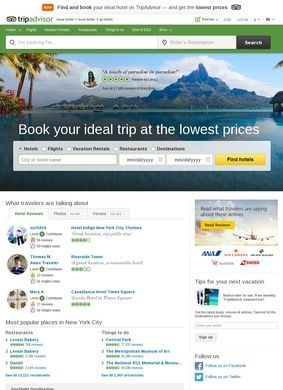
More than a billion reviews and contributions sit behind Trip Advisor, which is a strange thing to grasp until you start searching a specific restaurant in a specific city and realize someone has already eaten there, photographed the plate, and argued about whether the service was rushed. That scale is the whole point. Trip Advisor pulls together accommodation, dining, attractions, tours, and cruises into one search box, and the depth of opinion underneath each result is what separates it from a plain booking engine.
Four core search areas
The structure breaks into four main areas. Hotels can be searched, compared, and booked, with the reviews acting as a counterweight to the polished marketing photos every property pushes. Restaurants are sorted by location and cuisine, which is useful when you land somewhere unfamiliar and want to know what locals rate rather than what is closest to the tourist square. Things To Do is the section I find myself returning to most, because it holds more than 400,000 experiences, tours, activities, and attraction tickets, many of them bookable on the spot. Cruises round out the set with their own search and booking flow.
Planning tools and trip itineraries
On top of the search itself, Trip Advisor layers planning tools that try to do the organising for you. There are AI-driven trip planning features, personalised itinerary suggestions, and a steady stream of curated inspiration articles and guides. Some of this is the kind of editorial filler that any travel site produces, but the itinerary tools are a genuine attempt to turn a pile of saved listings into a workable day-by-day plan. Whether you want that depends on how much you enjoy planning a trip yourself versus handing the busywork to software.
Comparing travelers choice awards
The Travelers' Choice Awards program is one of the more recognisable parts of the Trip Advisor brand. It surfaces top-rated properties and experiences worldwide, drawing on the same review volume that powers everything else. For a traveler short on time, it works as a shortcut: instead of reading two hundred entries, you start with what the crowd has already pushed to the top. There is also a rewards program that hands out discounts on activity bookings, which nudges people toward booking through Trip Advisor instead of treating it purely as a research stop before buying elsewhere.
That tension, research stop versus booking destination, runs through the whole proposition. Plenty of people use Trip Advisor only to read reviews and then book direct with a hotel or operator. The site clearly wants to keep more of that journey in-house, and the bookable inventory across hotels, tours, and cruises reflects that ambition. It targets travelers at every stage, from the daydreaming-and-saving phase through to handing over a card number, and the breadth means a casual weekend planner and a seasoned business traveler can both get something out of the same tools.
Research stop versus booking destination
The business side deserves a mention too. Through its "Do Business With Us" channel, Trip Advisor lets hotels, restaurants, attraction operators, and other tourism businesses claim and manage their listings, reply to reviews, and buy advertising. This is where the model becomes a two-sided one: travelers get the reviews, and businesses get a place to respond and promote themselves. The review-response feature in particular changes the dynamic, since a thoughtful reply to a complaint often tells a prospective customer more than the original review did.
Owned brands and mobile apps
It is worth knowing that Trip Advisor is not a single property. It owns Viator, the experiences marketplace that overlaps heavily with the Things To Do section, and TheFork, which handles restaurant reservations across Europe. If you book a tour and the confirmation arrives under the Viator name, that is why. The same goes for European diners who reserve a table and find themselves on TheFork. The brands feed each other, and the practical result is a wider pool of inventory than the main Trip Advisor site alone would produce. Mobile apps for iOS and Android carry most of this across to a phone, useful when you are standing on a street corner trying to decide where to eat.
No platform of this size escapes friction. Sorting genuine reviews from planted ones is an ongoing problem on any user-generated site, and a traveler should read a spread of opinions rather than fixating on a single glowing or scathing entry. The sheer volume can also overwhelm; a search can return so many options that the act of choosing becomes its own small chore. The planning tools help with this, but they do not eliminate it. Reading reviews well is still a skill, and Trip Advisor rewards people who bring a little scepticism to it.
The comparison work Trip Advisor does invisibly is where the real advantage sits. Pulling pricing, reviews, photos, and booking options for a hotel into one view saves the hour you would otherwise spend with a dozen browser tabs open. For attractions and tours especially, having tickets bookable in the same place you read about them removes a real step. That convenience is the quiet reason so many trips begin on Trip Advisor, even for people who swore they only came to read.
The outside reputation picture is limited in the way you would expect for a consumer platform of this scale: independent review aggregators record a high volume of user feedback, but the scores swing widely depending on whether reviewers are complaining about a specific listing decision or praising the breadth of the search. Neither extreme is the whole story. What Trip Advisor delivers day-to-day, for most people, lands closer to what the product promises: a fast way to compare options, read what other travelers thought, and book without opening another tab. That is enough for a first visit, and the depth rewards anyone who uses it regularly.