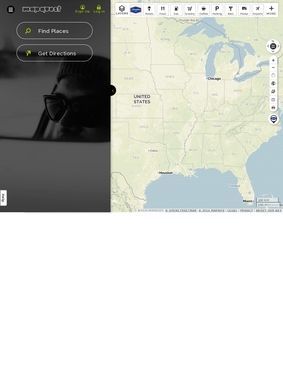
Type two place names into MapQuest and you get turn-by-turn driving directions, an estimated route, and the option to reroute in real time if the road ahead clogs up. That core function, the one most people came for years ago, still works without a fuss. The consumer site at mapquest.com keeps the things a casual user expects: interactive maps you can drag and zoom, place search for finding a restaurant or a hardware store, and route planning that lets you string a few stops together before you leave the house. There is also a layer of recommendations and reservations for dining and travel, which pushes the product a little past pure navigation and into the territory of deciding where to go in the first place.
Navigation and route planning
What surprised me when I looked past the familiar map interface was how much of the operation sits on the developer side. The platform serves roughly 350,000 developers and around 30 million monthly users, numbers that point to a brand that quietly became infrastructure for other people's apps while the public mostly remembers it as the printout-directions site from the early web. The geospatial work has been running for more than 25 years, and the company behind it, Mapquest Holdings LLC, operates as part of System1. That longevity carries a real argument: this is not a recent entrant guessing at how mapping should work.
Developer platform and infrastructure
The tooling at developer.mapquest.com and platform.mapquest.com is where the depth shows. The catalogue covers geocoding in forward, reverse, and batch forms, a directions API, static and interactive map tiles, a search API, and traffic data, plus a JavaScript and mobile SDK for building the whole thing into a native app. For anyone who has wrestled with stitching together location features, having geocoding, routing, and tiles from one provider under one key removes a fair amount of plumbing. API keys are issued at sign-up, so a developer can be testing calls the same afternoon they decide to try it.
APIs and tools for location services
Pricing is tiered across Pay-as-you-go, Basic, Plus, Business, and Business Plus, which gives a hobbyist room to experiment at low or no cost and gives a company a path to scale without renegotiating from scratch. The spread of plans reads like a product that expects very different kinds of customers: a solo developer wiring up a store locator, and an enterprise pushing millions of geocoding requests through a logistics system. The batch geocoding option is the sort of feature that appeals to a business with a backlog of addresses to clean up rather than a single lookup to perform. MapQuest also surfaces in the local-business directory space through its place-search layer, and the results there draw from the same geocoding infrastructure, so the data quality is consistent across consumer and API use cases.
Pricing plans for different user types
One smaller piece is worth flagging because it costs nothing and asks little: the free "Link to MapQuest" service that lets a third-party site embed an interactive map. For a small business or a blogger who just wants a working map on a contact or events page, that is a low-effort way in, no SDK integration required. It is the kind of offering that keeps the brand present on sites that would never sign up for a full API plan.
Embedding maps on third-party sites
The breadth does raise a fair question about focus. A platform trying to be a consumer navigation app, a dining-recommendation engine, and an enterprise location-intelligence vendor at the same time is carrying a lot. In practice the two halves serve genuinely separate audiences, and the consumer site does not feel weighed down by the API documentation that lives on a different subdomain. A general user planning a road trip never has to think about geocoding tiers, and a developer building a delivery app does not need the restaurant reservation flow. The separation works because each side is reachable on its own terms.
Consumer app versus developer platform
Where I would temper expectations is novelty. The consumer experience is competent and clean, but the market it competes in is dominated by mapping products bundled into phones and search engines, and MapQuest does not obviously do anything those cannot. Its real argument is on the platform side, where being an independent, long-standing provider of geocoding and routing APIs is a meaningful position, especially for teams that prefer not to build their location stack entirely on a single dominant ecosystem. The mobile app extends the consumer features to phones, which keeps parity with the category rather than a leap past it.
Testing accuracy before committing
For a developer evaluating providers, the most useful test is running a few hundred real addresses through the batch geocoder and checking the directions API against routes they actually drive, because that is where accuracy and freshness either prove out or do not, and the published documentation does not settle that question. The tiered pricing at least makes that trial cheap to run. The consumer side needs no such trial: it does what it says, the search finds places, and the directions arrive.
Strengths as a geospatial provider
So the verdict splits along the same line the product does. As a free, no-account way to pull up a map or plan a route, MapQuest remains perfectly serviceable, if no longer the default most people reach for first. As a developer platform, it is the more compelling proposition: a mature geospatial toolkit with a sensible pricing ladder and an unusually long track record, and it deserves a place on the shortlist for anyone weighing location APIs against the better-known alternatives. MapQuest is steady and capable across both faces, strongest where its experience counts most, and least distinctive exactly where the rest of the field is most crowded.