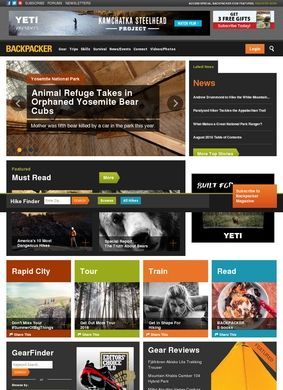
An afternoon before a long hike usually comes with a shortlist of trails a hiker only half trusts, a daypack that might be a size too small, and a nagging worry about the weather turning once the trail gains altitude. That is the moment Backpacker Magazine is built for. The site, running at backpacker.com under the Outside Inc. umbrella, pulls gear reviews, trip guides, and survival know-how into one place aimed squarely at people who are about to put boots on dirt and would rather not learn the hard way.
The front page of Backpacker Magazine reads like a table of contents for the outdoors. Gear, Trips, Skills, Survival, News and Events, Videos, Stories, Deals, a standalone Gear Guide. Each is a doorway into a different corner of the same obsession, and the sheer number of them signals a full publication rather than a blog with a few posts.
Gear is the heaviest section, and it is where the magazine does its most useful work. Reviews run across backpacks, tents, sleeping pads, socks, shoes, and daypacks, the unglamorous kit that quietly decides whether three days out are comfortable or miserable. A lot of it comes out of gear-testing lab reports, which is the line between a paid placement and a measured opinion, and that line is the whole reason a reader trusts a recommendation before spending a few hundred dollars on a shelter.
The catalog is deep enough that a reader shopping for a specific item, a three-season tent or a pair of trail runners, can usually find it covered, and the reviews tend to name the conditions the gear was tested in instead of trading in adjectives.
Gear reviews and the trail-planning shelf
Trip planning sits right next to the gear, which is the sensible place for it. Destination and trip guides, including a running annual feature naming the best hikes worth taking, give readers somewhere to point all that freshly reviewed equipment. Backpacker Magazine treats the two as halves of one task: work out where the trip is headed, then work out what to carry once there.
The tone stays practical throughout. A guide names trails and mileage, not moods. That annual feature does real work for a reader planning a season, pointing them at specific routes with enough concrete detail to turn a vague ambition into a booked permit and a packed bag. Trips and Gear feed each other this way, and reading them side by side is closer to planning with a knowledgeable friend than scrolling a listicle.
What holds the whole thing together is a point of view about the outdoors as something to do rather than something to look at. The photography is there, but the words are doing the heavy lifting, and they assume a reader who wants specifics.
Gear tested in the lab
The lab reports are the strongest card in the deck. When Backpacker Magazine says a sleeping pad holds its loft or a boot drains well, the claim is credible because someone weighed it, soaked it, and slept on it first.
Socks and shoes get the same scrutiny as flashier items like tents and backpacks, which counts for a lot, because a blister ends a hike faster than a snapped pole ever will. I have chased enough contradictory star ratings across retail sites to value a single tested verdict, and testing is where this site plainly pays its way.
Skills, survival, and trail news
Past the gear, the Skills and Survival sections handle the things that keep a trip from going sideways. Cooling-down techniques for brutal heat, altitude and oxygen testing, the small competencies that separate a hard afternoon from an emergency call. The News and Events feed runs alongside, covering trail deaths, wildfires, and National Park Service policy, with wildlife stories that lean more toward reading than doing.
That news coverage does real work beyond the headlines: a wildfire closure or a shift in park policy can rearrange a trip a reader has spent months planning, and having it filed next to the trail guides keeps the practical and the topical in one place. It is a wider brief than gear alone, and Backpacker Magazine carries the range without spreading itself thin.
Videos and Stories round out Backpacker Magazine for readers who want the trail without the packing checklist. They are the softer edge of a site that mostly wants to be useful.
What it costs to read all of it
None of this comes entirely free. Backpacker Magazine pushes a paid membership hard, with a pitch to save thirty percent on unlimited access to the site, its maps, and more. The subscription is the business model, and the site makes no secret of it. Anyone who reads a lot of this content will run into the wall soon enough.
That wall has teeth. A straight visit to the front page can fall into a login and authorization redirect loop routed through the Outside accounts system, which means a casual reader may meet a sign-in gate before reaching the article they came for. The membership also folds Backpacker Magazine into the broader Outside Plus bundle, so a single subscription buys access to more than this one title. Whether that is generous or just a bigger paywall depends on how much of the bundle a reader will ever touch.
A committed hiker who also skis or climbs may get real value from the spread; someone who only wants the hiking coverage is paying for a lot of rooms they will never walk into.
Contact information is the soft spot. Across the pages that loaded, no phone number, email, or street address showed up. The navigation is all editorial and commercial: Gear, Trips, Deals, and the subscription upsell, with no contact tab surfaced in what was retrieved. A footer contact route probably exists, the way it does for most publications this size, but a reader should not expect to reach a human quickly. For a media brand the size of Backpacker Magazine that is a minor complaint. For someone trying to reach a specific editor, less so.
Outside reputation splits in a telling way. On Yelp, Backpacker Magazine sits at a bleak one star from five reviews, filed under print media and marked unclaimed, which reads more like a handful of annoyed subscribers than a considered verdict on the journalism. Goodreads tells a warmer story, though about a different thing entirely. The brand's published guidebooks average 4.16 across 482 ratings, with a title like Backpacker Long Trails pulling 4.37 from more than two hundred readers. Those are book reviews, not website reviews, and the distinction is worth holding onto.
Indeed carries employee reviews of Backpacker Magazine as a workplace, though no score came through in the snippet. Beyond those three, the usual consumer platforms stay quiet. No Trustpilot, no Google rating, no Facebook or Tripadvisor number turned up for the publication itself, which for an outfit this well known is a little surprising.
So the visible numbers measure three separate things at once: five people genuinely cross with the magazine on Yelp, hundreds of readers happy with its books on Goodreads, and staff weighing in on Indeed. Stacked together they say less about whether the day-to-day site is worth reading than either figure suggests alone.
The guidebook ratings are the closest honest proxy for editorial quality, and they are strong. A reader deciding whether the writing is any good would do better to weigh those 482 book ratings than the five furious ones on Yelp, since the books are the same editorial voice under a cover.
The Yelp page for Backpacker Magazine, meanwhile, is still unclaimed: one star, five reviews, sitting there with nobody from the publication having answered a single word of it.