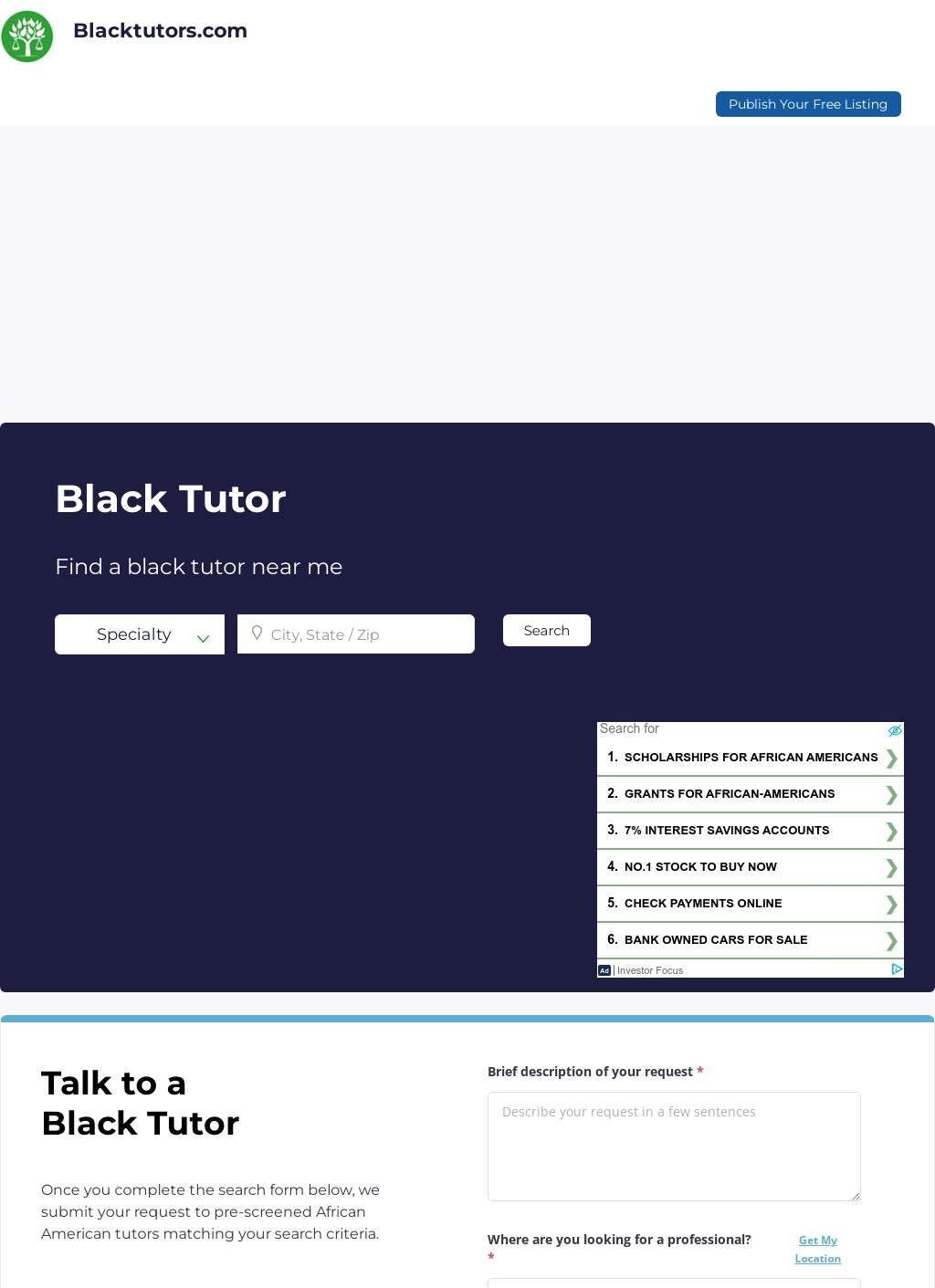
What does a student get when they land on Black Tutors instead of typing a generic search into a browser? A shortlist of African American tutors and teachers who have already been screened before they ever appear in the results. That is the whole premise here, and Black Tutors is built around it. A student, parent, or adult learner fills in a short request form describing what they need help with, and the platform passes that request along to tutors who match. No cold trawling through a hundred profiles, no wondering whether the person on the other end is who they claim to be. The screening happens first.
How the platform matches students with tutors
The subject coverage is broader than the name might suggest at a glance. Black Tutors sorts its listings into academic tutoring, in-person tutoring, language tutoring, online tutoring, STEM tutoring, and test preparation. Those are the practical buckets most families actually think in: help my kid with algebra, get me ready for a standardized test, find someone local who can sit at the kitchen table, or set up something over video because the good match lives three states away. Geographically the reach is national, with tutors spread across more than thirty major US cities including New York, Los Angeles, Chicago, Atlanta, and Miami. So a family in one metro is not stuck with three names while someone in a bigger city gets fifty. The spread is the point.
Academic subjects and geographic coverage
Worth being clear about what Black Tutors is and is not. It does not employ the tutors or deliver the lessons itself. It is the connective layer, run by Heritage Web LLC, that sits between a person who needs teaching and the people who provide it. That model lives or dies on the quality of its vetting, and the About page is where Black Tutors tries to earn that trust.
Vetting and credential verification
It says listings are manually reviewed and that licenses are verified both at the point of submission and again on an annual basis. Annual re-verification is a more serious commitment than a one-time check at signup, because credentials lapse and a directory that never looks again slowly fills with stale entries. Whether every listing genuinely gets that yearly pass is something an outsider cannot audit, but stating it as policy at least sets a standard the platform can be held to.
Annual license re-verification process
Black Tutors runs as a two-sided operation, and the tutor-facing half is spelled out on the Pricing page. Teachers and providers who want to be listed can start on a free tier and move up to paid tiers, billed either monthly or annually. That structure tells you something about incentives. A free entry point means the directory can grow without a paywall keeping smaller independent tutors out, while the paid tiers presumably buy more visibility or features for those willing to invest in being found.
Pricing tiers for tutors
Once inside, a tutor gets a dashboard covering their profile, their listings, and a referral system. The referral piece is a quiet but sensible touch, since good tutors tend to know other good tutors, and a directory that rewards them for bringing peers in can improve its own supply faster than paid marketing would. There is also a search and browse directory on the student side, so a person who prefers to look through tutors directly rather than wait on a matched request has that option too. A newsletter signup rounds out the account-level features for people who want to stay in the loop without checking back constantly.
Dashboard features and referral system
One item on the legal side deserves a plain mention because Black Tutors itself discloses it. The Legal Disclaimer notes that the company may receive compensation for endorsements or reviews of listed products and services. That is a normal arrangement for a directory that monetizes listings, and the honest move is that Black Tutors puts it in writing where a careful reader can find it. It does mean a visitor should treat any on-site promotion with the same healthy skepticism they would bring to any paid placement, and give the direct conversation with a tutor the final say when deciding.
Disclosure of paid endorsements
The contact setup is the part most likely to give a cautious user pause. There is a Contact page, but following it leads mainly to a help center and FAQ hosted at help.heritageweb.com, and the homepage itself does not put a phone number, a direct email, or a mailing address in front of you. For Black Tutors, whose entire job is matching people with local teachers, a more visible direct line would strengthen the sense that a human is reachable when a match goes sideways. The help center is a reasonable first stop for common questions, and the request form is itself a contact channel, but someone who wants to speak to a person before entrusting their child's education to the process may find the front door quieter than they would like.
Contact options and support channels
Independent feedback is where things get sparse. A search across the usual review platforms turns up no third-party coverage on Google, Trustpilot, Yelp, BBB, or similar. What surfaces is the site's own pages, its About, Pricing, Contact, Terms, and Disclaimer sections. That absence cuts both ways. It means no pattern of complaints has accumulated in public, which is not nothing, but it also means a prospective user cannot lean on a crowd of prior customers to confirm that the matching actually delivers. Black Tutors does maintain a presence on Facebook, X, LinkedIn, and Instagram, so there is a public face and a way to gauge how active the operation is, even if star ratings from third parties are not part of the picture.
Absence of third-party reviews
The narrow focus is what gives Black Tutors its shape. It has picked a clear audience and a clear promise: connect students and families with pre-screened African American educators, across a defined set of subjects and a real list of cities. For a Black family that specifically wants a tutor who reflects their child's background, or for any student who values that representation in a mentor, the appeal is concrete and easy to point to. The manual review and annual license checks, if honored, give the vetting some teeth. The free tier for tutors gives the supply side room to fill in.
Is Black Tutors right for you?
Where does that leave a person deciding whether to use it? For a parent hunting for a tutor who shares their child's heritage, or a tutor from that community looking for a low-cost way to be found, Black Tutors is a reasonable bet. The sensible next step is to submit the search-request form with as much detail as possible about grade level, subject, and whether in-person or online suits better, then use the reply to interview the matched tutor directly and confirm credentials yourself. Ask the tutor about their experience with the specific subject, request references, and treat the platform's screening as a helpful filter to build on, not a substitute for your own judgment. The infrastructure is here. The rest comes down to the conversation the match sets up.