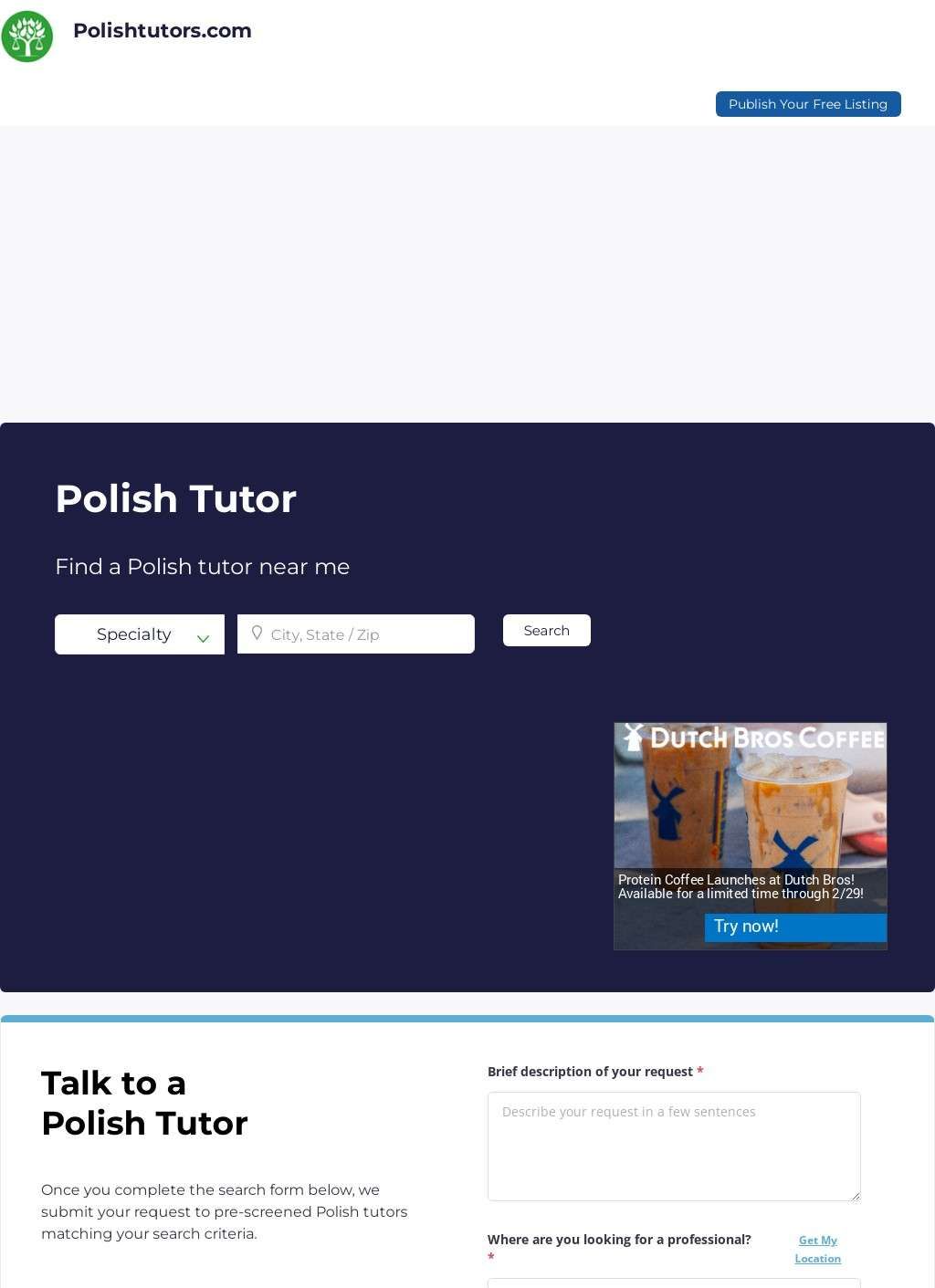
Polish Tutors is a U.S.-based matching service that pairs learners with pre-screened tutors of the Polish language. It does not run lessons itself or take bookings on the spot. A student fills in a short request form (name, phone, email, and a description of what they need help with), and the platform routes that request to suitable tutors who then make contact. The stated turnaround for a response is within two business days, which sets a reasonable expectation without overpromising same-day results.
How the matching process works
The categories on offer go wider than a single subject. Listed tutoring types include academic, language, online, in-person, STEM, and test preparation, so a parent looking for homework support and an adult preparing for an exam are both addressed by the same intake. Geographic reach is spread across major U.S. cities, with New York, Los Angeles, and Chicago named, plus coverage extending into Canada and Poland. That last detail is worth pausing on: a service centred on Polish naturally draws people with ties to Poland, and including the country itself in the coverage map fits the audience well.
Tutoring types and geographic coverage
One structural point shapes how the whole thing should be read. Polish Tutors runs under the Heritage Web network, with its help center sitting at help.heritageweb.com. That points to a family of subject-specific tutor marketplaces built on a shared platform, so this is one of several sites cut from the same template, not a lone agency that grew up around Polish instruction. The practical upside is consistency: the request flow, the verification badges, and the tutor onboarding all behave the way they would on the network's other sites. The trade-off is that none of it is bespoke to Polish, and a learner hoping for deep, language-specific curation should temper that expectation.
Heritage Web network platform
Supply on a marketplace like this depends on how easily tutors can join, and Polish Tutors keeps that side simple. Tutors can request a free directory listing on the site, which lowers the barrier to building up a roster and helps explain how a niche-language service can claim presence across several cities. Free entry tends to grow numbers quickly, though it also puts more weight on whatever screening sits behind the scenes. A student never sees that recruitment side; what reaches them is a curated shortlist, and the work of turning open sign-ups into a usable match is exactly what Polish Tutors takes on.
Tutor screening and verification
That is where the "Verified listing" indicators come in. Tutor profiles on Polish Tutors carry verification markers, and the site describes its tutors as pre-screened before they reach a student's shortlist. The exact bar for verification is not spelled out where a visitor can read it, so a prospective student is taking the badge at face value. Still, a visible marker beats a raw, unfiltered list, and it gives the matching step something to stand on. It also marks the difference between Polish Tutors and a plain classifieds board, where anyone could post with no check whatsoever.
Direct booking with individual tutors
Because Polish Tutors hands off the actual booking, the relationship a learner forms is ultimately with an individual tutor, not the platform. The site is the introduction layer. Anyone using it should plan to vet rates, scheduling, and teaching style directly with the person they get matched to, since those particulars are settled off-site between the two parties. That is a normal arrangement for a referral marketplace, and Polish Tutors is upfront that it does not book sessions directly, which is the honest way to frame what the form really starts.
Contact options and response time
On reaching the company, the picture is functional rather than generous. A contact page exists, and links to Facebook, X, LinkedIn, and Instagram are present, so there are channels beyond the form. The form is the primary route, and the site shows no phone number or published email address. For a service whose whole model runs on submitting a request, leaning on a form is internally consistent, and the two-business-day commitment at least tells a visitor what to expect after hitting submit. Someone who wants to speak to a human first will find that harder here, and that is worth weighing if the need is urgent.
Lack of independent reviews
External feedback is where the picture goes quiet. A search for reviews of polishtutors.com turns up nothing specific to the site; queries for "Polish Tutors reviews" surface rival platforms such as Wyzant, Preply, and Superprof instead of feedback on this one. There is no record of complaints to point at, but there is also no independent body of student experiences to confirm that the matching works or that the verified tutors deliver. A learner is going on the platform's own presentation and the credibility of the Heritage Web network behind it, with no third-party account either supporting or undercutting that.
Comparison with larger marketplaces
Set against direct competitors, the positioning is clear enough. Wyzant, Preply, and Superprof are broad, high-volume marketplaces; Polish Tutors narrows the field to one language and handles the introduction by hand through a request form instead of an instant-booking catalogue. For someone who specifically wants Polish and would rather describe their situation and be matched than scroll a list of profiles, that focus is the draw. The flip side is fewer points of comparison, since the larger platforms carry visible review counts and Polish Tutors does not.
What the site delivers, then, is an intake form, a network-backed verification badge, a spread of tutoring types, and coverage across U.S. cities plus Canada and Poland, with a promise to respond inside two business days and no public phone line or published email attached to the landing page.