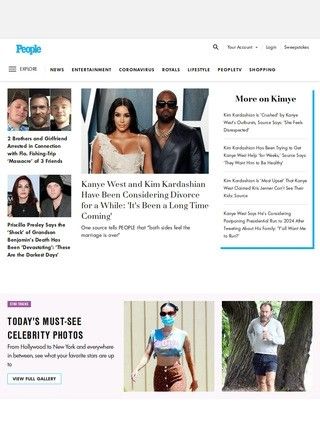
Product picks at PEOPLE.com: Lifestyle are run through actual labs. The section backs its recommendations with a program called PEOPLE Tested, where items get evaluated across three testing facilities, with chefs, makeup artists, interior designers, and medical professionals weighing in depending on the category. That is a sharper standard than celebrity-adjacent outlets typically bother with, and it changes how you read the shopping content. When a face cream or a kitchen knife shows up in one of these guides, there is at least a stated process behind why it made the cut, instead of a writer's say-so dressed up as a verdict.
How PEOPLE Tested works
PEOPLE.com: Lifestyle sits under the broader People brand, which has been around since 1974 and now runs as a flagship property of Dotdash Meredith. Lifestyle is the umbrella for six recognizable beats: Health, Parenting, Style and Fashion, Food, Home, and Travel. Each one pulls in news pieces, celebrity-sourced features, photo galleries, and the kind of buying guides described above. The mix tracks with what the title has always done, which is take the engine that covers famous people and point it at everyday concerns like what to cook, where to take the kids, and how to fix up a room.
Six lifestyle sections under one umbrella
Celebrity sourcing is the thread running through all of it, and that is the honest description of the editorial angle. A health story is often anchored to a public figure's experience. A food piece might lean on an actor's go-to recipe. This is not a knock; it is the brand's whole reason for existing, and it does the job of making lifestyle advice feel less abstract. A parenting feature carries differently when a recognizable name is the one talking.
Celebrity sourcing as editorial strategy
The flip side is that the celebrity hook can crowd out plainer, service-first reporting, and a reader who just wants the practical version sometimes has to read past the famous name to get to it. No standalone consumer ratings for PEOPLE.com: Lifestyle surface on review aggregators; what reputation tracking exists is tied to the parent brand, which has its own long-established footprint in mainstream media.
Testing rigor versus broader content
This is the part worth pressing on. PEOPLE.com: Lifestyle leans hard on the testing program in its commerce content, and that rigor is genuine where it applies. The problem is that the labs cover products, while a large share of what the Lifestyle section publishes is not a product at all. Travel dispatches, royals coverage, parenting essays, and human-interest stories run on conventional editorial judgment, the same as any large outlet. The tested badge does not extend to them, nor should it pretend to.
So the credibility of the section is really two different things wearing one banner. The shopping guides have a verifiable method. The rest is well-staffed mainstream journalism with the usual celebrity orientation. A reader who comes in expecting the lab standard to govern everything will be reading more into the brand than the brand claims. That gap is not hidden, exactly, but the testing program is the loudest selling point, and it does a lot of work shaping how trustworthy the whole section feels.
Worth saying plainly: the scope is wide. PEOPLE.com: Lifestyle is not a niche resource. It spans health through home through travel, and it also bleeds into the site-wide coverage of royals and true crime, since the magazine runs those threads everywhere. For someone browsing, that breadth is convenient. For someone who wants depth on one subject, it can feel like the section is a mile wide and the genuinely tested material is a narrower band inside it.
Inside the mobile app shift
The audience question got more interesting when the publisher rolled out a standalone mobile app built around a vertical scrollable feed clearly aimed at younger readers. That move says something about where the brand thinks its growth is. PEOPLE.com: Lifestyle on the desktop site still reads like a traditional magazine section, organized by topic and gallery, but the app pushes toward the short, swipeable format that competes for the same attention as social platforms.
Whether that shift helps or dilutes the Lifestyle content is an open question. A vertical feed rewards quick hits and strong images, which suits celebrity-driven lifestyle material well. It is less obviously suited to the longer testing write-ups, where the value is in the detail of how something was evaluated. There is a real chance the app version flattens the distinction between the carefully tested recommendations and the lighter scroll-bait, which would undercut the one thing that sets the section apart.
On access, the model is straightforward. The site is free and ad-supported, so anyone can read the bulk of PEOPLE.com: Lifestyle without paying. People also sells a print and digital magazine subscription on top of that for readers who want the full publication. Nothing here is gated in a way that would frustrate a casual visitor, which fits a property that reaches tens of millions of readers a month and depends on that scale.
For practical use, the smart move is to treat PEOPLE.com: Lifestyle as two resources at once. The PEOPLE Tested guides are worth consulting when shopping in one of the covered categories, because the method behind them is stated and specific. The rest, the features and the celebrity-anchored pieces, is enjoyable, professionally produced, and squarely in the brand's lane, but it should be read as mainstream lifestyle journalism, not as something held to the lab standard. Keeping those two registers separate is the key to getting value out of the section without overrating it.
The food and home beats are probably where the tested approach pays off most, since those are categories with chefs and interior designers in the testing mix and clear right answers about whether a pan sears or a sofa holds up. Health is trickier. The presence of medical professionals in the program is reassuring on product reviews, but health content that runs as a celebrity story rather than a tested recommendation carries the usual caveats of any consumer media outlet covering wellness, and the section does plenty of the celebrity-story kind.
That tension never fully resolves. The section has a long institutional track record and a testing program that genuinely sets it apart in the commerce space, yet the same banner covers a great deal of content operating on entirely different rules, and the brand's instinct, reinforced by its younger-skewing app, runs toward the scrollable and the celebrity-fronted. Which side wins out as the format shifts is the thing I cannot call, and it is the doubt a careful reader should carry into PEOPLE.com: Lifestyle rather than assume the tested standard speaks for the whole.