Records the government keeps forever
Most records the federal government creates are eventually destroyed on a fixed schedule. A small fraction, somewhere between two and five percent, is judged to have lasting legal or historical value, and those are the records that come here for permanent keeping. The National Archives and Records Administration is the agency Congress made responsible for that judgment and for the custody that follows. It appraises what should survive, takes legal title to it, describes it, stores it under controlled conditions, and makes it available to almost anyone who asks, usually at no charge.
The agency began as an independent body in 1934, by which point the cornerstone of its first building in Washington had already been laid. For several decades after 1949 it operated inside the General Services Administration. Congress restored its independence in 1985, and since then it has answered to the Archivist of the United States, a position confirmed by the Senate.
The scale of the holdings
The numbers are hard to picture. Textual holdings run past thirteen billion pages. Alongside the paper there are tens of millions of photographs, hundreds of thousands of reels of motion picture film, sound recordings, maps, architectural drawings, and a growing body of electronic records that includes email, databases, and archived websites. The online Catalog now describes well over one hundred million items, and staff add to it constantly. Not everything has been digitized, and the agency is careful to say so: the Catalog is a finding aid to what exists, not a copy of all of it.
How the collection is arranged
Records are grouped by the office that created them rather than by subject, an arrangement archivists call provenance. Someone looking for immigration files, for example, works through the record group of the agency that kept those files, not a topical folder labeled immigration. Keeping the original order intact matters when a document's authenticity or chain of custody is ever questioned, which is the whole point of an archive as opposed to a library.
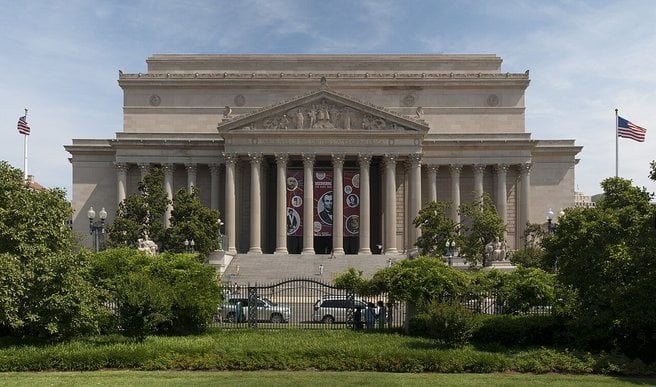
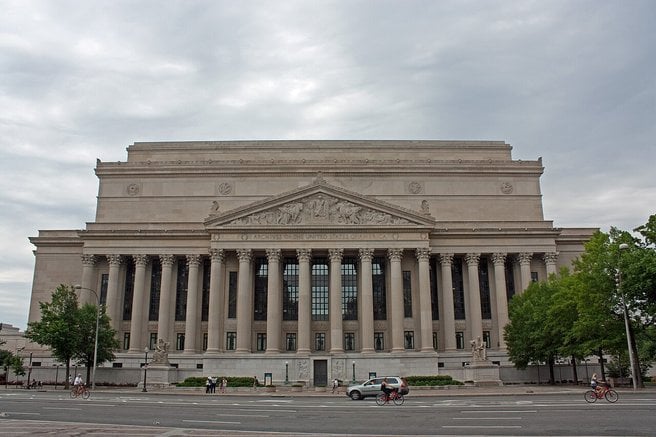
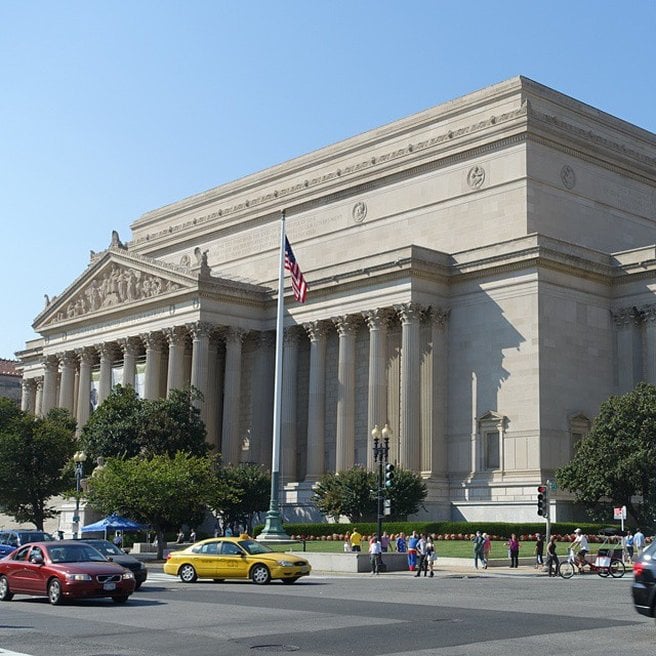
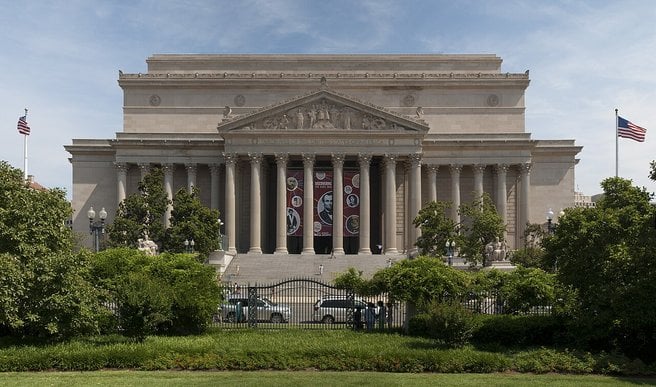
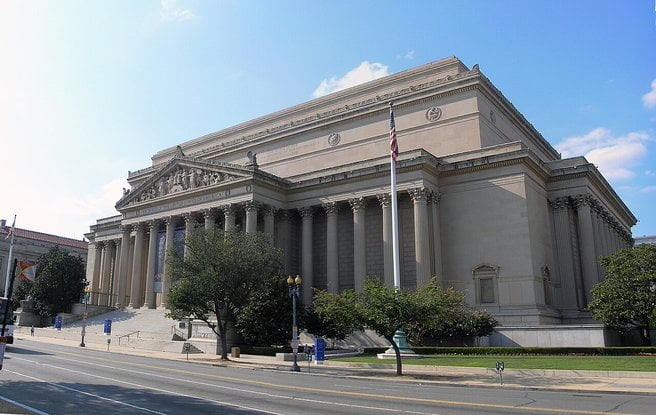
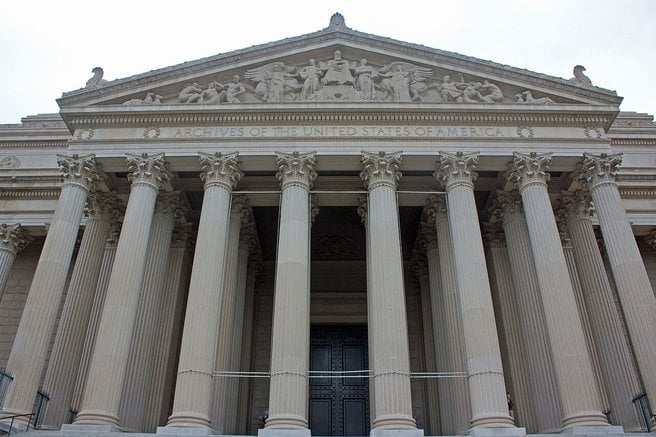
The physical operation is spread across the country. The original National Archives Building in Washington, often called Archives I, holds much of the most heavily used older material and the public exhibits. A second large facility, the National Archives at College Park in Maryland, opened in 1994 and took in a great deal of the modern record, including military service files, State Department records, and audiovisual holdings. Beyond those two are research centers in cities from Boston to San Francisco, the National Personnel Records Center in St. Louis for military and civilian service files, and fifteen presidential libraries holding the papers of presidents from Herbert Hoover forward.
The Charters of Freedom
The Rotunda of the Washington building displays the founding documents the agency calls the Charters of Freedom: the Declaration of Independence, the Constitution, and the Bill of Rights. They rest in sealed cases built to shield the parchment from light and air, and they are lowered into a vault below the floor each night. The Emancipation Proclamation joins the permanent display in 2026. Admission is free, and the exhibit is among the most visited in Washington.
The work beyond the stacks
Custody is only part of the mandate. The Office of the Federal Register, part of the agency, publishes the Federal Register on every working day along with the Code of Federal Regulations, which is how new rules and presidential documents receive official public notice. The agency also handles the Electoral College paperwork, receiving and preserving the certificates that record each state's electoral votes.
Two other functions sit here for reasons of independence. The Information Security Oversight Office watches over how the government classifies and declassifies national security information, and the National Declassification Center works through the backlog of older classified files. The National Historical Publications and Records Commission, the agency's grant-making arm, funds archives, historical societies, and documentary editing projects in every state, which is part of why so much American historical material outside Washington has been preserved and published at all.
Using the records
To the public, this is best known as the place genealogists and historians go. Census schedules, ship passenger lists, naturalization papers, military service and pension files, and federal land records all live in the system, and much of the most requested material has been digitized, some of it in partnership with subscription websites and some through the agency's own Catalog. A crowdsourcing program invites volunteers, called Citizen Archivists, to transcribe and tag scanned pages so they turn up in searches. Founders Online, another project, puts the complete correspondence of the early presidents and framers on the open web at no cost.
Because it holds the primary sources most American history is written from, the agency has a plain place in a directory category devoted to history. Researchers, teachers, and family historians tend to arrive here sooner or later, since this is where the original evidence is kept rather than a secondhand account of it.
Where to find it
The headquarters is at 8601 Adelphi Road, College Park, Maryland 20740-6001, which is also the address of the College Park research facility. The flagship exhibits and much of the older record are held at the National Archives Building, 700 Pennsylvania Avenue NW, in Washington, D.C. General questions, research appointments, and records requests go through one public line, 1-866-272-6272, and written inquiries can be sent to inquire@nara.gov. Anyone tracing a family history, checking a federal regulation, or wanting the original text of a founding document can begin at either address or by phone.
Verified social profiles
Business address
National Archives and Records Administration
8601 Adelphi Road,
College Park,
Maryland
20740-6001
United States
Contact details
Phone: +1 866-272-6272