The department of musical instruments at a major art museum
The Metropolitan Museum of Art in New York keeps one of the largest and most varied collections of musical instruments held by any museum. The instruments belong to a dedicated curatorial department within the wider museum, which was founded in 1870 and sits on Fifth Avenue facing Central Park. The department holds roughly 5,000 instruments drawn from six continents and the Pacific Islands, ranging from ancient examples to instruments made in the last century. Because these objects are collected, studied, preserved, and shown as instruments rather than only as decorative art, the department is a clear reference point for a category about musical instruments.
The collection is unusual for an art museum in that it treats the instrument as a made object with a working purpose. Curators record how each piece was built, who made it, where it came from, and how it was played, so a single flute or lute carries both its physical description and an account of its use. This approach means the galleries can be read as a survey of how people around the world have shaped wood, metal, skin, and string into tools for making sound.
How the collection began and grew
The department traces its start to a gift made in 1889 by Mary Elizabeth Adams Brown, who donated more than 270 instruments on the condition that she be allowed to keep collecting for the museum. She did exactly that for the next three decades. By the time of her death in 1918 the holding she assembled, known as the Crosby Brown Collection, had grown to more than 3,600 instruments representing many cultures and periods. That founding gift set the pattern for a department that would gather instruments from across the world rather than from a single country or tradition.
Later gifts, purchases, and bequests added to the collection until it reached its present size. The museum continued to acquire European and American instruments alongside pieces from Asia, Africa, and the Americas, and it kept documentation on each. The result is a holding that lets a visitor compare, for example, a keyboard instrument from Renaissance Italy with a stringed instrument from East Asia within the same set of galleries.
The Andre Mertens Galleries
The instruments on public view are shown in the Andre Mertens Galleries for Musical Instruments, the department's permanent display space. The galleries reopened in February 2019 after a multi-year renovation, with more than 600 instruments arranged across more than 13,000 square feet on the museum's upper level. The display groups instruments in ways that let a visitor trace families of instruments and follow how forms changed over time and across regions. Only a fraction of the full 5,000-object collection can be shown at once, so the galleries present a selection while the remainder is held in storage and study areas.
Notable instruments
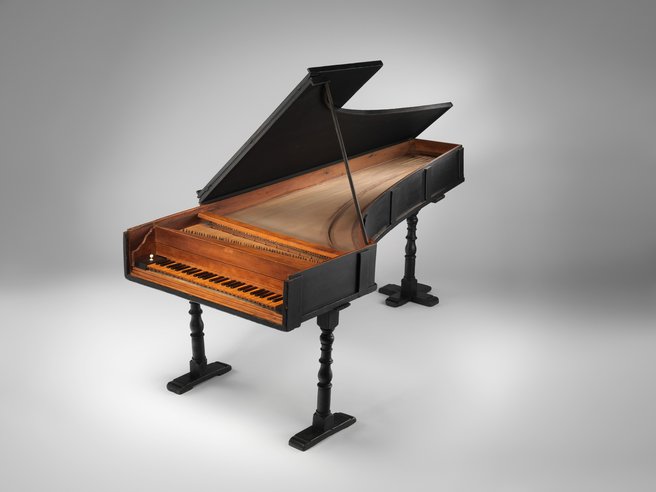
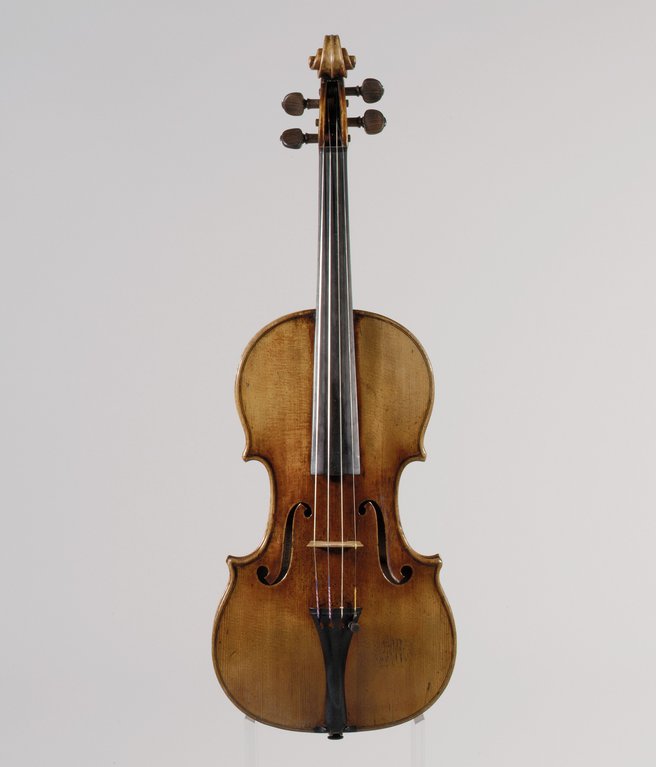
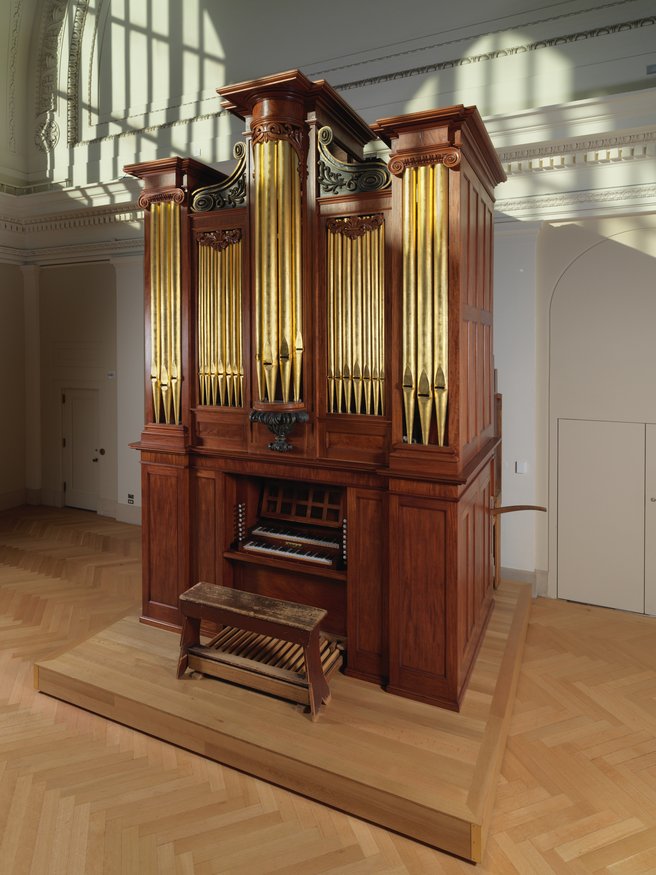
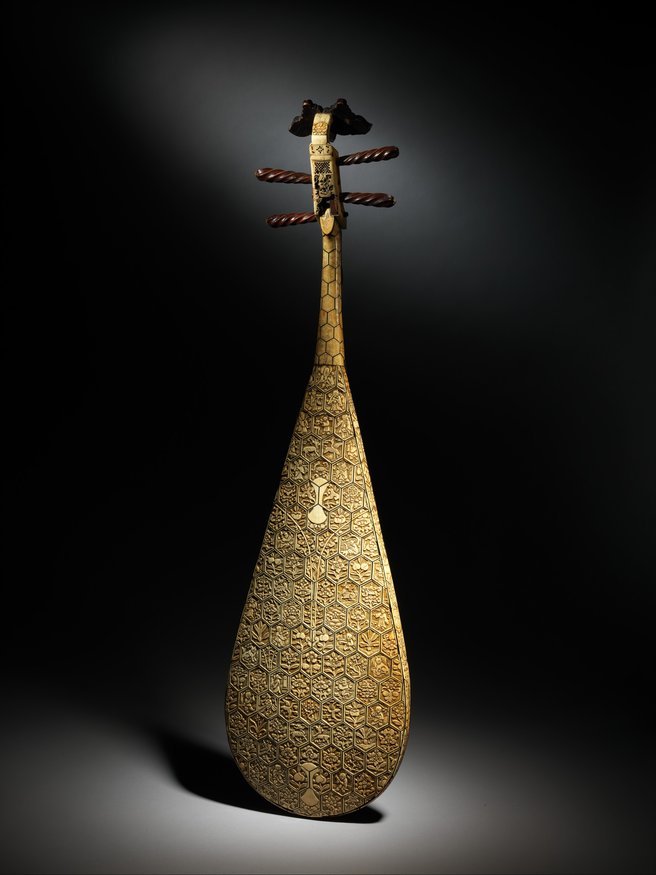
Several individual pieces are widely cited. The oldest surviving piano is here, built by Bartolomeo Cristofori in Florence around 1720; Cristofori is credited with inventing the piano, and this example documents the instrument near its origin. The department also holds violins by Antonio Stradivari, the maker whose name is attached to some of the most valued stringed instruments ever produced. Other highlights include a Ming-dynasty pipa decorated with ivory plaques and an American pipe organ built by Thomas Appleton in Boston in 1830. These objects draw visitors who want to see instruments known from recordings and histories in person.
Study, care, and access
Beyond display, the department does the work expected of a research collection. Curators and conservators examine instruments to learn how they were constructed, treat fragile parts, and control the conditions of storage so that materials such as gut, hide, and thin wood do not deteriorate. The museum publishes catalogs and articles on the collection, and it has at times arranged for instruments to be played or recorded so that their sound can be studied and shared. This scholarly side is part of why the collection is used as a reference by makers, players, and historians.
The instruments sit within one of the world's most visited art museums, which means they are seen alongside paintings, sculpture, arms and armor, and other departments under one roof. A visitor to the galleries encounters the instruments in a museum setting rather than a concert one, with labels and, in places, audio that connects an object to the music it produced. The department also supports friends' groups and programs that bring performers and researchers into contact with the collection.
The Metropolitan Museum of Art is at 1000 Fifth Avenue in New York, New York, postal code 10028, at the eastern edge of Central Park on the Upper East Side. General information is available by telephone at +1 212-535-7710. The main building, known as The Met Fifth Avenue, is open most days, and the musical instrument galleries are included with general admission. For a category devoted to musical instruments, the department is one of the standard examples: a large, well-documented collection, gathered over more than a century, that preserves and displays instruments from many cultures in one place.
Business address
The Metropolitan Museum of Art
1000 Fifth Avenue,
New York,
New York
10028
United States
Contact details
Phone: +1 212-535-7710