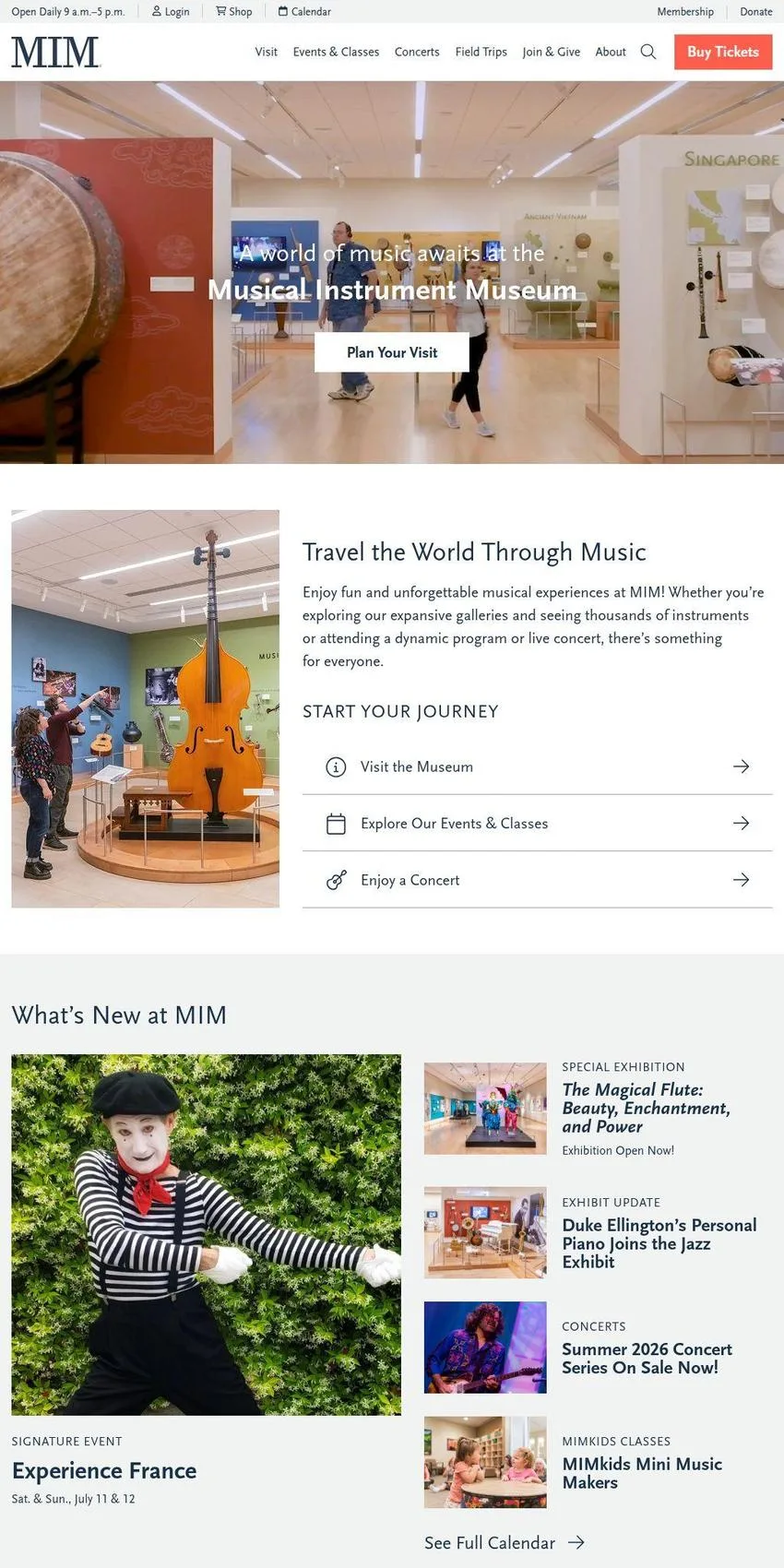
A museum built around the world's musical instruments
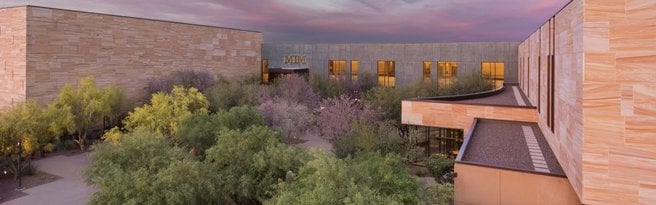
The Musical Instrument Museum, known as MIM, is a nonprofit museum in Phoenix, Arizona, devoted to musical instruments from across the globe. It opened in April 2010 and holds more than 15,000 instruments and related objects gathered from nearly 200 countries and territories, covering every inhabited continent. The building runs to roughly 200,000 square feet across two floors, which makes it the largest museum of its kind anywhere. Construction cost more than 250 million dollars, and the museum was planned from the start to hold instruments from every part of the world rather than a single region. Its founder was Robert J. Ulrich, a former chief executive and chairman of Target Corporation, whose visits to instrument collections in Brussels and Paris shaped the plan for a museum on this scale.
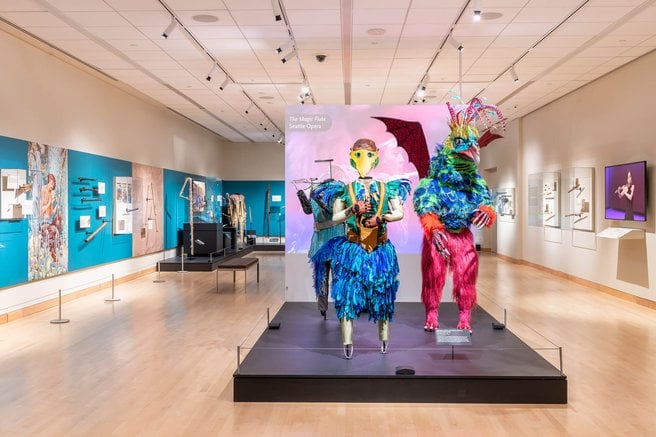
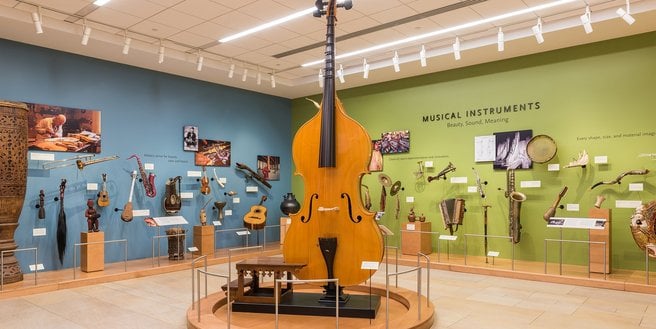
The reason the museum sits within a category about musical instruments is direct. Almost everything on display is an instrument, a part of one, or an object used to make or play music. Rather than treating instruments as isolated art objects, the museum presents most of them alongside recordings and film of the instrument being played in its home setting, so a visitor can connect the object to its sound and its use.
How the collection is arranged
The permanent collection is organized mainly by geography. Five galleries divide the world into large regions, and within each region smaller sections group instruments by country or cultural area. This layout lets a visitor move from one part of the world to the next and compare how different societies build and play their instruments.
The five geographic galleries cover the following regions:
- Africa and the Middle East
- Asia and Oceania
- Europe
- Latin America
- The United States and Canada
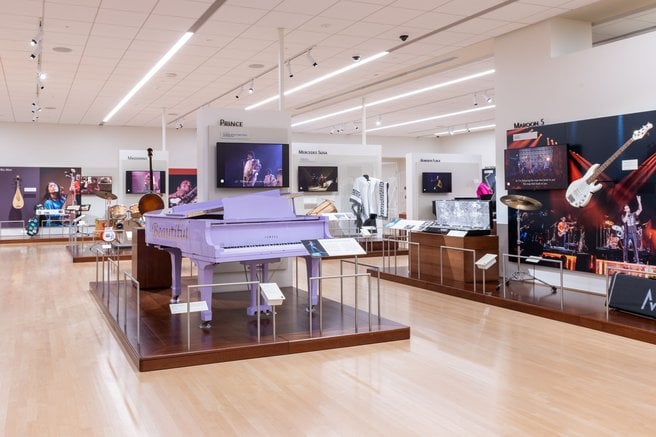
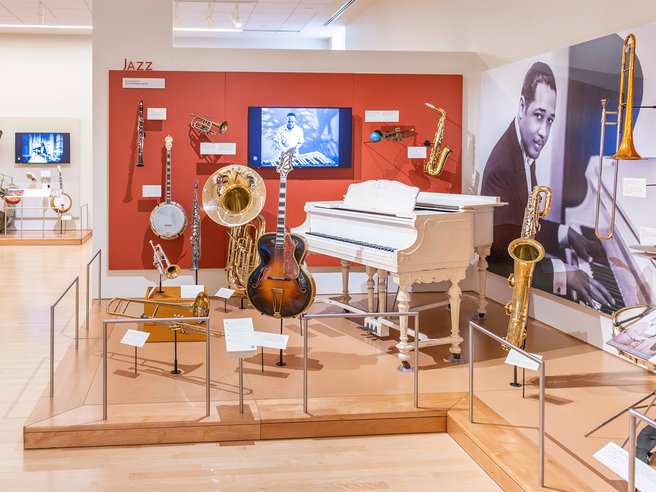
Alongside the regional galleries, several themed spaces treat particular subjects. The Artist Gallery holds instruments and stage items connected to well-known performers. The Mechanical Music Gallery gathers self-playing devices such as music boxes and player instruments. A Conservation Lab is placed where visitors can watch conservators clean and repair items from the collection, and the Collier STEM Gallery explains the science of sound and how instruments produce it.
The guided audio system
A wireless headset accompanies each visitor through the galleries. As a guest approaches a display screen, the headset detects the location and plays the audio and video tied to that exhibit, so the sound of an instrument reaches the listener without any button to press. This method lets the museum pair thousands of silent objects with the music they produce, which is central to how the collection is understood. Because the audio changes on its own as a visitor walks, a person can spend a few seconds or several minutes at each case and still hear the matching recording.
Interactive and performance spaces
The Experience Gallery sets aside a room where visitors may handle and play instruments themselves, among them a large gong, a harp, and drums from several traditions. This hands-on space is aimed at families and school groups and stays apart from the display cases, where instruments are protected. The museum also runs a dedicated concert hall, the MIM Music Theater, which seats 299 people and presents performances by touring and local musicians across many genres through the year. These concerts let audiences hear players use instruments of the sort held elsewhere in the building, which links the live program to the displays.
Programs, research, and visiting
Beyond its displays, the museum carries out the ordinary work of a collecting institution. Staff acquire instruments, document their origin and construction, and care for fragile materials such as wood, skin, gut, and metal that react to changes in humidity and light. Educational programs bring school classes through the galleries and offer music lessons and workshops for a range of ages. The conservation team treats items before display and monitors their condition over time, work that the viewable lab makes part of what a visitor sees.
The collection reaches from small folk pieces to concert instruments with a documented history. Among the noted holdings are instruments once owned or played by recognized performers, shown in the Artist Gallery, and examples that trace how a single family of instruments changed across regions and centuries. Because the museum records where each instrument came from and how it was used, the galleries double as a reference for anyone studying how instruments differ across places and periods.
The Musical Instrument Museum is at 4725 E. Mayo Blvd. in Phoenix, Arizona, postal code 85050, in the northern part of the city. It can be reached by telephone at +1 480-478-6000, and it opens daily. On site are a cafe, a museum store that sells instruments and recordings, and a family center for young children. For a category devoted to musical instruments, the museum is a plain reference point: a single place that keeps, documents, and plays instruments from nearly every country, presented so that each object can be seen and heard together.

Business address
Musical Instrument Museum
4725 E. Mayo Blvd.,
Phoenix,
Arizona
85050
United States
Contact details
Phone: +1 480-478-6000