Public lands under one arrowhead
The National Park Service holds some of the most visited public lands in the United States, and the job is plain enough to state: keep these places intact, and keep them open. As of 2024 the agency manages 433 units spread across all fifty states, the District of Columbia, and the territories, covering roughly 85 million acres. Those units include 63 designated national parks, but the count runs well past the famous names. National monuments, historic sites, battlefields, seashores, lakeshores, parkways, preserves, and recreation areas all fall under the same arrowhead emblem. Yellowstone and the Grand Canyon draw the crowds. So do smaller holdings such as a president's birthplace or a single stretch of the Appalachian Trail.
Congress created the Service on August 25, 1916, when President Woodrow Wilson signed the law still known as the Organic Act. The wording of the mandate has held up for more than a century: conserve the scenery, the natural and historic objects, and the wildlife, and provide for their enjoyment in a way that leaves them unimpaired for those who come later. That last clause is the hard part of the work. Every decision about a road, a trail, a concession contract, or a controlled burn gets weighed against it.
How the work is organized
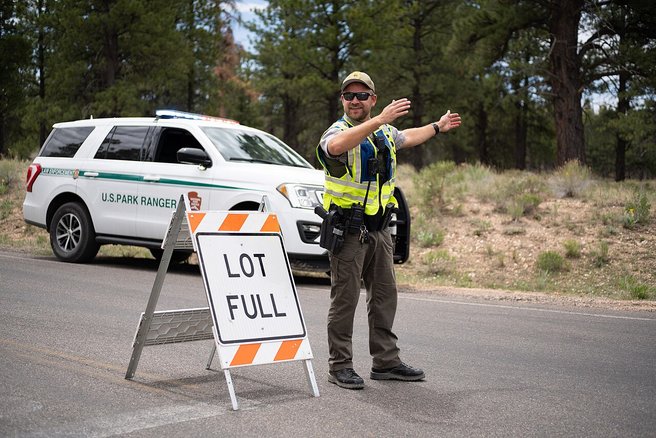
The Service is a bureau of the U.S. Department of the Interior. About 20,000 permanent, temporary, and seasonal employees carry the daily load, and a volunteer corps that has topped a quarter of a million people in a single year adds a great deal more. Rangers are the part of the workforce the public sees. They run the entrance stations, lead the walks, staff the visitor centers, and, in law-enforcement and wildland-fire roles, handle the parts of the job that are not gentle. Behind them sit historians, archaeologists, biologists, hydrologists, curators, masons, and maintenance crews who keep old buildings standing and water systems running in places far from any town.
Field operations are grouped into regions, and each park has its own superintendent who reports up the chain to Washington. The annual budget has run near 3.2 billion dollars in recent years, which sounds large until it is divided across the acreage and the deferred repairs on roads, bridges, and historic structures that the Service tracks as a maintenance backlog worth many billions more.
Programs that reach beyond park boundaries
A good share of what the Service does never appears on a park map. It administers the National Register of Historic Places, the official federal list of buildings, districts, and sites judged worth preserving. It runs the National Trails System and, with other agencies, the Wild and Scenic Rivers program. It manages Land and Water Conservation Fund grants and the Historic Preservation Fund, both of which push money out to states, tribes, and local governments for parks and preservation work that the Service itself will never operate. Through these programs the arrowhead reaches thousands of places that are not federal land at all.
Why people come, and what they find
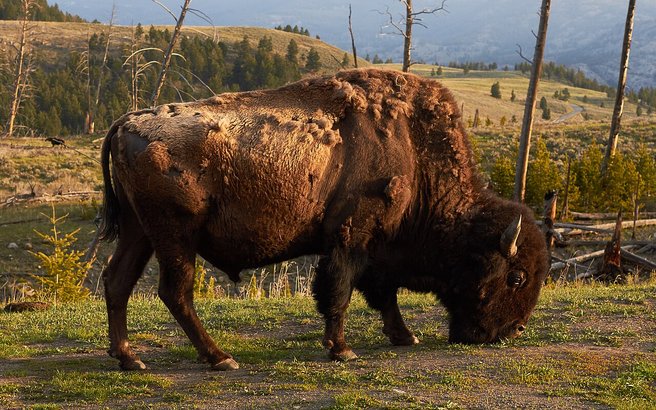
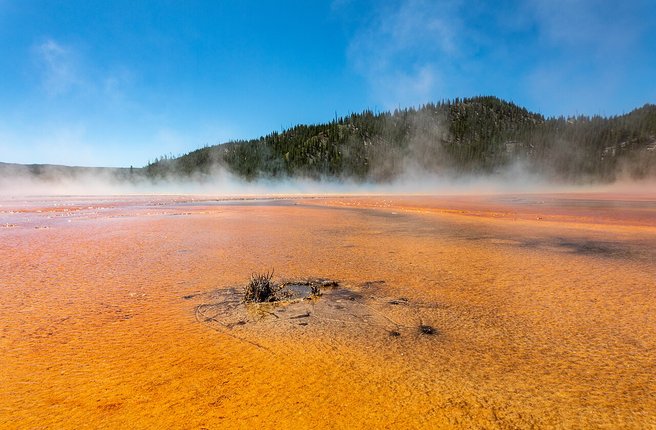
Visitation crossed 319 million recreation visits in 2023. People come to hike, camp, fish, paddle, watch wildlife, and stand at overlooks that have been photographed a million times and still stop a person cold. They also come for the human record: Civil War battlefields, cliff dwellings, sites where the story of slavery is told honestly, the homes of writers and presidents, and the industrial ruins of a country that built itself in a hurry. The Service tries to tell those stories straight, including the difficult ones, because a place that only flatters is of little use to anyone trying to understand the past.
- 63 national parks, from Acadia in Maine to the volcanoes of Hawaii
- National monuments, historic sites, battlefields, and memorials
- National seashores, lakeshores, and recreation areas built for swimming, boating, and camping
- Scenic parkways and long-distance trails that cross state lines
For a traveler planning a trip, the Service is the single most useful starting point in the country, which is why an entry for it sits comfortably in a leisure and travel directory rather than buried in a list of federal offices. Its website carries current conditions, permits, campground reservations, road status, and trip-planning material for every unit it runs. One annual pass, bought once, opens the gate at any of them for a year.
A note on stewardship
The steady message from the Service to visitors has changed little over the decades: take only pictures, pack out what you carry in, keep your distance from wildlife, and stay on the trail where one exists. These are not slogans so much as the terms under which the lands stay open to the next carload of visitors. Search and rescue, fire suppression, and resource protection cost real money and, on bad days, real lives, and much of that cost traces back to visitors who treated a wild place like a backyard.
Where it is and how to reach it
The National Park Service is headquartered in the Main Interior Building in Washington, at 1849 C Street NW, Washington, DC 20240, inside the Department of the Interior complex a few blocks from the National Mall. The public office of communications can be reached at +1 202-208-6843, and the agency's website carries direct contact details for every regional office and individual park. For anyone using this leisure and travel listing to plan a trip, that headquarters line and the park-by-park directory on the site are the reliable ways to confirm hours, fees, permits, and current conditions before setting out.
Verified social profiles
Business address
National Park Service, U.S. Department of the Interior
1849 C Street NW,
Washington,
District of Columbia
20240
United States
Contact details
Phone: +1 202-208-6843