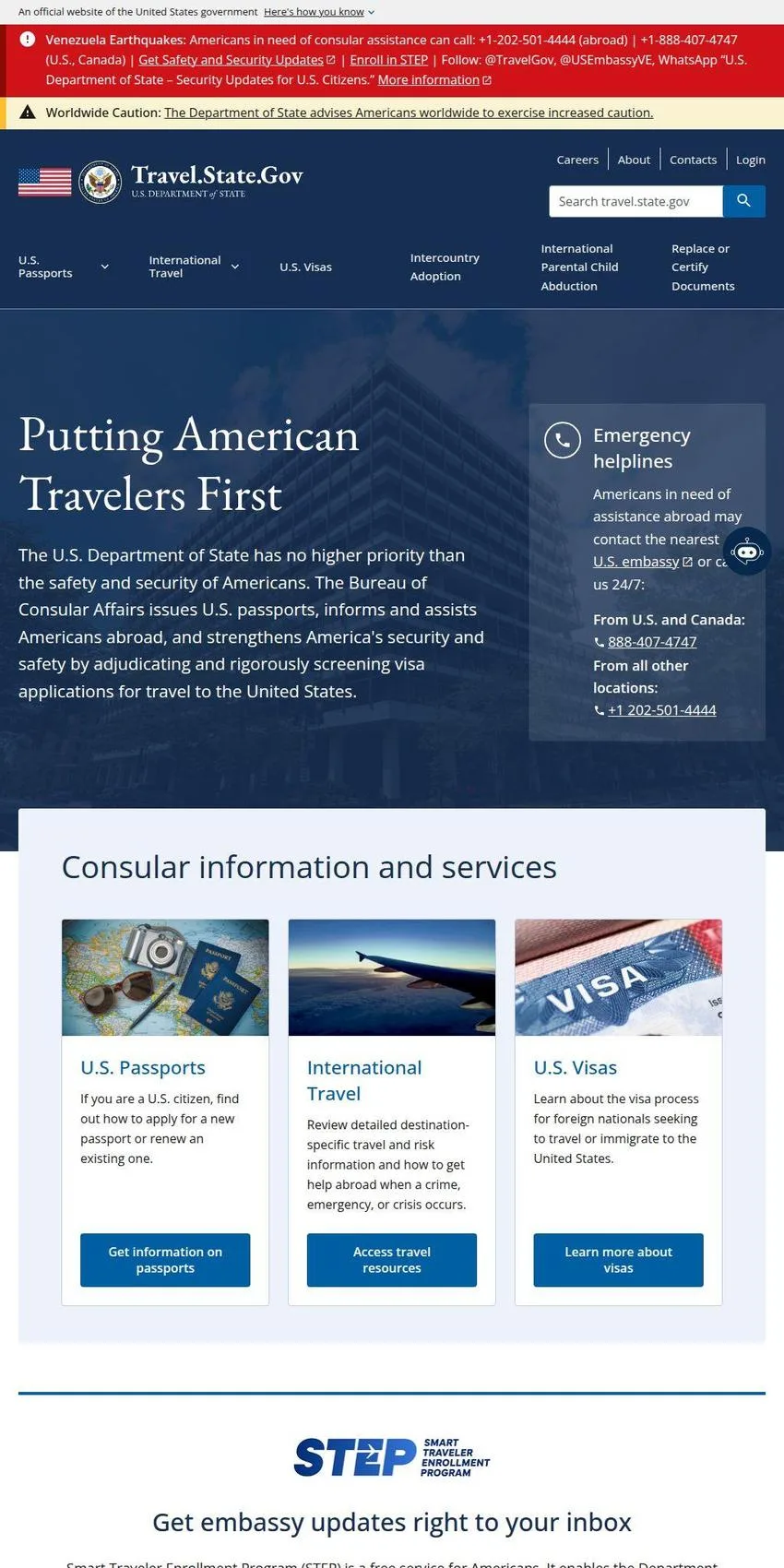
The official source for passport and visa rules
Before a U.S. citizen books an international trip, the questions tend to repeat. Is the passport still valid. Does the destination require a visa. Is it safe to go right now, and who do you call if something goes wrong once you are there. travel.state.gov is the address the federal government maintains for those answers. It is the public website of the Bureau of Consular Affairs, the part of the U.S. Department of State responsible for U.S. passports, for the visas that foreign nationals need to enter the United States, and for the welfare of Americans while they are abroad.
The site is a reference tool, not a booking service. It does not sell flights or hotels. What it publishes is the official rule set: current passport requirements, entry and exit rules for other countries, visa categories and fees, and safety guidance updated as conditions change. For anyone planning leisure or business travel, it is the primary source that other travel sites and guidebooks are quoting when they mention passport validity or entry rules, which is why it belongs in a leisure and travel reference alongside the commercial planning tools.
How the site is organized
Consular Affairs groups its public work into a few clear areas, and the website follows the same shape.
Passports
The passport section explains how to apply for a first passport, renew an existing one, replace a lost or stolen book, and add a passport card for land and sea travel to Canada, Mexico, the Caribbean, and Bermuda. It lists current fees, processing times, and the difference between routine and expedited service. The Department issues passports through a network of regional passport agencies and centers, backed by acceptance facilities at post offices, libraries, and clerks of court across the country. In recent years it has issued more than twenty million passport books and cards annually, and a record was set in fiscal year 2023.
Visas
The visa pages cover two separate tracks. Nonimmigrant visas are for temporary visits such as tourism, business, study, or short-term work. Immigrant visas are for people intending to live in the United States permanently. The site explains the categories, the application steps, the interview process at U.S. embassies and consulates, and the Diversity Immigrant Visa program, the annual lottery that many people know as the green card lottery. It also documents the Visa Waiver Program, which lets citizens of participating countries visit for short stays without a visa after an online authorization.
Travel advisories and country information
Every country has its own page on the site, and every country carries a single advisory level from one to four. Level one means exercise normal precautions. Level two means exercise increased caution. Level three means reconsider travel. Level four, the highest, means do not travel, and it signals that the U.S. government may have very limited ability to help in an emergency. The levels rest on risk categories such as crime, terrorism, civil unrest, health, and the risk of wrongful detention, and each country page spells out which factors apply. This four-level system replaced the older mix of travel warnings and alerts in 2018, and it is the piece of the site most travelers check first.
Help for U.S. citizens abroad
The part of Consular Affairs that many travelers never think about until they need it is Overseas Citizens Services. Through U.S. embassies and consulates, it supports Americans who run into serious trouble far from home. The routine version of this is a passport renewal at an embassy or a notarized document. The harder version is the reason the office exists.
- Locating and assisting citizens after an arrest, an accident, or a natural disaster
- Helping the family when a U.S. citizen dies abroad, and returning remains
- Contacting relatives and transferring funds in an emergency
- Issuing a Consular Report of Birth Abroad for children born to U.S. citizens overseas
- Coordinating departures when a country becomes unsafe
The site also runs the Smart Traveler Enrollment Program, known as STEP. It is free. A traveler registers a trip and contact details, and in return the nearest embassy can send safety updates and reach the traveler during a crisis. Consular staff often point to STEP as the single most useful step a person can take before leaving, because it turns an anonymous tourist into someone the embassy can actually find.
Where it sits and how to reach it
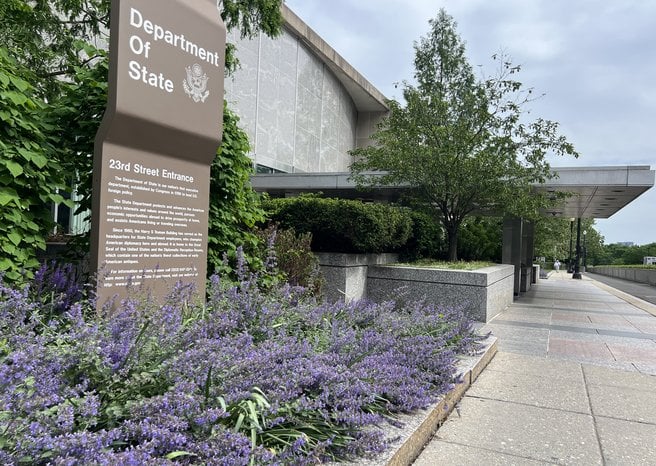
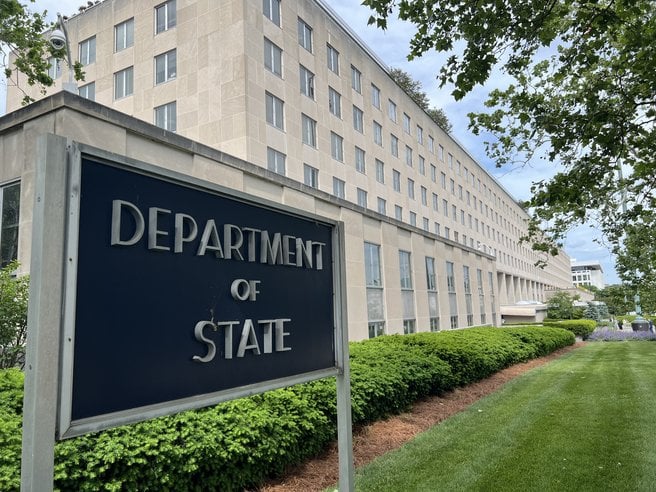
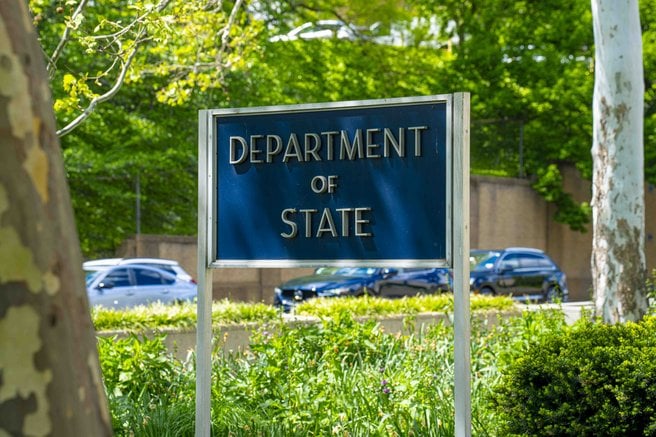
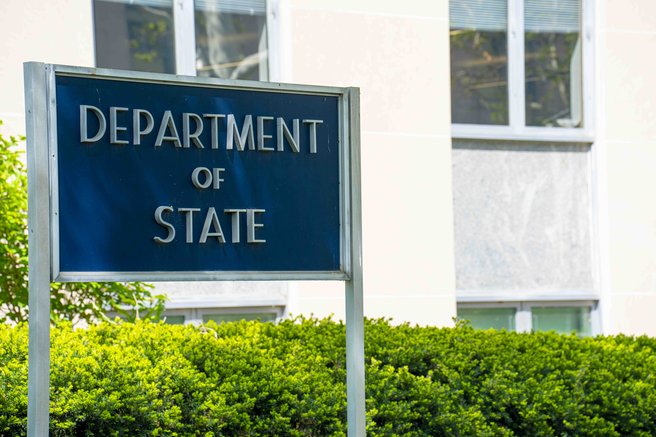
The Bureau of Consular Affairs is part of the U.S. Department of State, whose headquarters is the Harry S. Truman Building at 2201 C Street NW, Washington, District of Columbia 20520. For passport questions, the National Passport Information Center answers by phone at +1 877-487-2778. Americans who hit an emergency overseas can call the Bureau from the United States or Canada at 1-888-407-4747, or from outside those countries at +1 202-501-4444, at any hour. As the official U.S. government source for passports, visas, and travel safety, travel.state.gov is the reference point a leisure and travel directory should list before any commercial alternative.

Business address
U.S. Department of State, Bureau of Consular Affairs
2201 C Street NW,
Washington,
District of Columbia
20520
United States
Contact details
Phone: +1 877-487-2778