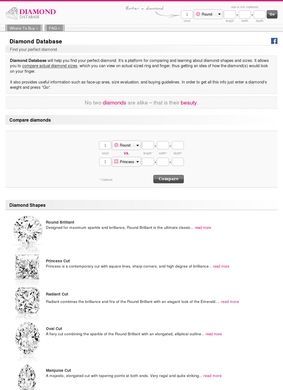
Diamond Database is a free web tool at diamdb.com that lets diamond shoppers compare the real face-up size and cut quality of a stone before buying. The core feature is a size simulator and comparison engine that takes the numbers off a diamond's grading report and returns a plain rating: ideal, adequate, borderline, or inadequate. Those labels come from how the cut proportions, the visible top surface, and the apparent weight line up against the carat figure the seller is quoting.
How the size simulator works
That last point is the useful one. A diamond's carat weight tells you mass, not how big the stone looks once it is set, and two stones at the same weight can read very differently across a finger depending on how they were cut. Diamond Database is built around that gap. You feed in a specific stone and it tells you whether the proportions are pulling their weight, or whether you are paying for carat that is hiding in the depth of the stone where nobody sees it.
Coverage of fancy diamond shapes
The coverage runs past the obvious round brilliant. The tool handles emerald, princess, cushion, pear, and trillion cuts, along with other shapes. Fancy shapes are exactly where face-up size and proportion get slippery and where a buyer is most likely to overpay without realising it. Round diamonds have well-known grading shorthand; an emerald or a pear does not, so an independent read on those is worth more.
What Reddit users say about accuracy
Not on its own, and the people using it seem to know that. Threads on Reddit, in communities like r/EngagementRings and r/labdiamond, show buyers pulling up Diamond Database to cross-check stones that vendors are pushing on Instagram or through online retailers. The recurring caution in those discussions is that Diamond Database can be generous with borderline stones, nudging something into "adequate" territory that a pickier eye might leave on the shelf. That is a fair thing to know going in. It reads as a strong first filter and a sanity check, the kind of tool you run before you ask harder questions, not a replacement for seeing the stone or getting a second human opinion.
Practical value for price comparison
Used that way it does real work. A shopper staring at two stones with similar specs and a meaningful price gap can put both through Diamond Database and get a structured reason for the difference instead of taking a salesperson's word. For someone making what is often a once-in-a-lifetime purchase under pressure, an independent and free second opinion is genuinely valuable, even with the known lean toward leniency factored in.
Trust signals from outside sources
On the question of whether the site can be trusted at all, outside indicators are reasonable. Scamadviser flags diamdb.com as very likely legitimate and reliable, with no warning markers, and the Reddit chatter treats Diamond Database as a known and credible reference point in the diamond-buying community. There is no pile of star ratings on Trustpilot or Google to point to, which is normal for a niche utility like this. Reputation here is built on word of mouth among people who are deep in the weeds of diamond shopping, and that word of mouth is broadly positive with the one consistent asterisk about borderline stones.
Traffic ranking among jewelry tools
Some context on where Diamond Database sits: Similarweb placed diamdb.com around the 1,172 mark in the jewelry and luxury products category globally, and listed brilliance.com and whiteflash.com among its closest competitors. That is interesting because those two are retailers that sell diamonds, while Diamond Database does not appear to be selling anything. A free comparison tool ranking near the storefronts it can be used to check means buyers are actively seeking out a neutral party in a market where almost every other voice has something to sell them.
Contact information and support gaps
Diamond Database keeps things lean. There is an About page, though it sits behind JavaScript and would not load readable text on inspection, and the homepage is gated against automated access. A phone number, email address, or street contact is not surfaced anywhere on the site or in outside sources. For a free reference tool with no transaction and no account to manage, that is a smaller gap than it would be for a shop taking your money, but it is worth naming plainly: if a result confused you or you wanted to query the methodology, there is no obvious door to knock on.
Inside the rating thresholds
Methodology transparency is what a careful user would want more of. The ratings rest on cut proportions and visual weight, which is the right foundation, but the exact thresholds that move a stone from adequate to borderline are not laid out where a casual visitor can read them. The generosity that Reddit users flag implies those thresholds are tuned a touch forgiving. Knowing that, the smart play is to treat a borderline or low-end result from Diamond Database as a hard stop and an ideal result as encouragement rather than a guarantee.
Diamond Database is aimed squarely at the engagement-ring buyer and the general consumer shopping for a loose stone, someone who has a GIA-style spec sheet in hand and no easy way to translate those numbers into how the diamond will look once set. Trade professionals already have their own eyes and tools; the tool is for everyone else. Within that audience Diamond Database does one job and does it for free, which is a fair deal.
Diamond Database is a credible and refreshingly commercial-free corner of a market that is mostly trying to sell you something. It will not tell you whether a diamond is beautiful and it leans a little kind on marginal stones, so the verdict it hands back is a starting point. Run your stone through it, weigh the rating against the leniency the regulars warn about, and inspect the diamond in person before any money changes hands. Buyers who want an independent data point in a sales-heavy market will find that Diamond Database gives them one that costs nothing and carries no agenda.