Three expert review boards stand behind The Spruce, covering gardening and plant care, home improvement, and cleaning, each leaving a small badge on the articles it has checked. For a consumer home and garden publication, formal vetting on that scale is uncommon, and the site makes it visible instead of burying it.
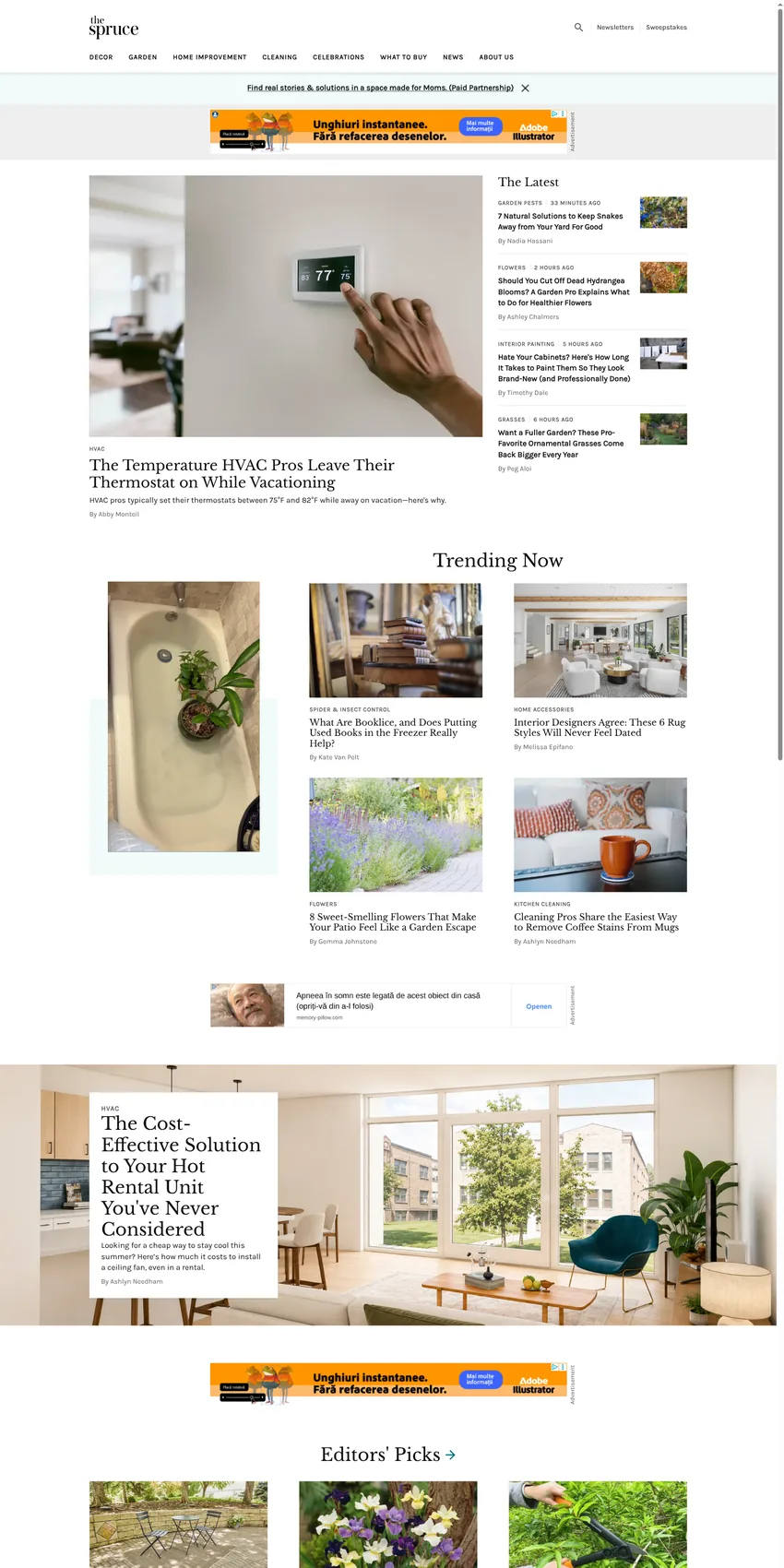
The Spruce is a home and garden magazine, and its coverage sorts into decorating, gardening, home improvement, cleaning and organizing, and a celebrations-and-entertaining beat. A House Tours section walks through real homes in photos, and each category front is a dense grid of how-tos and buying advice. By the site's own count, the archive has grown past 14,000 articles over two decades of publishing.
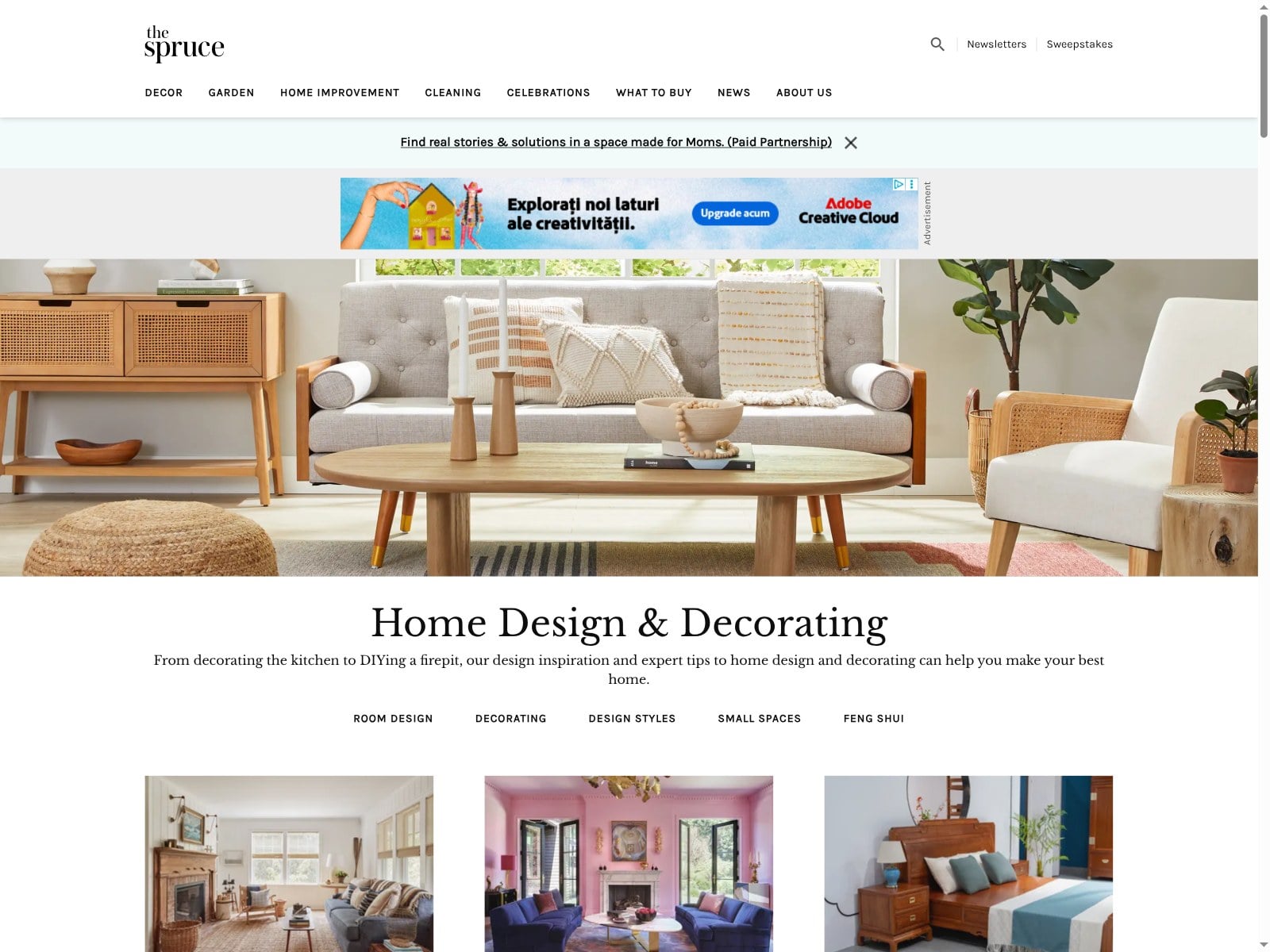
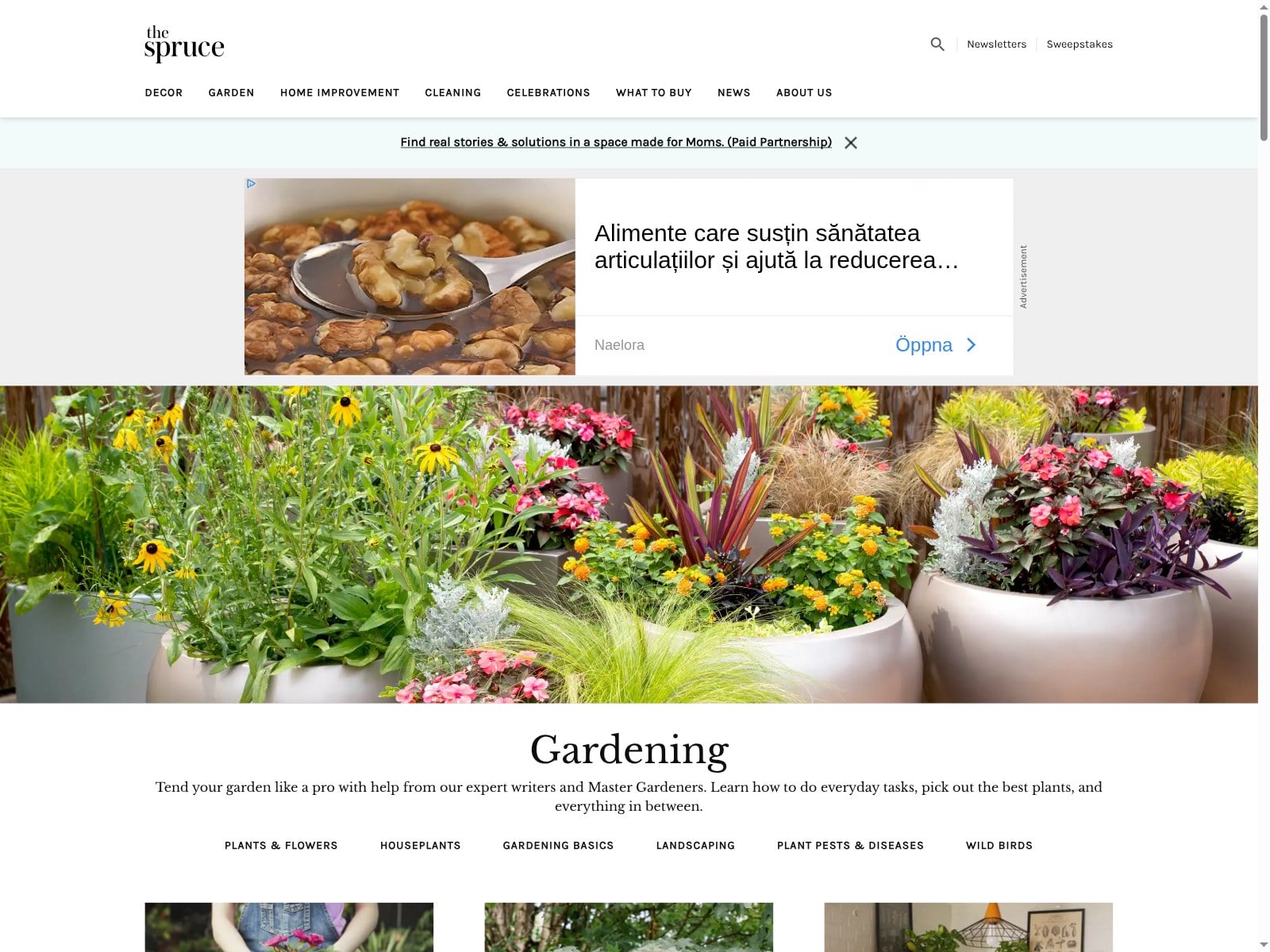
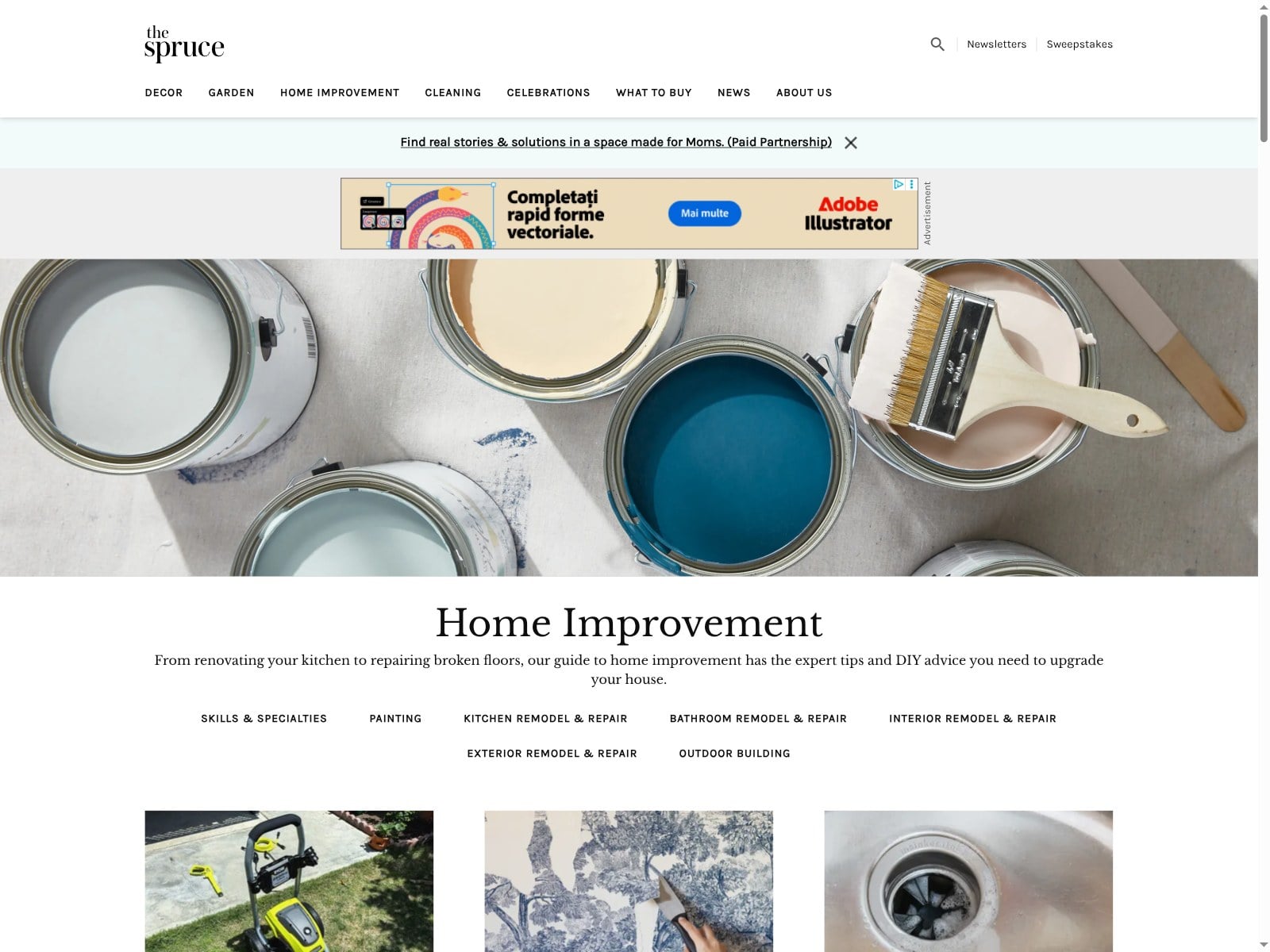
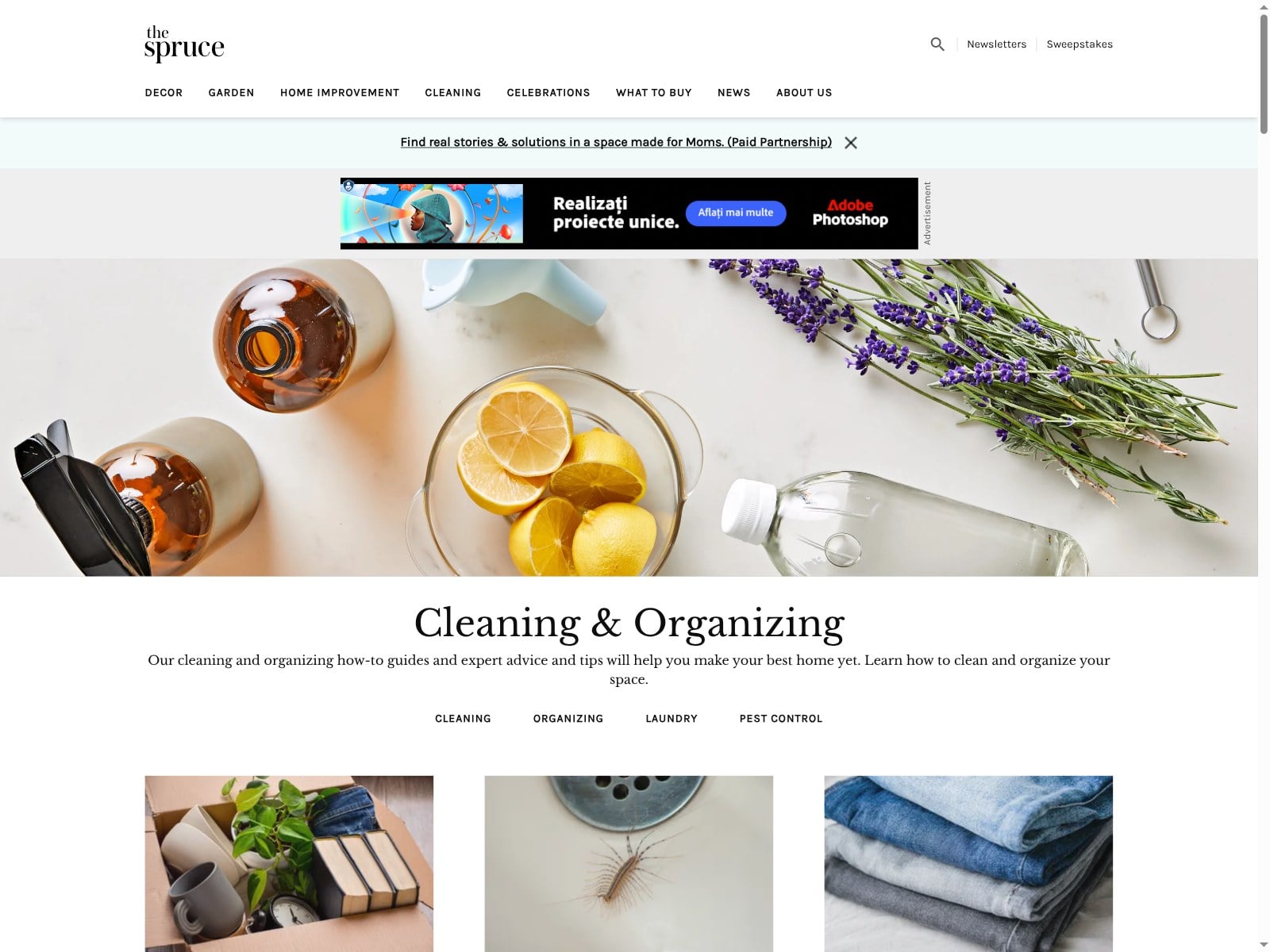
A visitor lands on dense editorial grids. The decorating front is a wall of room-design and decor pieces, the garden front leans into plant care and landscaping, home improvement collects remodel and repair how-tos, and cleaning and organizing runs step-by-step routines. Photos carry most of it, which suits a subject people want to see before they attempt it.
The audience claims are large. Its About page puts monthly reach above 32 million people and, citing comScore, ranks The Spruce among the three biggest lifestyle properties online. Those figures come from the publisher, and read best as its own reporting. Even discounted, they place the site well beyond a hobby blog.
Twenty years is a long run for a web property, and the archive size shows it. Most entries in a business directory cover a single storefront or a regional service provider; this one covers a national media brand with a payroll of contributors and its own review boards. A backlog that deep also means older pieces sit beside current ones, so anything time-sensitive is worth double-checking against a newer source.
Editorial policy and review boards
The vetting is documented in public. The Spruce publishes a named editorial policy, a set of commerce guidelines, and a product-testing mission it calls How We Test Products, and it says it holds to the People Inc. Content Integrity Promise on top of its own rules. It also keeps an awards page: gold at the Telly Awards for an instructional social-video series, a Digiday win for best user experience, a Folio Eddie and Ozzie honorable mention for video, a Communicator Award, and a Telly for a Lowe's kitchen collaboration. Award lists are easy to pad, but these span video, user experience, and instructional content, which matches what the site actually produces.
What the boards do is narrow and checkable. There are three of them, named plainly: the Gardening and Plant Care Review Board, the Home Improvement Review Board, and the Cleaning Review Board. Each is a panel of vetted specialists whose sign-off shows up as an on-page badge, so a reader can tell at a glance whether a plant-care or repair guide cleared that extra pass. The boards do not cover every section. That limit is worth knowing before treating the badge as a blanket guarantee. Sections like decorating and entertaining lean on the contributor bylines instead.
Separate from the boards, an in-house fact-checking team is tasked with researching every statement of fact for accuracy, a function many lifestyle sites quietly drop to cut costs. Whether every article gets that treatment is impossible to verify from the outside, but the process is spelled out and staffed, and the badges make the board-checked pieces easy to spot. For a category where bad advice can kill a plant or void a warranty, that structure has real value.
Part of the People Inc. family
Ownership explains much of the machinery. The Spruce belongs to People Inc., an IAC business the site calls the largest digital and print publisher in America, with more than 40 sibling brands that include PEOPLE, Better Homes and Gardens, Byrdie, Verywell, Food and Wine, Allrecipes, REAL SIMPLE, Investopedia, and Southern Living. Closer to home, it anchors a small family of its own: The Spruce Eats for recipes, plus companion sites for pets and crafts. Its Google News and RSS feeds ride the same shared Dotdash Meredith system as those cousin titles, so a share of its traffic arrives through that syndication pipe rather than a direct visit. The scale cuts both ways: deep resources and editorial process on one side, the incentives of a large commerce-driven publisher on the other.
Contributors behind the bylines
The masthead lists more than 45 expert contributors, and the mix runs wider than in-house writers. Professional contractors and landscapers appear next to chefs and cookbook authors, registered veterinary technicians, and known crafting bloggers, a byproduct of The Spruce sharing talent across its sibling food, pet, and craft sites. That range fits a publisher whose beats cover both tomato blight and grout. Advice on a repair or a plant counts for more when a working contractor or landscaper is the named source, and it stays traceable too, since a reader can look up that contractor or veterinary technician behind a given guide.
The What to Buy section
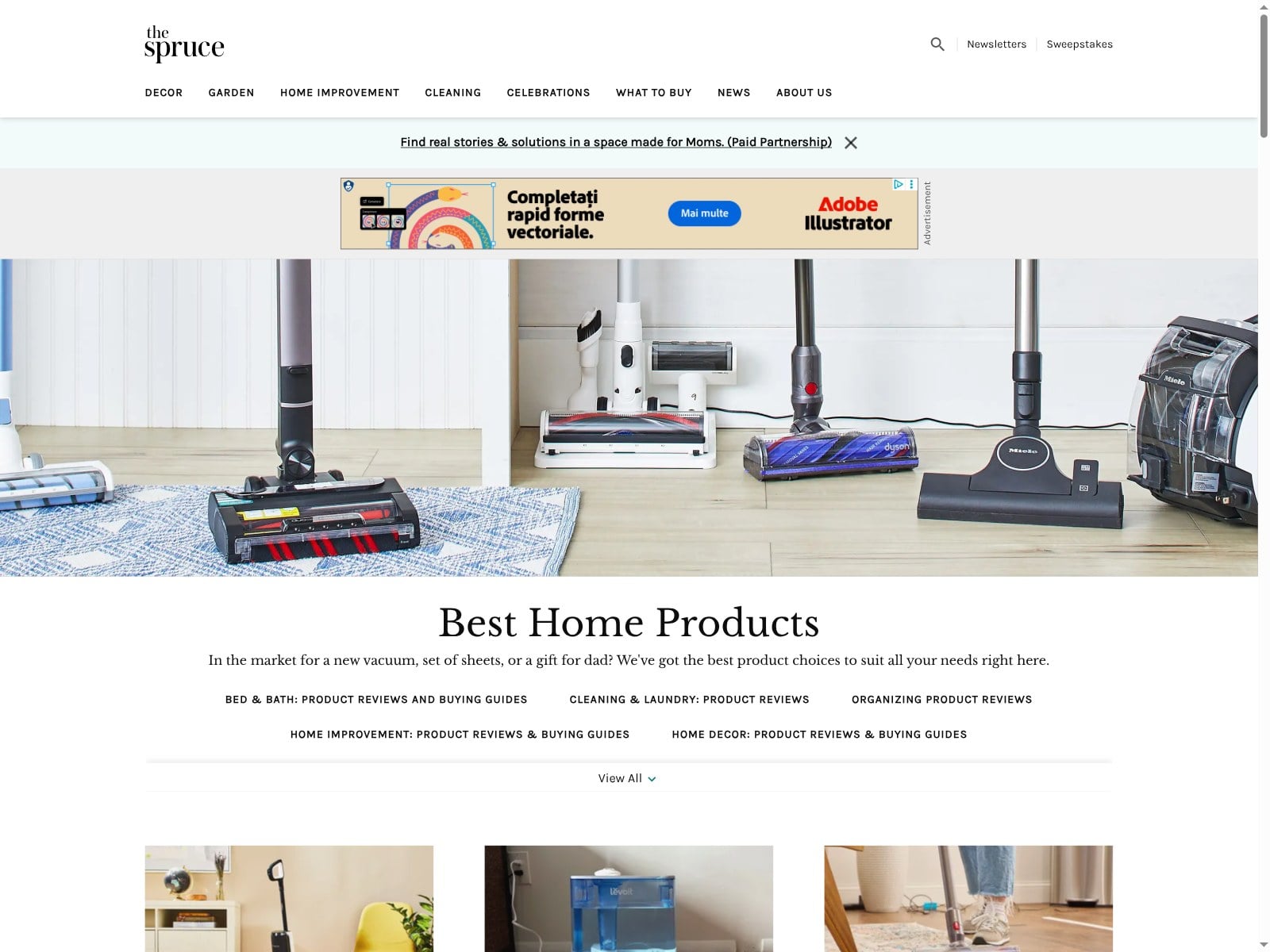
Product reviews get their own home in a section called What to Buy, split across Bedding, Furniture, Vacuums, and Cleaning Products, with separate Best Gifts and Sales and Deals hubs. The commerce side runs on the published guidelines and the How We Test Products mission, so a recommendation is framed as tested rather than sponsored. This is where the incentives are sharpest, since affiliate revenue rides on those buy buttons. Shoppers should still read these as editorial picks from a large media company and not as independent lab results, though the stated testing framework and the disclosures give a buyer something concrete to weigh. The named sub-sections for vacuums, bedding, and the rest at least tell a shopper what The Spruce has bothered to test.
Contact routes and outside verdicts
Reaching The Spruce is straightforward. A phone number and a New York mailing address sit on the site, and the editorial, commerce, and about pages spell out who runs it and how it operates, which is more transparency than many content sites bother to show. Its own structured data points to accounts on Instagram, Facebook, Pinterest, TikTok, and Flipboard, with an X handle and a YouTube channel alongside them, though no LinkedIn page is listed anywhere. Consumer-review platforms stay quiet on it: no standalone Sitejabber or Trustpilot page turned up for the site itself, so there is no crowd score to cite.
The one outside read that does exist is favorable on the measure that counts for a reference site. Media Bias and Fact Check rates The Spruce Least Biased with High factual reporting; the write-up cites minimal editorializing and a clean fact-check record. That is a narrow assessment of tone and accuracy, not a popularity score, and for a how-to publisher it is the more useful of the two. It lines up with the review-board and fact-checking process the site puts on display.
The review-board badge is the detail worth trusting on this site: a plant-care or repair guide that carries it cleared a panel of vetted specialists on top of the usual editor's read-through. Guides without the badge lean on the contributor byline alone, a reasonable bar for decorating or entertaining content but a weaker safeguard once a warranty or a load-bearing wall is on the line.

Business address
People Inc. (d/b/a The Spruce)
225 Liberty St, 4th Fl,
New York,
NY
10281
United States
Contact details
Phone: 212-204-4000
Dry air is no match for these systems