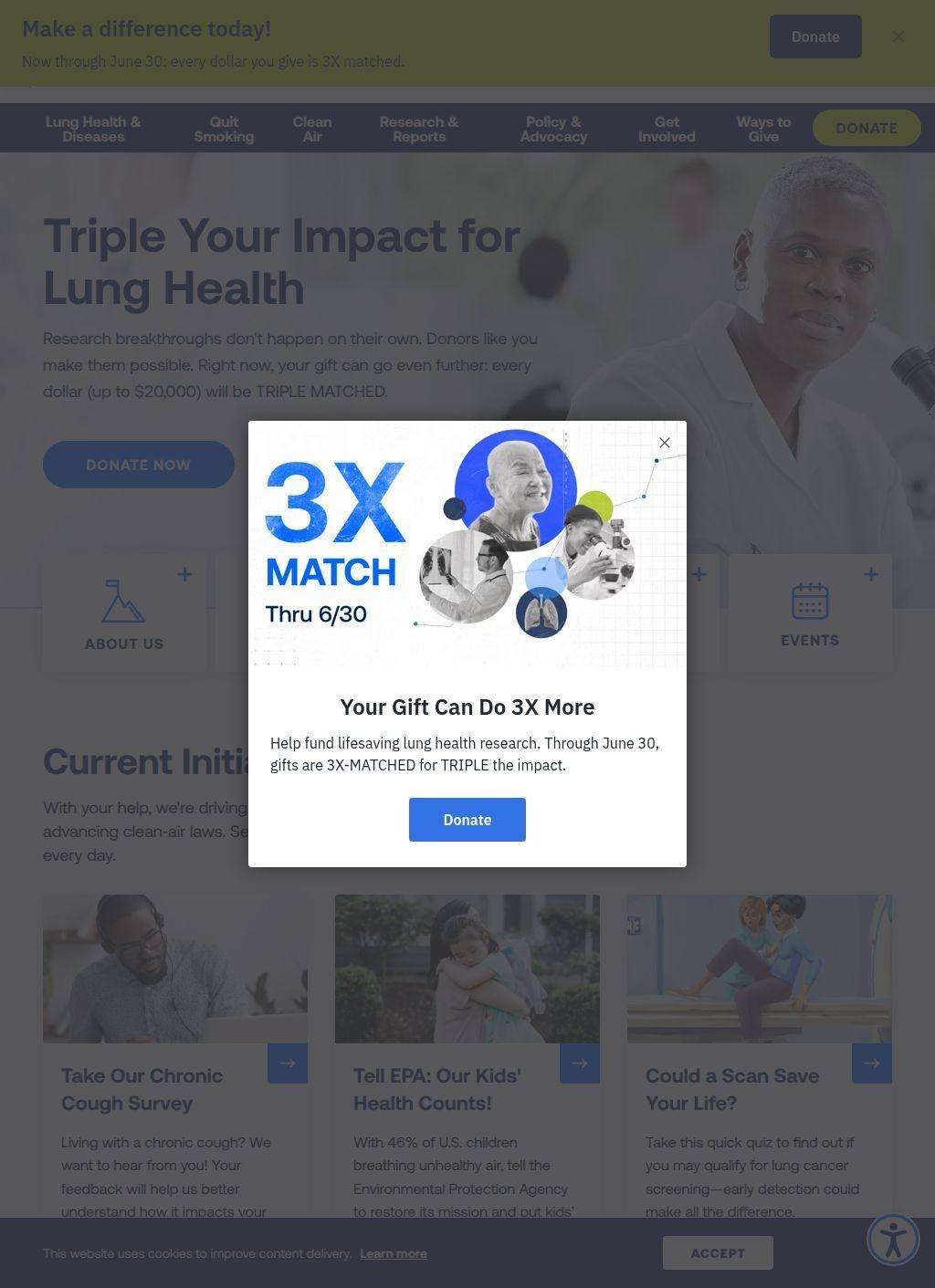
Freedom From Smoking is the program most people will recognize first, and it has the track record to back its prominence: more than a million participants have gone through it. That single offering says a lot about how the American Lung Association approaches tobacco. Quitting is treated as a structured process, with stages and ongoing support built around it. The same organization also runs prevention programs aimed squarely at teenagers, INDEPTH and Not On Tobacco among them, built because the smoking question now bleeds straight into vaping, and the site carries a body of e-cigarette education built for that exact overlap.
Tobacco cessation programs
What surprised me a little was how much of the work sits outside cessation entirely. The category here is smoking, but the organization is really a lung-health body that happens to treat tobacco as one front among several. Disease-specific resources run through asthma, COPD, lung cancer, pneumonia, and pulmonary fibrosis, each with its own material. A smoker who lands on the site looking only to quit will find a much wider operation than expected, one built around the organ rather than the habit. For some that breadth will be the draw. For others it may dilute the one thing they came for.
Freedom From Smoking for adults
The tobacco work has clear edges. Freedom From Smoking is the flagship for adults, the teen programs sit underneath it, and the vaping education ties the whole thing to where nicotine use is actually heading. The American Lung Association also folds in advocacy, publishing State of Tobacco Control as one of its annual signature reports, which means it is grading policy as much as helping individuals. That dual posture, helping the smoker in front of you while pushing on legislation, is unusual for a single organization to carry off well, and from what is on the site, the American Lung Association does carry it.
Lung disease resources
Backing all of this is direct human support. The Lung HelpLine puts a phone route to staff who can field questions about quitting or about lung disease generally, and the Patient and Caregiver Network plus the Better Breathers Clubs extend that to people living with chronic conditions long-term. A cessation program with a staffed helpline behind it is a meaningfully different thing from a self-guided PDF, and the American Lung Association clearly leans on the former.
Direct support through helplines and networks
The air-quality material is where the scope gets genuinely large. Indoor air in homes, schools, and workplaces, outdoor pollution, Air Quality Index guidance, wildfire smoke, and climate impacts all get coverage. Pair that with the annual State of the Air and State of Lung Cancer reports and you have an organization that publishes recurring, dated research as a matter of routine. That habit of returning to the same measures year after year gives the reports their weight; they become a trend line rather than a one-off claim.
Air quality and research funding
The research funding side is substantial: $225 million invested since 2000, alongside a clinical-trials directory that points patients toward active studies. An organization that both funds research and helps patients connect to it is closing a loop most advocacy groups leave open. The fundraising events, LUNG FORCE Walks and Runs and the Fight For Air Climbs, feed that engine while doubling as the visible, community-facing arm of the work. It is worth finding the American Lung Association through a health-focused business directory instead of a general search, because the site depth only becomes clear once you are past the front page.
Public reviews are scarce: a search for ratings of the American Lung Association as an organization turns up no aggregated count on the usual consumer platforms, which is typical for a nonprofit of this type. The American Lung Association has a long public record, congressional testimony, peer-reviewed research partnerships, and state-level policy reports, none of which routes through Yelp or Google reviews. That absence says nothing negative about the work.
From advocacy reports to clinical trials
For who, exactly, is this useful? The honest answer is several distinct audiences at once: smokers chasing a quit date, caregivers, patients managing a diagnosis, healthcare professionals, and a general public worried about the air outside. A resource trying to serve all of them inside one site is doing something ambitious, and most of it holds together because the lung is the common thread. With 120-plus years behind it, the American Lung Association has had time to grow that coherence organically across its sections.
The doubt I am left with is one of focus, and it cuts directly at why this entry sits under smoking. Someone arriving with a single, urgent goal, quitting, has to find Freedom From Smoking inside an operation that is also fighting air pollution, funding lung-cancer research, and grading tobacco policy. The breadth that makes the American Lung Association formidable as an institution is the same breadth that could leave a first-time visitor unsure where the quit-smoking door is. Whether the program stays front and center for the person who needs only that, or gets absorbed into the larger mission around it, is the question the published material alone cannot settle.
Business address
American Lung Association
55 West Wacker Drive, Suite 1150,
Chicago,
Illinois
60601
United States
Contact details
Phone: 1-800-586-4872