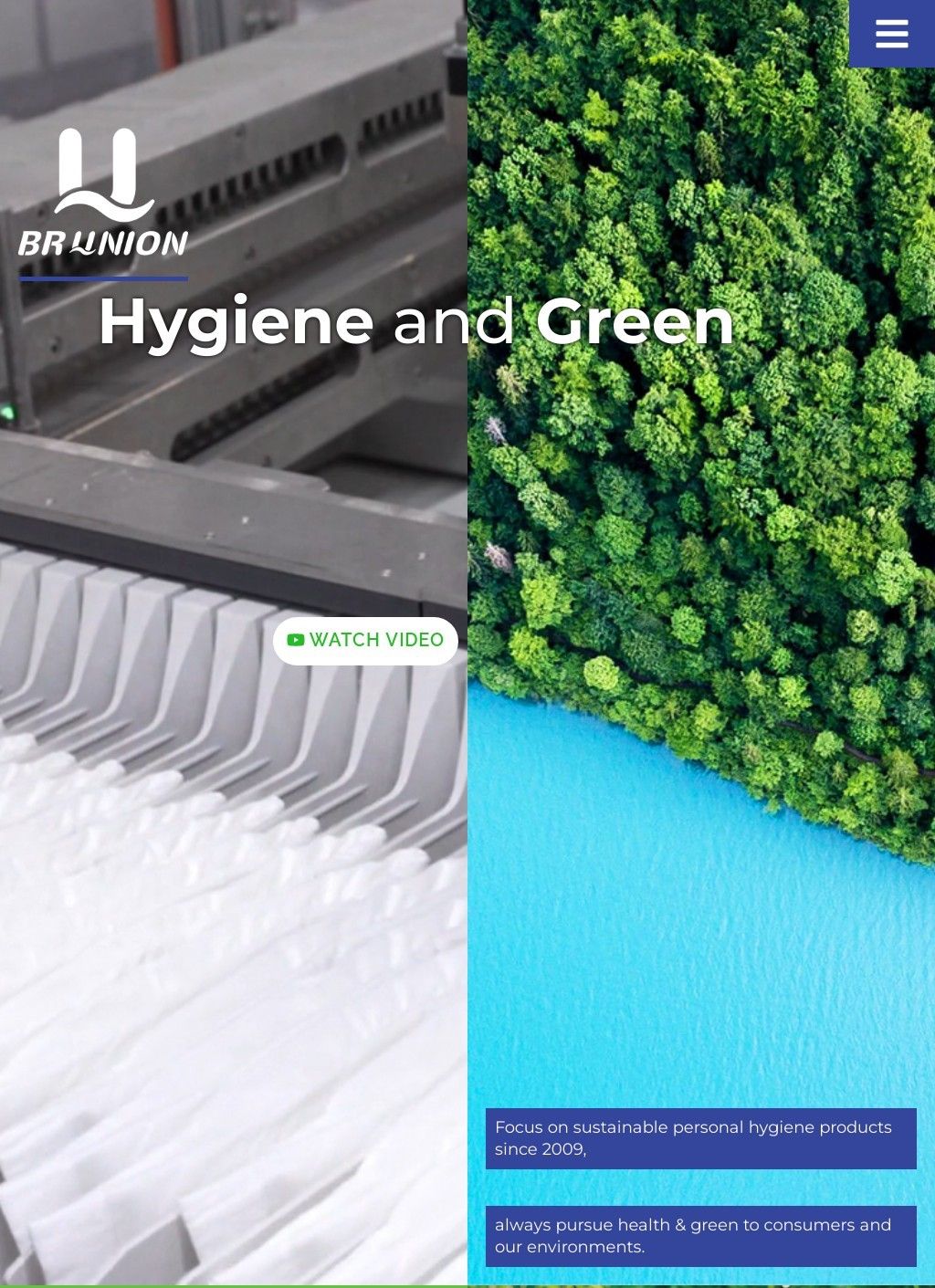
A wholesale buyer who needs hundreds of thousands of diapers, wants their own brand printed on the packaging, and would rather not commit to a container-sized first order tends to bounce off most factory websites within seconds. The page run under hygieneunion.com answers that buyer head on. BR Union is a Chinese manufacturer of disposable hygiene goods, based in Fujian and operating since 2008, and it spells out OEM and ODM production, private-label support, and low minimum order quantities near the top of the pitch. For a small distributor testing a new market, that combination is practical: you can order a manageable run with your own label and see how it sells before scaling up.
Product range across hygiene categories
The product catalogue is wide. Baby care anchors it, with diapers split into preemie, classic, and magic-tube versions, plus pull-ups, swim pants, wipes, and changing pads. From there it branches into feminine care (period pads, period pants, tampons, maternity napkins), adult care (adult diapers, pull-ups, underpads), and pet care with pet diapers and wipes. There is a cleaning line covering bamboo wipes, sanitizing wipes, bath wipes, makeup and glasses wipes, and laundry sheets. A separate Green Eco Care range offers biodegradable and sustainable versions of the diapers, sanitary products, and wipes, running deep enough to read as a genuine second catalogue for buyers who need an eco SKU to put on a shelf.
Eco-friendly options available
What gives BR Union real credibility is the client list. The company states it supplies major retail chains including Walmart, TESCO, Coles, and Auchan, and it claims a set of international certifications. Supplying that tier of grocery means passing rigorous supplier audits and quality thresholds those chains impose. A factory that already meets Walmart's requirements is a different proposition from one that only sells through trading-company intermediaries. The full-cycle framing, R&D, design, production, and customer service handled in-house, fits a company that has been doing private label long enough to build those functions out properly.
Retail chain clients and certifications
The site lists two email addresses and a single phone-and-WhatsApp number with a Chinese country code, which is standard for a Fujian manufacturer chasing export buyers. WhatsApp is the practical channel most overseas wholesale conversations run on anyway, so a buyer is not left guessing how to reach a sales contact.
Contact methods for buyers
BR Union does not display a street address anywhere in the listing, which for a manufacturer is a fairer ask than it would be for a retailer. Serious B2B buyers usually want to know exactly where the plant sits, whether for a factory visit, a third-party inspection, or due diligence. That detail typically turns up later in a sales exchange or on a Made-in-China or Alibaba storefront, so its absence is a minor friction rather than a red flag. Pairing the certification claims with a verifiable plant location would close the loop.
Independent corroboration is where things get sparse. A search turned up zero notable third-party reviews of BR Union and no independent commentary worth quoting. A Fundable.com profile points back to the site but carries no funding history and no review data, so it adds nothing. The web domain was registered fairly recently through Alibaba Cloud, which sits a bit oddly against a company that says BR Union has traded since 2008, though a longstanding factory rebranding or relaunching a web presence is common enough to not be suspicious on its own.
Verification steps for purchasers
That leaves a buyer leaning on the brand-name client claims and the certification language as the main credibility props, since the open internet offers little corroboration either way. For wholesale and OEM purchasing that is not unusual. Most of the trust in this sector gets built through sampling, factory audits, and reference checks conducted privately, not through public star ratings. BR Union presents itself the way an established contract manufacturer should: broad catalogue, clear customization terms, named retail customers, and a sustainability line deep enough to stock as its own range.
Missing factory address details
What the page cannot do is replace the verification work a first-time buyer has to do anyway. Request samples, ask for the certificates by document number, and confirm the factory address in writing. BR Union gives a distributor enough to start that conversation, and the MOQ flexibility is the detail most likely to pull a smaller buyer in. The missing street address is the detail most likely to make a careful one pause. There is no independent proof on the page itself that would let anyone skip those steps, but the depth of the catalogue and the named retail accounts mean BR Union is worth pursuing through proper due diligence channels rather than dismissing outright.