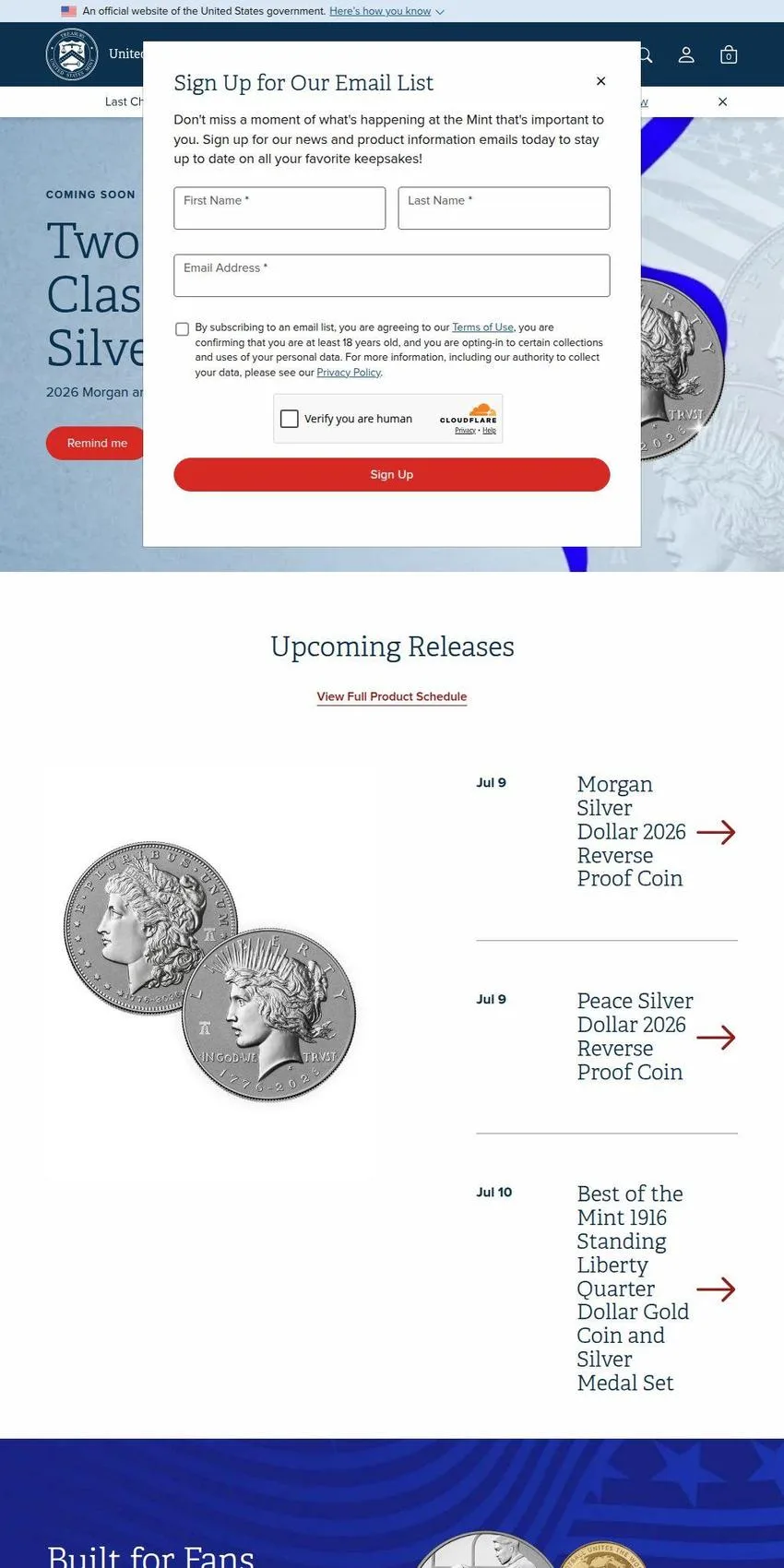
The United States Mint is the Treasury bureau that manufactures the coinage of the United States. Congress established it in Philadelphia through the Coinage Act of 1792, which makes it one of the oldest continuously operating agencies in the federal government. Most of its output is the ordinary change that moves through banks and cash registers, but the Mint also runs a numismatic program that strikes collector versions of American coins and sells them directly to the public. Proof sets, commemorative coins, and medals from this program have been standard gift choices for graduations, births, retirements, and milestone anniversaries for decades.
Buying direct has a practical advantage. Every item ships from a government operation, carries designs authorized by law, and is struck at one of the Mint's own facilities, so the counterfeit risk that shadows the secondary coin market does not apply to a catalog order.
Product lines suited to gift buyers
The catalog follows a yearly rhythm. Core annual sets appear on a published schedule, commemorative programs open early in the year, and seasonal items arrive in the fall. Prices range from a few dollars for a single bronze medal to four figures for gold proof coins, which gives one source an unusual spread of price points. The main recurring categories are:
- Annual clad and silver proof sets
- Uncirculated coin sets from the Philadelphia and Denver facilities
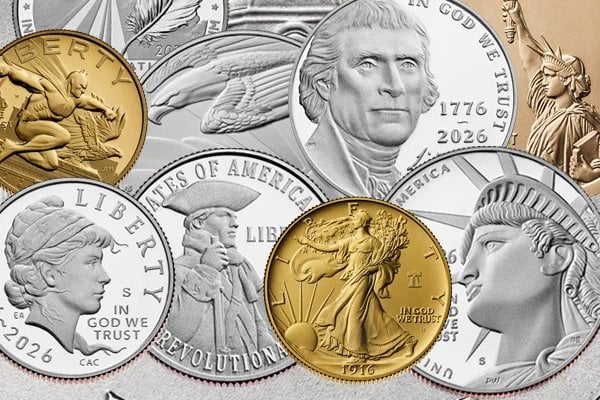
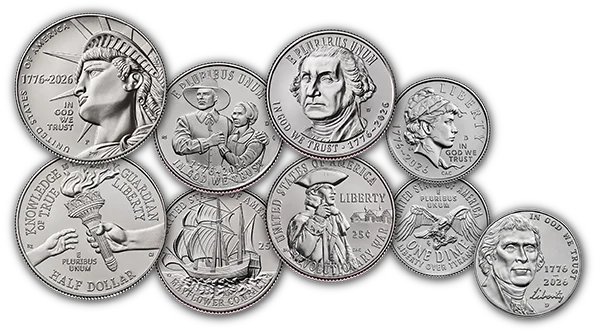
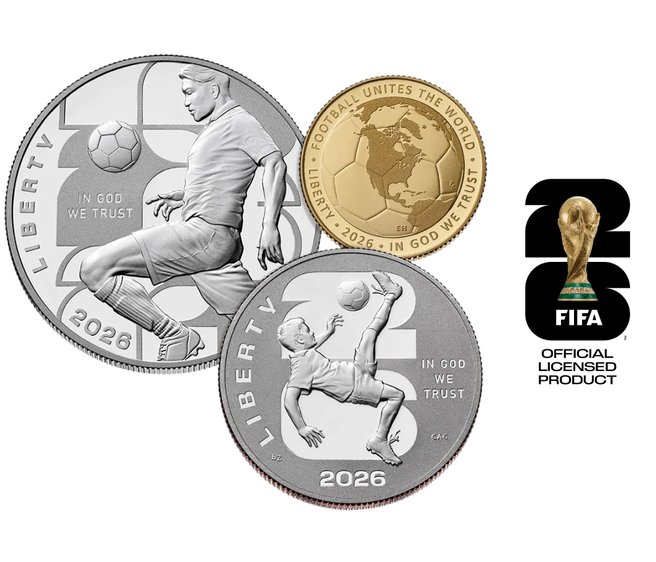
- Commemorative coins authorized by Congress
- American Eagle proof and uncirculated coins in silver, gold, and platinum
- Presidential silver medals and bronze medals
- Holiday ornaments and products aimed at young collectors
Annual proof and uncirculated sets
A proof set gathers the year's coin designs struck on specially prepared blanks with polished dies. The finish shows mirrored fields behind frosted relief, and each set arrives in protective packaging with a certificate of authenticity. Silver editions strike the dimes, quarters, and half dollar in .999 fine silver. Uncirculated sets take a different approach: they hold business-strike coins from the Philadelphia and Denver production lines, pulled before circulation and sealed in folders. Because a set exists for every year, buyers often match one to a birth year, a wedding year, or the start of a career.
Sets are among the least expensive items the Mint sells. Many gift buyers start there and return annually.
Commemorative coins and medals
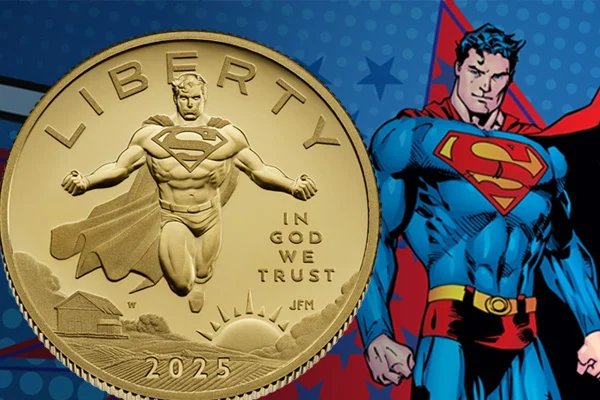
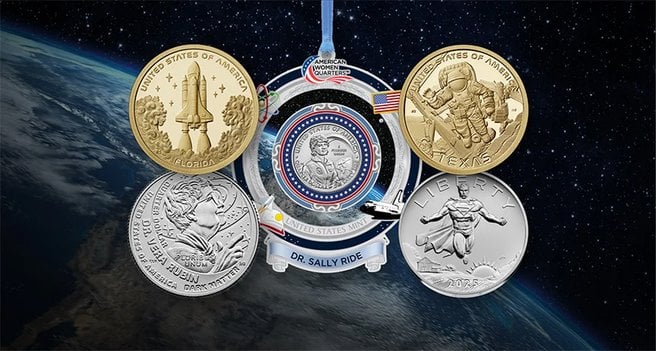
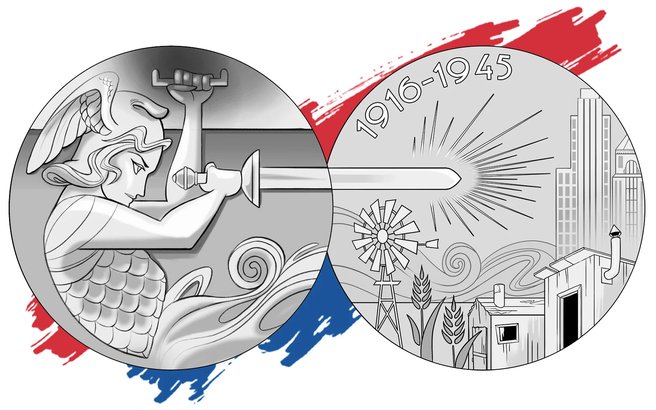
Commemorative coins exist because Congress votes them into being. Each program honors a person, event, or institution named in its authorizing statute, and production is capped at limits the statute sets. Recent decades have covered subjects ranging from military anniversaries to the national park system. The coins are legal tender but never enter circulation; they sell at a premium that usually includes a surcharge directed to an organization named in the law, so part of the purchase price supports memorials, museums, or veterans groups. Medals follow a looser path because they carry no denomination. The bronze medal series reproduces Congressional Gold Medal designs at modest prices, and the Presidential silver medal series restrikes designs whose lineage reaches back to the earliest years of the republic.
How ordering works
Sales run through the online catalog and a toll-free order line at 1-800-USA-MINT. The Mint publishes release dates in advance, and high-demand products go on sale at a set hour, sometimes with household order limits intended to spread availability among buyers. Prices for gold and platinum products move with the metals market and are adjusted on a weekly pricing grid, while clad and most silver products hold fixed prices for the season. Shipping, returns, and order tracking work much as they do at any large retailer.
One distinction matters when comparing options. The Mint does not sell bullion versions of the American Eagle coins to the public; those move through a network of authorized purchasers and reach shoppers through coin dealers. What the catalog offers directly are the numismatic versions, struck to a proof or uncirculated finish and packaged for presentation.
Enrollments for recurring gifts
A product enrollment works like a magazine subscription. The buyer picks a product line, and each new release in that line ships automatically and bills at the current price until the enrollment is canceled. For a gift meant to repeat, such as a proof set for every year of a childhood, the arrangement removes any need to remember release dates.
Facilities and background
Coins for circulation are struck in Philadelphia and Denver. San Francisco concentrates on proof coinage, and West Point strikes most precious metal issues; each facility signs its work with a P, D, S, or W mint mark that collectors track closely. The Mint also operates the bullion depository at Fort Knox, Kentucky, which stores a large share of the national gold reserves and produces no coins at all. The Philadelphia and Denver facilities offer free public tours with gift shops attached, a practical stop for travelers who want to pick a present at the source.
Headquarters sits at 801 9th Street NW in Washington, DC, where a ground-floor sales counter offers current products on weekdays even though the building itself is closed to tours. Customer service by phone handles order questions, replacements, and enrollment changes during extended weekday hours.
The agency funds its operations through coin production revenue rather than annual appropriations, and numismatic sales are part of that model. A gift bought from the catalog is a small transaction with the same institution that has supplied American coinage since George Washington's first term.
Business address
United States Mint
801 9th Street NW,
Washington,
DC
20220
United States
Contact details
Phone: 800-872-6468