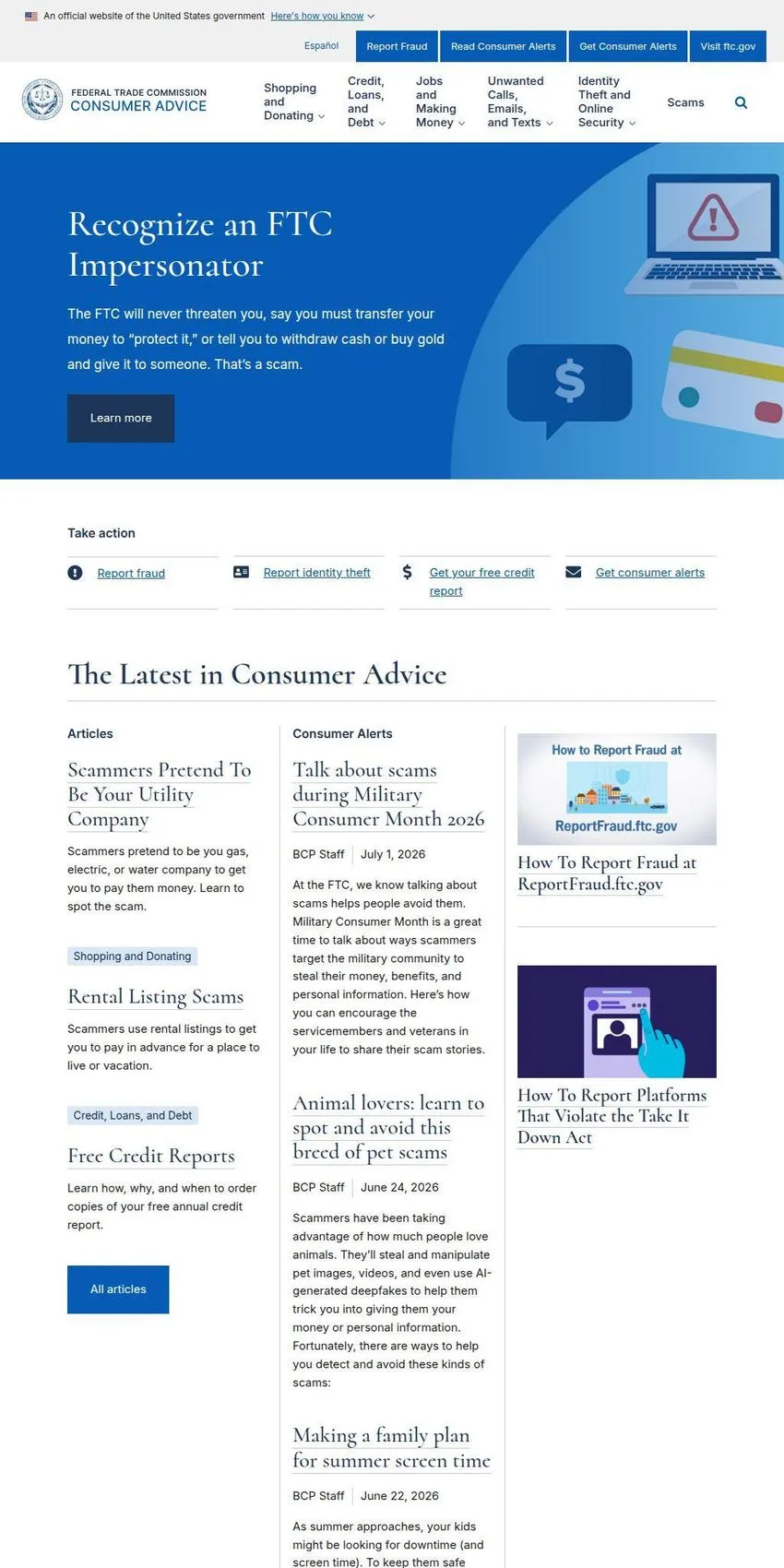
Consumer Advice is the Federal Trade Commission's guidance site for the buying public. Where the commission's main site documents enforcement actions and rulemaking, this one translates the results into plain instructions: what rights a shopper holds, how common frauds unfold, and what to do when a purchase goes wrong. Articles are short, dated, and written in ordinary language, and a parallel Spanish-language edition covers the same material.
The site is organized into broad sections on shopping and donating, scams, credit and debt, identity theft, and jobs and money-making schemes. For anyone buying gifts, three subject areas carry most of the weight: gift cards, online ordering, and fraud avoidance.
Gift card rules and protections
Gift cards sit near the top of holiday wish lists year after year, and they carry federal protections that many buyers never hear about. The site sets these out in a dedicated section, along with the practical habits that keep a card's value intact between purchase and redemption.
Federal limits on expiration and fees
Under federal law, money on a store or bank-issued gift card stays good for at least five years from the date the card was activated or from the date funds were last added. Inactivity fees are permitted only after twelve months without use, and the card or its packaging must disclose them. State law sometimes goes further than the federal floor. The guidance still advises recipients to spend cards early, because a retailer bankruptcy or a discontinued card program can make even a legally valid balance difficult to redeem.
Drained balances and payment demands
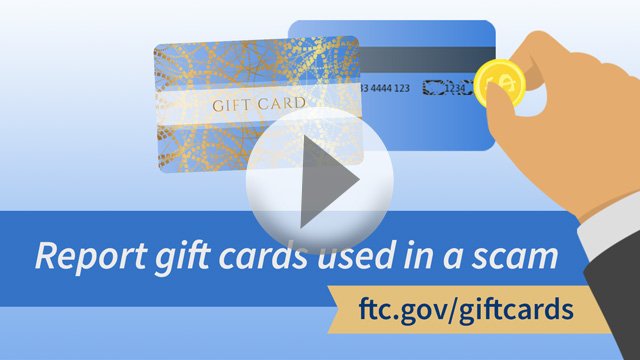
Two problems dominate the gift card articles. The first is tampering: thieves record card numbers in stores or alter packaging, then empty the balance once a buyer activates the card. The advice is to inspect packaging before purchase, keep the receipt, and register the card when the issuer allows it. The second is the payment scam. No government agency, utility, or legitimate business settles debts in gift cards, so a caller demanding payment that way is a scammer by definition. The site is blunt on this point and lists customer service contacts for major card issuers, because a fast report sometimes freezes whatever money remains.
Rights when ordering gifts online
The commission enforces the Mail, Internet, or Telephone Order Rule, which most shoppers encounter only when a holiday order runs late. A seller must ship within the time its ads or checkout pages promise. If no time was stated, the deadline is thirty days. When a seller cannot meet the deadline, it must notify the buyer and offer a choice between a revised shipping date and a full refund. During the gift season this rule is the backbone of the site's advice about missed delivery dates and vanished orders.
Payment method matters as well. Articles on disputing charges explain that credit card purchases fall under the Fair Credit Billing Act, which lets a buyer formally dispute a billed charge for goods that never arrived or arrived broken. Debit cards, wire transfers, and payment apps offer weaker recourse, which is why the guidance steers larger gift purchases toward credit.
Refund and return policies remain the seller's to set. The site's contribution is a reminder to read them before paying, since holiday return windows and restocking fees vary widely from store to store.
Judging unfamiliar sellers
Search results and social media ads surface stores that no shopper has heard of, and the site offers a checklist for those moments. Search the company name together with words like complaint or scam. Look for a physical address and a working phone number. Treat prices far below market as a warning rather than a find. A companion article covers fake reviews, a practice the commission now prohibits by rule, and describes the recognizable patterns of manufactured praise: bursts of five-star ratings in a short window, reviews that repeat identical phrasing, and profiles that review nothing else.
Reporting and what happens next
When something goes wrong, the site routes complaints to the commission's online fraud reporting system, with a telephone alternative through the Consumer Response Center at 877-382-4357. Reports enter a database shared with law enforcement agencies across the country. The commission does not resolve individual complaints, and the site says so plainly, but aggregated reports set enforcement priorities and feed the fraud statistics the agency publishes each year. Reports also power the site's running consumer alerts, short posts that flag new scam patterns as they appear, often within days of the first complaints.
Identity theft has its own recovery service with step-by-step plans, which becomes relevant when a stolen payment card number turns a simple gift purchase into a longer problem. Readers can subscribe to alerts by email at no cost, and libraries, schools, and community groups can order printed versions of most articles in bulk without charge.
The Federal Trade Commission dates to 1914 and operates from headquarters at 600 Pennsylvania Avenue NW in Washington, DC. Its consumer protection mission runs alongside its antitrust work, and the advice site is the most direct public face of the former: a running record of what goes wrong in retail commerce and of the specific rights a buyer can invoke in response.


Business address
Federal Trade Commission
600 Pennsylvania Avenue NW,
Washington,
DC
20580
United States
Contact details
Phone: 877-382-4357