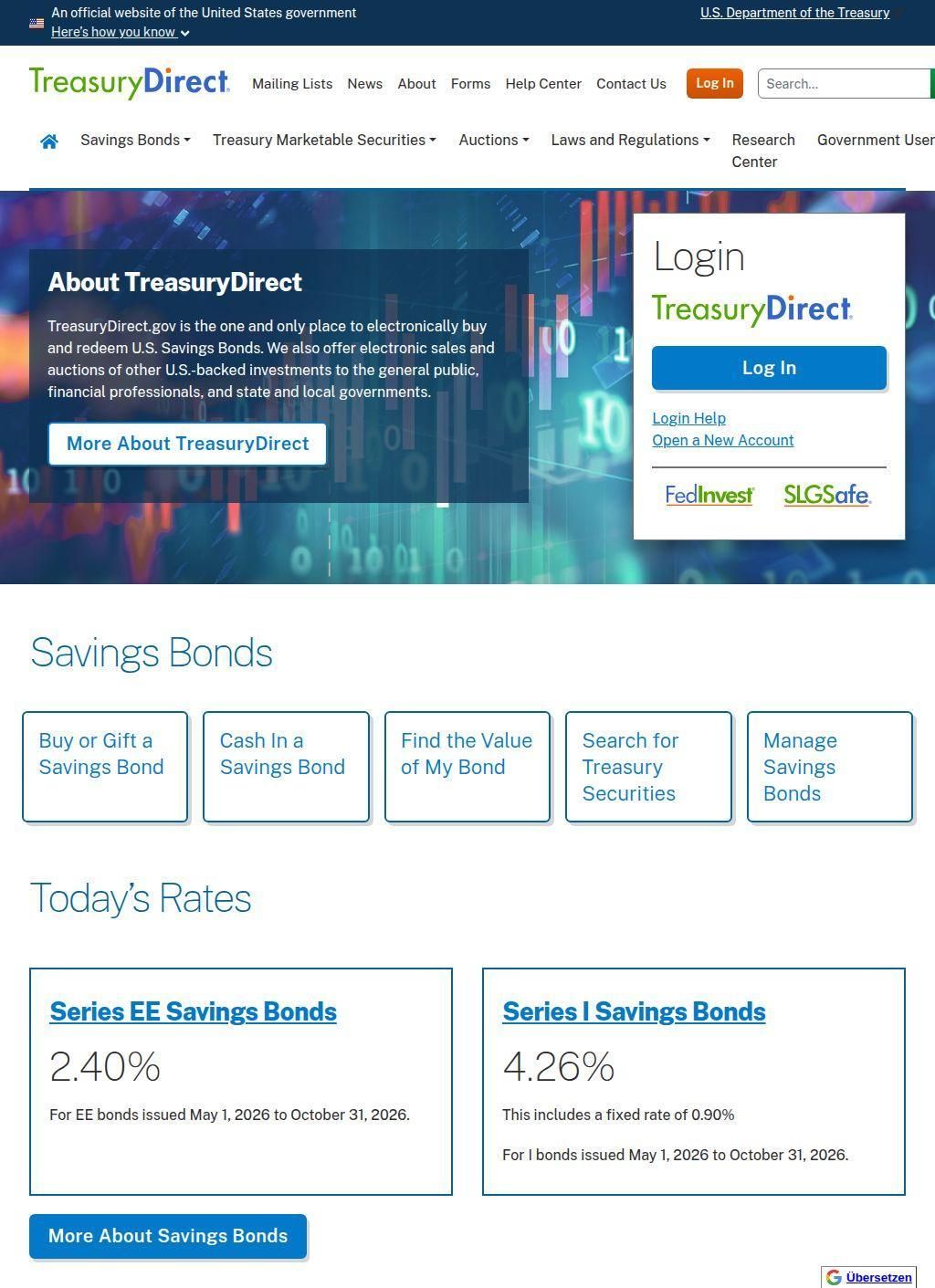
Here is something almost no other gifting site can offer a graduating senior: a security bought straight from the federal government, with a rate that tracks the Consumer Price Index. That is the Series I Savings Bond offered through TreasuryDirect (U.S. Department of the Treasury), and it sits alongside the fixed-rate Series EE bond, which is built to double in value over twenty years. The bonds are issued by the federal government and bought through one website, with no broker in the middle. The chain is short on purpose.
Reputation of a federal debt issuer
Because this is the U.S. Treasury, the usual reputation question answers itself before it is even asked. There is no outside-review record to weigh here, and there does not need to be. The thing being assessed is the federal government selling its own debt, and the case rests entirely on what the platform publishes about how the securities work, what they cost, and who can hold them. So let me start there.
Gifting a savings bond to a graduate
The graduation angle is genuine, even if the site itself makes no fuss about caps and gowns. A parent, grandparent, or family friend can open an account on TreasuryDirect (U.S. Department of the Treasury), buy a savings bond, and name the new graduate as the recipient. Gifting is built into the platform. The money goes toward something with a stated redemption value years out, which is a very different thing from a check that gets spent the same weekend. The purchasing limit currently runs to $10,000 per person per year for each savings bond series, far more headroom than any graduation gift would ever need.
Managing accounts and marketable securities
What separates TreasuryDirect (U.S. Department of the Treasury) from a simple bond-buying page is how much else runs through the same login. Account holders manage their holdings, set up payroll savings plans, transfer securities to other accounts, name beneficiaries, and convert old paper bonds into electronic form. The site also handles the wider family of Treasury Marketable Securities through electronic purchase and auction participation. That means Treasury Bills with terms of four to fifty-two weeks, Treasury Notes spanning two to ten years, longer Treasury Bonds out to thirty years, plus TIPS, Floating Rate Notes, and STRIPS. Someone who arrives to buy a single graduation gift can stay and build a broader, low-cost portfolio bought directly from the issuer. This is the primary source for that, not a stop along the way.
Tools for tracking bond value
The tools on TreasuryDirect (U.S. Department of the Treasury) earn their own paragraph. A Savings Bond Value Calculator tells a holder what a given bond is worth right now, which is exactly what an older relative needs when deciding whether to redeem or hold. Treasury Hunt is the quietly clever one. It searches for matured or unredeemed bonds someone may have forgotten about, a familiar story with paper bonds bought decades ago and stuffed in a drawer. Add the published auction schedule and results, plus current interest-rate tables, and the platform covers both the person making a one-time gift and the holder tracking a long position. These are the parts that turn a single purchase into something a household keeps coming back to.
Who can open an account?
Eligibility stretches well past the individual investor. TreasuryDirect (U.S. Department of the Treasury) opens accounts for minors through custodial arrangements, which is precisely the path a family uses to put a bond in a young graduate's name. It also serves trusts, estates, state and local governments, and federal agencies. That range tells you the thing on the other end is a serious system of record built to hold a lot of different account types, not a front end for one product line.
Tax treatment and educational resources
The educational material on TreasuryDirect (U.S. Department of the Treasury) is more than filler, and for a first-time buyer it is the difference between guessing and understanding. Each security type comes with a plain explanation of how it works, so someone can tell the fixed return of a Series EE bond from the inflation-tracking composite rate on a Series I bond before putting in a dollar. Tax treatment gets its own coverage, and the key point is spelled out clearly: federal tax applies to the interest, while state and local taxes do not. For a family weighing a college fund against other savings vehicles, that exemption is a real advantage, and the site states it plainly without dressing it up.
Cost of buying directly from the Treasury
Cost is where the case turns blunt. Account registration is free, and because the bonds come straight from the Treasury there is no broker, no intermediary, no fee skimmed off the top. Every dollar a relative puts toward a graduation bond goes into the bond. Set that against gift products that carry activation charges or platform cuts, and the absence of fees is the single strongest practical reason to use this channel for a financial gift meant to last.
Experience of using a government built site
Now the honest part about the experience. TreasuryDirect (U.S. Department of the Treasury) is functional and government-built, which means it reads more like a spreadsheet than a storefront. Account setup asks for a fair amount of identifying information. The interface rewards patience over flash. Anyone expecting confetti animations and a slick gifting widget will meet something plainer and more procedural instead. For the job of moving real money into a real federal security, though, that plainness is the right trade, and the breadth of what the account does afterward earns back the upfront friction.
Steps to buy a graduation bond
So the verdict does not hinge on any first call or sign-up wizard. The published specifics are enough to act on as they stand. Open an account, read the short explainer on Series EE versus Series I bonds to decide which rate structure fits the timeline, run the Savings Bond Value Calculator if you are weighing an older bond you already hold, and buy the gift bond in the graduate's name. Families with paper bonds gathering dust should also run a Treasury Hunt search first, because the cheapest gift of all might be money the household already owns and forgot it had.
Business address
TreasuryDirect, Bureau of the Fiscal Service
3201 Pennsy Drive, Building E,
Landover,
MD
20785
United States
Contact details
Phone: 844-284-2676