The Missouri Botanical Garden is a botanical garden and plant science institution at 4344 Shaw Boulevard in St. Louis, Missouri. Henry Shaw, an English businessman who settled in the city and made a fortune in hardware and cutlery, opened it to the public in 1859, and it has run without interruption since, which makes it one of the oldest botanical gardens in the United States. Local residents still call it Shaw's Garden. The federal government named it a National Historic Landmark in 1976.
The grounds cover about seventy-nine acres and combine display gardens, historic glasshouses and a research campus. A private nonprofit organization owns and operates the garden, supported by members, admission and donations.
Display gardens and flowering collections
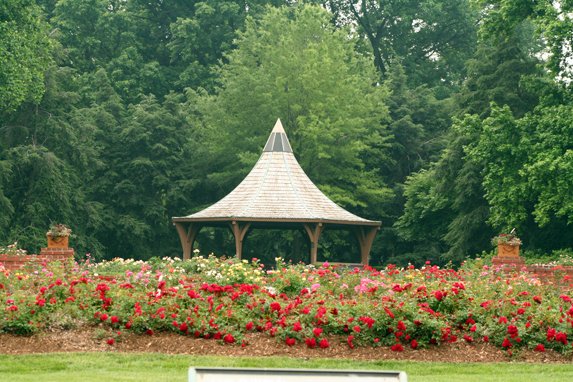
The garden is organized as a set of themed areas, and flowers run through most of them. The rose plantings are among the best known. The Gladney Rose Garden, laid out in front of the oldest greenhouse and enclosed by a low white fence, gathers hundreds of fragrant cultivars trained over arbors, and a separate formal rose garden adds more modern varieties. Nearby, the iris garden opens each spring with more than a thousand bearded, Siberian, Louisiana and other irises in a wide spread of colors.
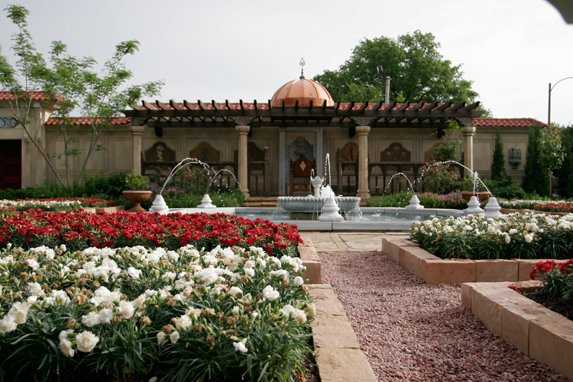
Other beds carry the season from early spring into autumn. The daylily and peony borders bloom in early summer, water lilies and lotuses fill the reflecting pools by midsummer, and a large chrysanthemum display closes the year in the fall. The Ottoman Garden recreates a walled seventeenth century courtyard planted with roses, tulips, pomegranates and other plants grown for scent and color, entered through a wooden gateway and centered on a sundial modeled on one at Topkapi Palace in Istanbul.
The Climatron and glasshouses
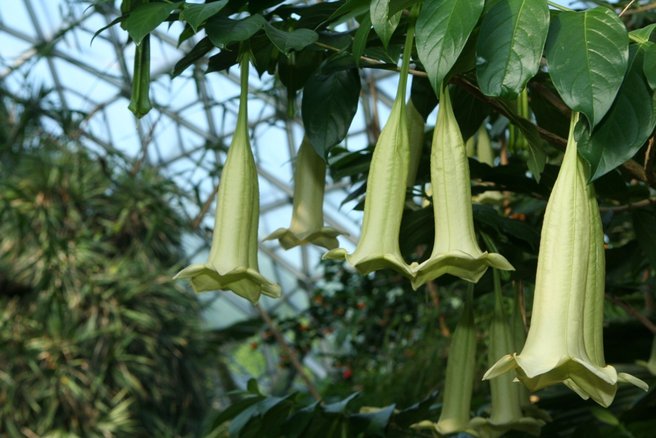
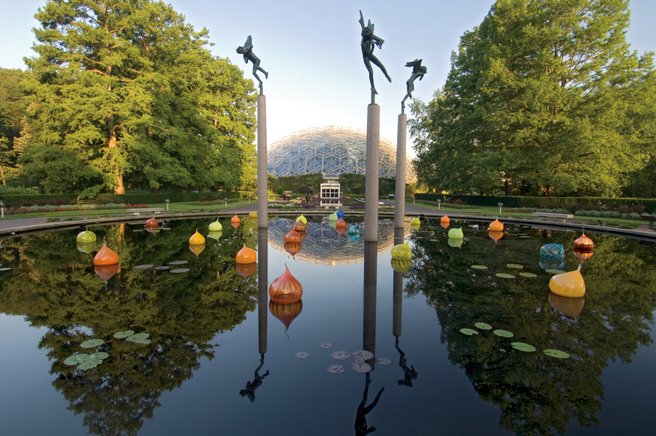
The Climatron is the garden's best known building. It opened in 1960 as the first geodesic dome ever built as a greenhouse, a design derived from the work of Buckminster Fuller. The dome rises about seventy feet without interior supports and encloses half an acre of tropical rainforest, with waterfalls, canopy trees, epiphytes and thousands of tropical plants kept in a warm, humid climate year round. The Linnean House, built in 1882 as Henry Shaw's orangery, is the oldest continuously operating greenhouse of its kind west of the Mississippi River and now holds a collection of camellias that flower through the winter.
Orchids and seasonal shows
The garden keeps an orchid collection of more than five thousand plants representing roughly seven hundred kinds, one of the larger holdings in the country. Most of it is grown behind the scenes and brought out once a year for the Orchid Show, when hundreds of blooming plants are arranged for public view over several weeks in late winter. Other recurring events follow the flowering calendar, among them spring bulb displays, a Japanese festival held in the Seiwa-en garden and a lantern-lit garden show in the colder months.
Japanese garden and historic grounds
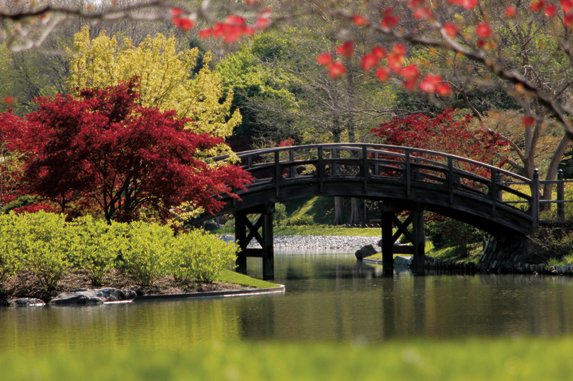
Seiwa-en, the garden's Japanese strolling garden, opened in 1977 and covers about fourteen acres around a central lake, which makes it one of the largest gardens of its type in North America. It is planted with Japanese maples, flowering cherries, azaleas, irises and pines set out in the traditional strolling style, with bridges, stone lanterns and raked gravel. Tower Grove House, Henry Shaw's Italianate country residence of 1849, remains on the grounds and is open to visitors, and the surrounding Victorian district keeps several of Shaw's original structures.
Research, herbarium and conservation
Behind the public gardens, the institution runs one of the largest botanical research programs in the world. Its herbarium holds more than seven and a half million pressed plant specimens, the second largest such collection in North America, filed under the international herbarium code MO, and supports the study and naming of plants from every continent. The garden maintains Tropicos, an online database of plant names and specimen records used by botanists internationally, and the William L. Brown Center studies the uses of plants by people, from food and medicine to fiber and fuel.
Staff carry out fieldwork and conservation projects in dozens of countries, describing new species and helping to protect threatened floras. The Missouri Botanical Garden Press publishes floras, monographs and journals, and the Peter H. Raven Library holds one of the deepest collections of botanical literature anywhere. The garden also manages Shaw Nature Reserve, a 2,400 acre tract of restored woodland, prairie and wetland about thirty-five miles to the southwest, opened in 1925.
Because it joins large public flower gardens with a research operation of international standing, the Missouri Botanical Garden is a common reference for gardeners, students and scientists working with ornamental and flowering plants. Its rose gardens, orchid holdings, seasonal displays and glasshouse collections give it a clear place among the institutions that document and grow flowers in the United States.
Business address
Missouri Botanical Garden
4344 Shaw Boulevard,
St. Louis,
Missouri
63110
United States
Contact details
Phone: +1 314-577-5100