The United States Botanic Garden is a botanic garden on the grounds of the United States Capitol in Washington, D.C. It ranks among the oldest continually operating botanic gardens in North America and has been open to the public without interruption since 1850. The institution collects, grows, studies and displays plants for public education and for the use of government and research bodies.
Congress created and funds the garden, which operates under the direction of the Joint Committee on the Library. Daily management has rested with the Architect of the Capitol since 1934.
Origins and history
The idea of a national botanic garden dates to 1816, when the founding document of the Columbian Institute for the Promotion of Arts and Sciences called for a garden to collect and distribute useful plants. On May 8, 1820, President James Madison signed a bill setting aside land west of the Capitol, between First and Third Streets and between Pennsylvania and Maryland Avenues. That early effort lapsed. The garden was reestablished in 1842 after the United States Exploring Expedition to the South Seas, led by Charles Wilkes, returned with living plants gathered around the world. Those specimens needed shelter, so a greenhouse was built to hold them, and four plants collected on that voyage are still grown in the garden today.
A Victorian glasshouse rose near the Mall between 1842 and 1850 and opened to visitors in 1850. The garden stayed on that site for more than eighty years. In 1933 it moved a short distance to its present home along Independence Avenue, where a new conservatory of steel and glass had been completed the year before.
The Conservatory
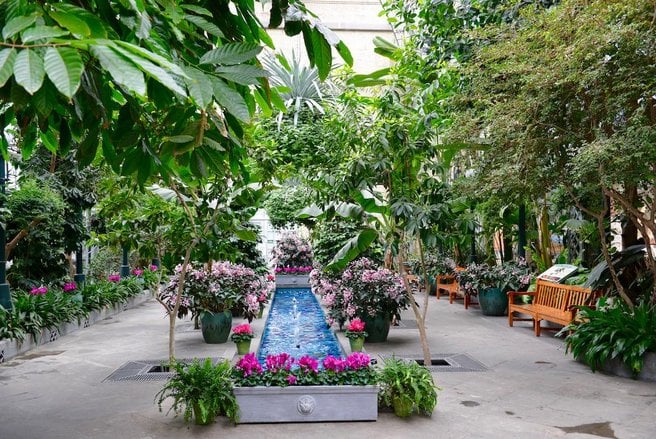
The Conservatory is the central building of the garden and encloses about 28,000 square feet of growing space under glass. It reopened in 2001 after a renovation that began in 1997 and rebuilt the aging structure, its climate systems and its interior rooms. Separate houses inside recreate distinct growing conditions. The Tropics room fills a tall central pavilion with a rainforest canopy that visitors can look down on from an upper walkway. Other rooms hold desert succulents, medicinal plants, primitive plants such as ferns and cycads, and the flora of oceanic islands including Hawaii.
Orchids and flowering displays
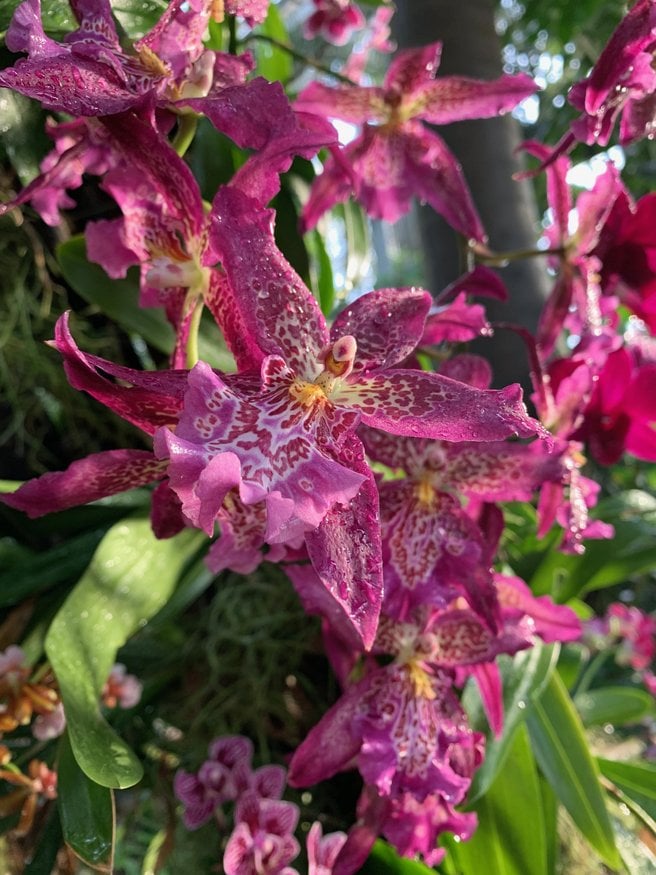
The garden keeps one of the larger orchid collections held by any public institution in the country, several thousand plants in all, and rotates blooming specimens through a dedicated orchid house across the year. Each winter it mounts a joint orchid exhibition with the Smithsonian Institution. Seasonal flower displays change with the calendar, from spring bulbs and summer annuals to chrysanthemums in autumn. The winter holiday show, a tradition of long standing, combines poinsettias and other seasonal blooms with model railways and replicas of Washington landmarks built from bark, leaves, seeds and other plant parts.
Outdoor gardens
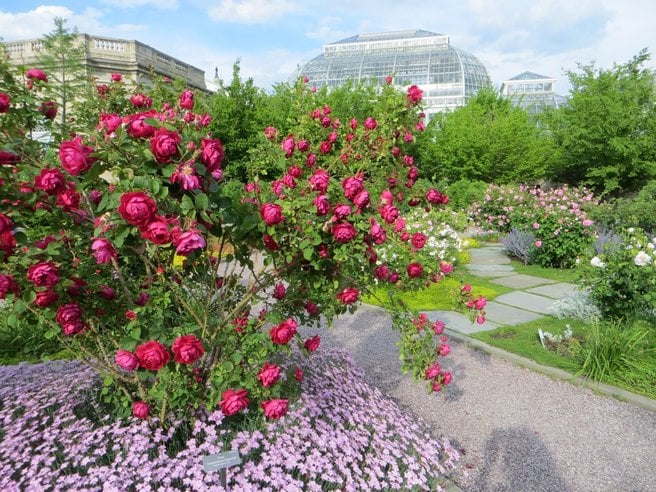
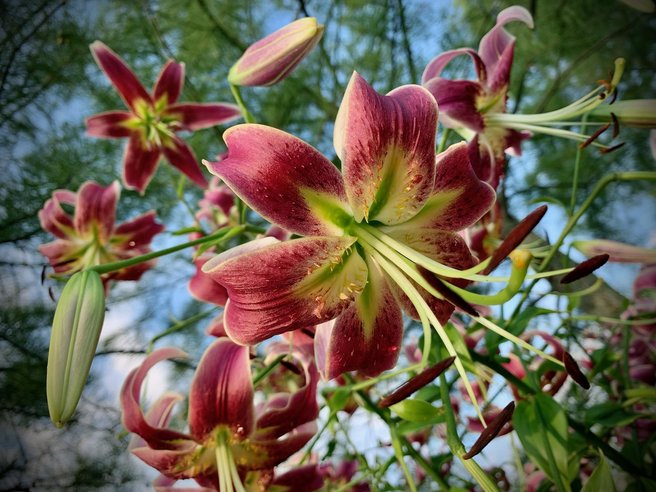
Beyond the glasshouse the campus includes several acres of outdoor planting. The National Garden opened in 2006 on the west side of the Conservatory. It contains a rose garden, a butterfly garden, a lawn terrace, a water feature and the Regional Garden, planted with species suited to the mid Atlantic climate. The rose garden gathers varieties chosen for scent and for their performance in the region, while the butterfly garden pairs nectar plants with the host plants that caterpillars feed on.
Bartholdi Fountain and Gardens
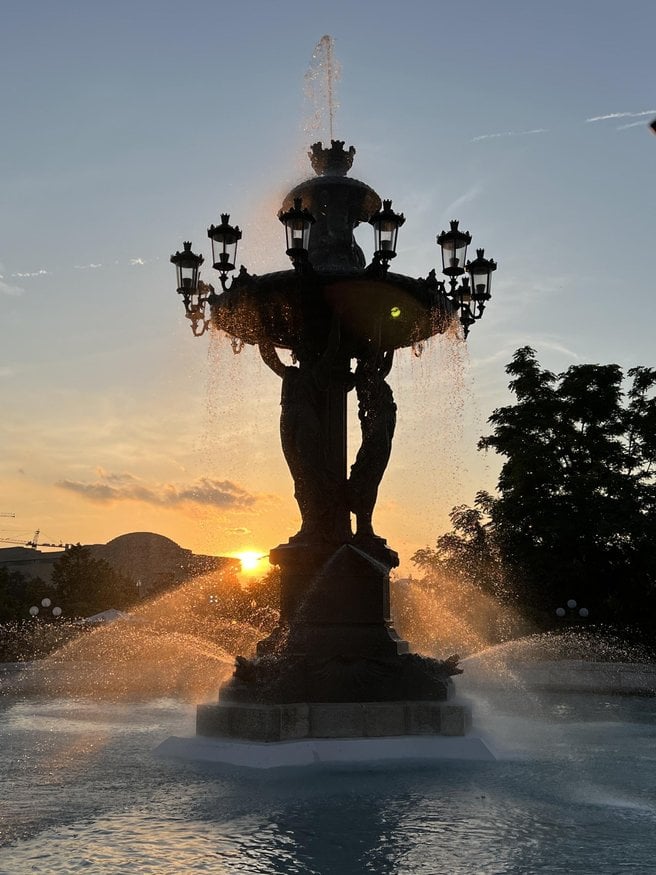
Across Independence Avenue sits Bartholdi Fountain and Gardens, a two acre space added to the campus in 1932. Its centerpiece is a cast iron fountain designed by Frederic Auguste Bartholdi, the sculptor of the Statue of Liberty, for the 1876 Centennial Exhibition in Philadelphia. The fountain rises about thirty feet, weighs more than fifteen tons and is lit at night. The surrounding beds were replanted in 2016 as a demonstration of sustainable design, arranged in themed sections that show how ornamental plantings can be built around water conservation and healthy soil.
Collections, research and education
The living collection holds more than 9,500 accessions representing over 44,000 individual plants. Curators organize them into groups that include economic and medicinal plants, orchids, carnivorous plants, cacti and other succulents, aroids, bromeliads, cycads, ferns and native plants of eastern North America. The garden takes part in plant conservation programs and keeps rare and endangered species, some of which no longer exist in the wild and survive only in cultivation.
Plants for display and distribution are raised at a production facility across the Anacostia River, opened in 1993, which provides about 85,000 square feet of greenhouse space in thirty four bays. Staff there propagate the annuals, perennials and specimen plants that fill the Conservatory rooms and outdoor beds through the year.
Admission is free and the garden opens every day. Public programs include lectures, workshops, school visits and demonstrations on subjects such as urban gardening, pollinator support and growing food in small spaces. The garden is also a working resource for members of Congress and for other agencies, supplying plants for official buildings and answering horticultural questions. Its mix of flowering collections, glasshouse rooms and outdoor gardens places it among the standard reference points for anyone studying ornamental and useful plants in the United States.
Business address
United States Botanic Garden
100 Maryland Avenue SW,
Washington,
District of Columbia
20001
United States
Contact details
Phone: +1 202-225-8333