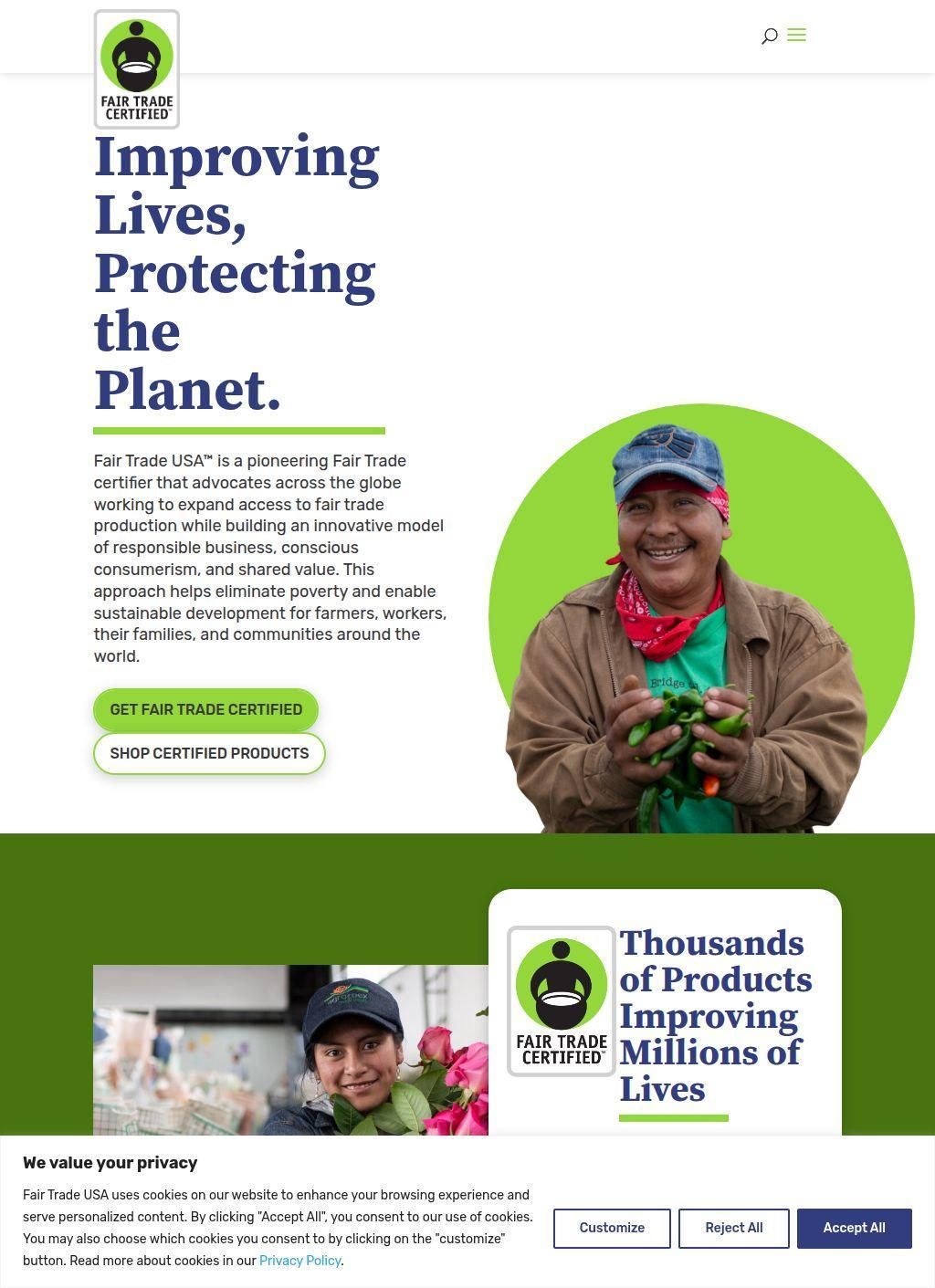
Fair Trade USA is a nonprofit certification body based in the United States that puts its seal on products meeting a defined set of labor and pricing standards. It operates as a 501(c)(3) organization, and the work it positions between producers in developing markets and the brands and retailers that want to sell goods with a credible ethical claim attached. The category that lands it here, food gifts, only captures a slice of what it covers, since coffee and chocolate are the consumer-facing items most people associate with the seal.
Six product categories with price floors
The certification spans six areas: coffee, factory-made goods, floral products, produce, consumer packaged goods, and seafood. Each carries standards around safe working conditions, fair compensation, and a guaranteed minimum price paid to farmers and producers. That last piece is the part I find most concrete, because a floor price is a measurable commitment, not a vague promise about doing better. On top of the price floor, certified producers gain access to Community Development Funds, money routed back into the communities where the goods originate. The site explains how those funds get directed and who decides where they go.
Community Development Funds for producers
For businesses, the offering from Fair Trade USA is more practical than ideological. It licenses brands and traders to carry the Fair Trade Certified seal, and it keeps a partner directory so the relationships are visible to anyone checking a supply chain. A separate Partner Portal handles the working side of those accounts for business clients. The roster of retail partners aligned with Fair Trade USA is not small: Amazon, Target, Kroger, and Sam's Club all appear among the chains carrying certified products. That scale tells you the seal has crossed from niche signal into mainstream shelf space.
Licensing and partner relationships
The answer is four different groups, and the structure of the site reflects that split. Brands come looking for a way to back up an ethical sourcing claim with a recognized third party. Retailers use the certification to set their shelves apart on sustainability. Producers and farming cooperatives, often in developing economies, engage with the standards and the funds. And consumers arrive wanting a way to verify that a bag of coffee or a bar of chocolate carries more than marketing behind it.
Four distinct audience groups
Serving four audiences at once is a hard balance, and the site mostly manages it by giving each group its own track. Fair Trade USA runs a Producer Certification and Recognition Program aimed at the supply side, ongoing Agricultural Standards revision work that keeps the rules current, and a donation platform at the consumer and supporter end for those who want to fund the mission directly. The material does not collapse into one generic pitch, which is the right call when a coffee roaster and a smallholder cooperative need very different information from the same organization.
Producer certification and agricultural standards
The presence of an active standards-revision process is worth noting on its own. Certification schemes lose credibility when their rules ossify, so the fact that Fair Trade USA treats its Agricultural Standards as a living document, revised on an ongoing basis, is a point in its favor. It is a sign the body is paying attention to how conditions on the ground actually shift over time, and that the rules behind the seal keep pace with them.
How does the organization stay current?
Social activity is consistent across the usual channels, with accounts on Instagram, Facebook, Twitter, YouTube, and LinkedIn all running under the same handle. For an organization whose value depends on public recognition of a seal, keeping that recognition fresh across platforms is part of the actual job, not a side activity. On independent review platforms, Fair Trade USA does not have a broad public ratings presence, which is typical for a B2B certification body, given that most of its relationships run through brands and retailers, with few end consumers leaving reviews online.
Social media presence and public visibility
What the site does well is make the mechanics legible. A shopper can understand what the seal means, a brand can find the path to licensing it, and a producer can see what certification requires and returns. The minimum-price guarantee and the Community Development Funds give the whole thing a backbone of specifics that a lot of ethical-labeling efforts lack. There is a real program behind the logo, with documented standards and a named structure for the money.
Transparent mechanics and documented standards
If there is a limitation, it is one of category fit. Filing Fair Trade USA under food gifts undersells the breadth of what it certifies, and a visitor arriving with chocolate and coffee in mind will find a far larger operation than that framing suggests. The seafood and floral certifications, for instance, have nothing to do with gift baskets. None of that reflects on the organization itself; it is a note that the listing context narrows something deliberately wide.
The verdict is straightforward. Fair Trade USA runs a documented, multi-category certification program with concrete producer protections, a transparent funding mechanism, and adoption by retailers most shoppers already use. A consumer trying to read a label honestly, or a business weighing whether certification is worth pursuing, will find the substance here to make that call. The one caveat is practical rather than critical: come expecting a national certification infrastructure across many product types, and treat the food-gift angle as a single entry point into a much broader operation.
Business address
Fair Trade USA
360 Grand Avenue #311,
Oakland,
California
94610
United States
Contact details
Phone: 1-510-663-5260