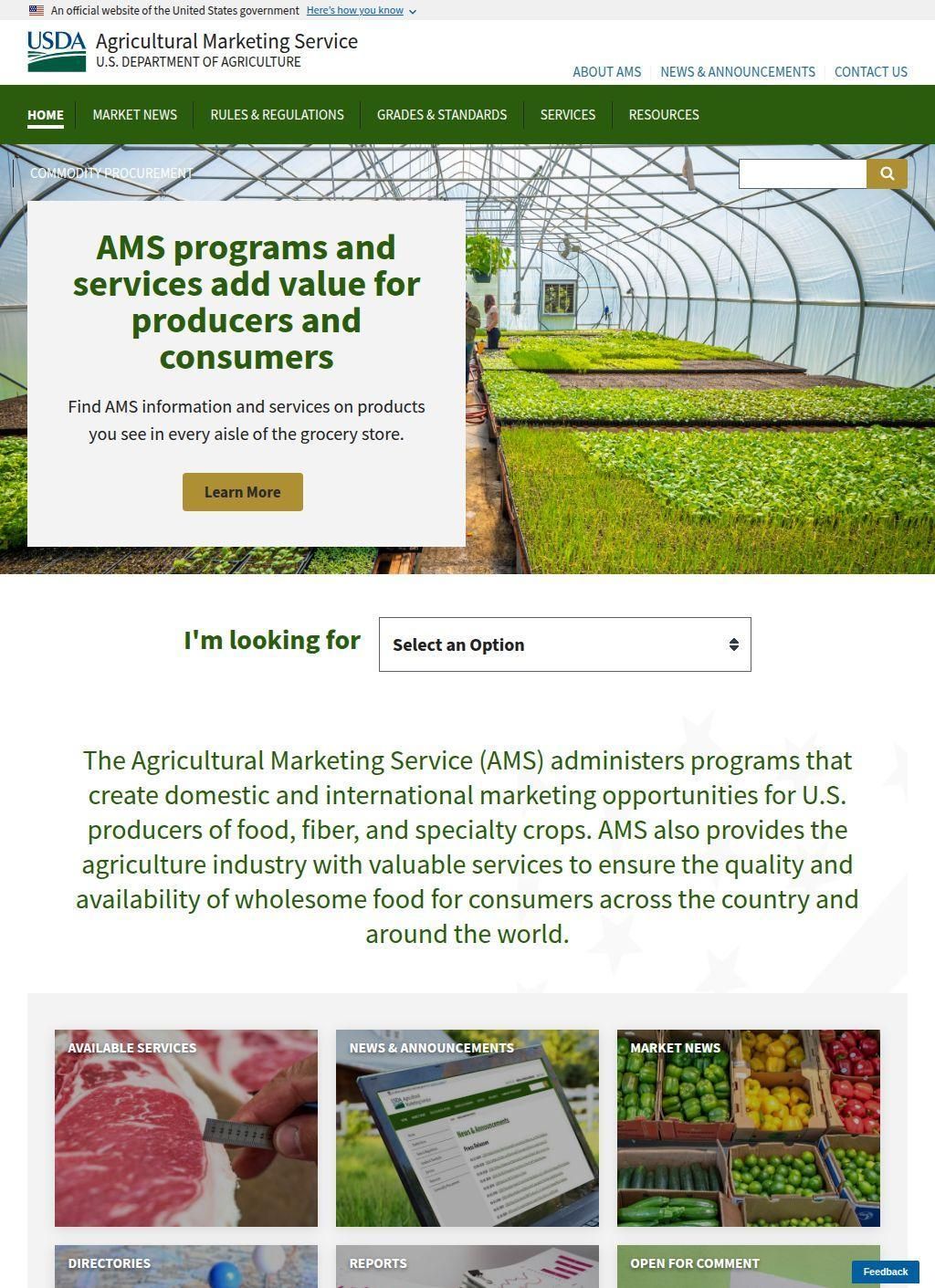
Feeder and replacement cattle auction reports, broken out state by state, are the part of this site that anyone tracking livestock prices will reach for first. The USDA Agricultural Marketing Service, an arm of the U.S. Department of Agriculture, collects that data straight from auction sites and publishes it as plain reports, PDF or online, covering slaughter cattle moving through local livestock markets alongside the feeder and replacement runs. It is granular, repeatable reporting that small operations rarely have the means to produce on their own, and here it sits open and free.
Livestock auction reports by state
That auction coverage is one slice of a much larger reporting effort. USDA Market News, the public face of much of what the USDA Agricultural Marketing Service does, has been putting out price and sales figures for more than a century, and the spread of commodities is wide: livestock, meat, poultry, eggs, wool, grain, feedstuffs, bioenergy, fruits, vegetables, and the specialty crops that often get short shrift elsewhere. A producer trying to read where prices are heading, a buyer weighing a purchase, a distributor planning transportation: all can pull the same unbiased numbers and reach their own conclusions without any party having an informational edge. The Livestock, Poultry and Grain Market News Division handles the volume and price side of that work, and it also develops the quality standards that meat, poultry, egg, and rabbit products are measured against.
Market news across commodities
The mandate behind all this reporting reaches back to creating domestic and international marketing opportunities for the people who grow food, fiber, and specialty crops. That framing explains why the USDA Agricultural Marketing Service leans so hard on free, unbiased data: the goal is a working market where a small producer can see the same prices as a large one. Transparency is the product, not a courtesy.
From field to fair trade practices
Standards are only useful if someone applies them consistently, and a good chunk of what the agency does is exactly that. USDA grading runs across beef, lamb, poultry, eggs, dairy, and produce, covering the familiar shields that show up on packaging and in wholesale dealing. One detail worth flagging is the Remote Grading Program for Beef, which lets independent packers get grading done without carrying the cost of a grader on site. For smaller plants that single change to the cost structure can be significant, and it is the sort of practical adjustment that does not always make headlines.
Grading standards for meat, poultry, eggs
Inspection and testing extend the same idea into other commodities. The Federal Grain Inspection Service checks grains, pulses, oilseeds, and processed goods, while the Seed Regulatory and Testing Division runs agricultural and vegetable seeds against market compliance rules. There is also an audit and accreditation track built on international standards, the route by which a producer or supplier can demonstrate to a customer that what they ship stays consistent batch after batch. These are quiet functions, but they sit underneath a great deal of commercial trust in the food chain, and the USDA Agricultural Marketing Service carries most of them under one roof.
Grain inspection and seed testing services
Procurement is handled here too. The USDA Agricultural Marketing Service issues solicitations for more than 200 USDA Foods, and approved vendors submit their offers through a Web-Based Supply Chain Management system. That connects the agency directly to the food assistance programs and government buyers who need a steady, vetted supply, a different audience from the farmer checking a cattle report but served by the same organisation.
Procurement and transportation logistics
Transportation gets its own attention as well, through analysis and services tied to agricultural shipping equipment and logistics. Moving perishable and bulk farm goods efficiently is half the battle for exporters and distributors, so its presence rounds out the picture of an agency that follows a commodity from the field to the buyer.
The reach runs from farmers and producers through processors, distributors, and exporters, then on to people administering food assistance programs and procurement offices buying in bulk. A site serving that many constituencies at once risks feeling scattered, and the USDA Agricultural Marketing Service does cover a lot of ground, but the common thread is consistent: collect reliable information about agricultural markets, set and check standards, and make the results available to anyone who needs them. Fair trade practices in livestock trading sit behind that mission, which is why so much of the output is oriented toward keeping buyers and sellers on equal footing.
Comparing prices across regions and time
The market news material is the strongest reason for most visitors to keep a tab open. A century of continuous price reporting is not a marketing claim, it is a record, and the value compounds because the figures are unbiased and comparable over time. Someone watching feeder cattle in one state can set those numbers against slaughter cattle prices at a nearby market and see the spread for themselves. The grading and certification programs back that up by giving the traded goods a shared vocabulary, so a USDA grade means the same thing to a buyer in one region as it does in another. The USDA Agricultural Marketing Service has had a long runway to refine how that information is presented, and it shows in how readily the auction reports slot into a daily routine.
Check the auction reports for current data
What the USDA Agricultural Marketing Service offers is less a single tool than a working reference for an entire sector, and the auction reporting that lands it in the auctions category is a fair representative of the whole: specific, current, collected at the source, and given away rather than sold. For producers, the grading shields and the price reports do real work together. For government and food-program buyers, the solicitation system and the audit standards run by the USDA Agricultural Marketing Service are the practical doorway in. The breadth can take a moment to navigate, and not every division will be relevant to any one visitor, but the depth behind each program is genuine. A cattle producer comparing this week's replacement heifer prices across three states will find the data already compiled and waiting.
Business address
USDA Agricultural Marketing Service
1400 Independence Avenue SW, Room 3071-S,
Washington,
DC
20250
United States
Contact details
Phone: 202-720-8998