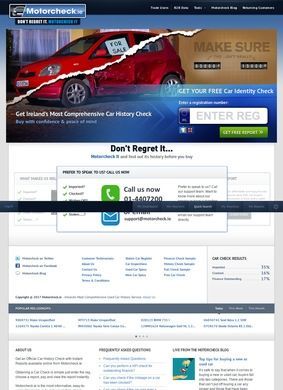
Type an Irish registration plate into Car History Checking Service and within seconds it returns whether the car in front of you has been written off, scrapped, stolen, or quietly clocked to shave thousands of kilometres off the dial. That is the whole pitch, and it is a useful one. Buying a used car in Ireland or the UK means trusting a stranger about a machine you cannot see the past of, and a paid report from Car History Checking Service pulls together the records that strangers tend to forget to mention.
Inside the full vehicle report
The full report is the paid product, and the list of what it covers is long enough to justify the fee. Outstanding finance is checked, which alone can save a buyer from purchasing a car that still legally belongs to a lender. Mileage is verified across recorded readings so that clocking shows up as an inconsistency instead of a surprise two years later.
What the check covers
There is write-off and scrapped status, a stolen-vehicle flag, NCT and MOT history, the number of previous owners, road tax status, and records of engine or colour changes. It also surfaces things people rarely think to ask about: whether a car has spent part of its life as a taxi or hackney, what manufacturer warranty data exists, the Euro NCAP safety rating, any open recalls, and a valuation estimate so the asking price has something to be measured against.
Why breadth beats a basic check
That breadth is the point. A cheaper check might confirm the make and model and stop there. Car History Checking Service goes after the records that actually change a buying decision, and it presents them as one report instead of sending someone off to chase five different agencies. For a private buyer doing this once every few years, the convenience is real, and the taxi-usage and recall data are the items that separate a thorough check from a token one.
Free identity check option
Not everything sits behind the paywall. A free basic identity check returns the core vehicle details from the registration alone, which is enough to confirm a seller is describing the right car before any money changes hands. It is a sensible on-ramp, and it lets someone test the plate they have been given without committing to a purchase. The full report still costs money, and reports are delivered instantly once payment goes through, so the whole thing is self-serve from start to finish with no waiting on a human.
Tools for traders and dealerships
Car History Checking Service is not aimed only at people kicking tyres on a driveway. There is an API for businesses and traders who want to fold these checks into their own systems, and a separate trade portal at trade.motorcheck.ie built for dealerships and motor trade professionals. Gift vouchers are offered too, which is an odd but logical touch given how often someone buys a car for a family member. The service has built distinct tooling for each audience, private buyers on one side and motor trade professionals on the other, which is a different kind of effort than a single landing page stretched to cover both.
Behind the data guarantee
One detail worth singling out is the data guarantee. Every report carries a 30,000 euro guarantee on the data it provides, which puts real money behind the accuracy claim. Plenty of check services promise reliable data; backing it with a financial commitment of that size is a stronger move than a reassuring sentence on a homepage. It will not undo a bad purchase on its own, but it changes the risk calculation for the buyer who is leaning on the report to make a decision.
How does the service rate on trust?
Reputation lands roughly where you would hope for a service handling money and trust. Trustpilot carries around 211 reviews at a four-star rating, a figure echoed across several of the regional Trustpilot pages. Smart.reviews lists it higher, at 4.7, and there are further user reviews on TrustBurn without a clear aggregate to read from. Four stars across a couple of hundred Trustpilot reviews is a credible middle: enough volume that the score is not a fluke, and not the suspiciously perfect run that makes a thoughtful buyer narrow their eyes. It reads like a service that mostly delivers and occasionally disappoints, which is the honest shape of most things.
Contact options for buyers
Contact is handled without games. A phone number and a support email are both published on the site, and there is a live chat option for anyone who would rather not wait. For a product that takes payment up front and delivers a digital report, having a visible phone line matters, because the moment something looks wrong in a report is the moment a buyer wants a person, not a help article. Car History Checking Service does not bury that route, and the live chat gives a faster lane for the smaller queries that do not warrant a call.
Limits of the service
There are limits worth naming. This is a data product, so its value depends entirely on the completeness of the records it draws from, and no check can promise to catch every undisclosed accident or every quietly repaired flood car. The coverage is Ireland and the UK, so it is not the tool for someone importing from further afield. And the meaningful detail is paid, so a buyer comparing several cars will be paying per report unless they look at the trade options. None of that is a flaw so much as the nature of the work, but it is the realistic frame for what Car History Checking Service can and cannot do.
Weighed up, Car History Checking Service does the thing it sets out to do and does it broadly. The report covers the checks that genuinely protect a used-car buyer, the free identity lookup lowers the barrier to a first try, the trade portal and API extend it to people who run this at scale, and the data guarantee puts a number behind the promise. The four-star standing and the open contact details fit a service that has been doing this long enough to be judged on results. The cost of a report from Car History Checking Service is small against what it can catch, and the registration-plate lookup that opens the whole process takes about as long to run as reading this sentence.