Property seized and forfeited under federal laws enforced by agencies of the Department of the Treasury and the Department of Homeland Security is sold at public auction under the direction of the Treasury Executive Office for Asset Forfeiture, known as TEOAF. The office was established in 1992 to shape the consistent and strategic use of asset forfeiture by the agencies it serves, and every dollar the auctions raise is deposited in the Treasury Forfeiture Fund, the account it administers.
The seizing agencies behind the sales are Internal Revenue Service Criminal Investigation, Homeland Security Investigations, and the United States Secret Service. Their casework produces a constant flow of property into the program, from suburban houses to cargo lots taken at ports of entry.
Two auction tracks
The program splits into two lines of business. Real property auctions dispose of houses, condominiums, commercial buildings, operating businesses, and vacant land. General property auctions handle movable goods: cars, trucks, motorcycles, boats, aircraft, jewelry, watches, electronics, antiques, furnishings, and the occasional oddity such as bulk refrigerant seized by customs officers. Both tracks are run by private contractors working under Treasury supervision, and both publish schedules and catalogs in advance of each event.
Real property auctions
A national contractor manages seized, blocked, and forfeited real estate in all fifty states, the District of Columbia, and the territories, handling custody, upkeep, and disposition on behalf of TEOAF. Properties sell either through online auctions or at live events held at the property itself. Every real property auction is open to the public, and a free email notice service announces upcoming sales to subscribers.
Deposits, bidding, and closing
Bidding on real estate ordinarily requires a deposit by cashier's check in the amount stated in the terms of sale for that property. When several properties sell at the same time and place, a separate deposit is needed for each one a bidder wants to pursue, and checks are returned to those who do not win. Written bids can be submitted for onsite auctions by bidders who cannot attend in person.
The winning bidder moves to a closing on the schedule fixed by the terms of sale, paying the balance by the stated deadline. Title transfers by special warranty deed. The government offers no financing, so buyers who cannot close in cash or with their own lender risk losing the deposit. A real estate broker is welcome but never required, and each property's opening bid is set in advance, sometimes with a reserve behind it.
Inspection and terms of sale
Announced inspection periods let bidders walk through a property before the sale. The terms of sale document for each listing controls the deposit amount, the closing timeline, and any special conditions, and the auction pages tell bidders bluntly to read it first. Questions go to a public auction line staffed by the contractor, and the program's published answers cover the points first-time bidders raise most, from how deposits are handled when a bidder loses to whether a government employee or a foreign national may take part.
The same contractor has supported Treasury and Homeland Security seizure work since 1990 and also performs asset management for other federal clients, so the sale mechanics tend to be uniform from one property to the next.
General property auctions
Movable property is consolidated at contractor facilities in Dayton, New Jersey, Pompano Beach, Florida, and Riverside, California, covering the East, Southeast, and West. Sales run as nationwide online auctions, as vehicle events, and as recurring vessel and aircraft auctions, with live and simulcast events staged at the Riverside and Pompano Beach sites. The published calendar for 2026 and early 2027 lists vehicle sales in the spring, nationwide online auctions in May, September, December, and March, and vessel and aircraft auctions spaced through most months of the year.
Nearly all events are open to any adult member of the public. The exception is the occasional vehicle sale restricted to licensed salvage dealers, which the calendar labels as such. Auction catalogs are posted for download before live events, and bid results appear on the site after each sale, so a first-time buyer can review what comparable lots actually brought.
Goods sell in their existing condition under the government terms of sale posted for the program. Inspection before bidding is the buyer's job here as well.
Where the money goes
Sale proceeds from both tracks are deposited in the Treasury Forfeiture Fund. The fund's stated mission is to use asset forfeiture to disrupt and dismantle criminal enterprises, and its revenues pay for law enforcement activities and for restitution to victims of fraud. The auctions are the visible end of that pipeline, converting seized wealth into money a court or agency can redirect.
Schedules shift during the year as cases resolve, so the calendar pages carry the current dates for each program, and the email lists remain the practical way to hear about a property before the sale closes. The department's general information line in Washington handles questions that fall outside what the auction contractors can answer.



Business address
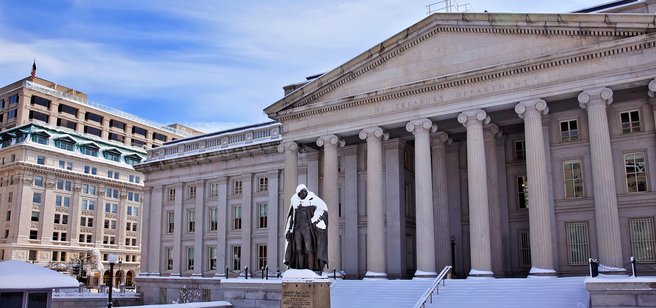
U.S. Department of the Treasury
1500 Pennsylvania Avenue NW,
Washington,
DC
20220
United States
Contact details
Phone: (202) 622-2000