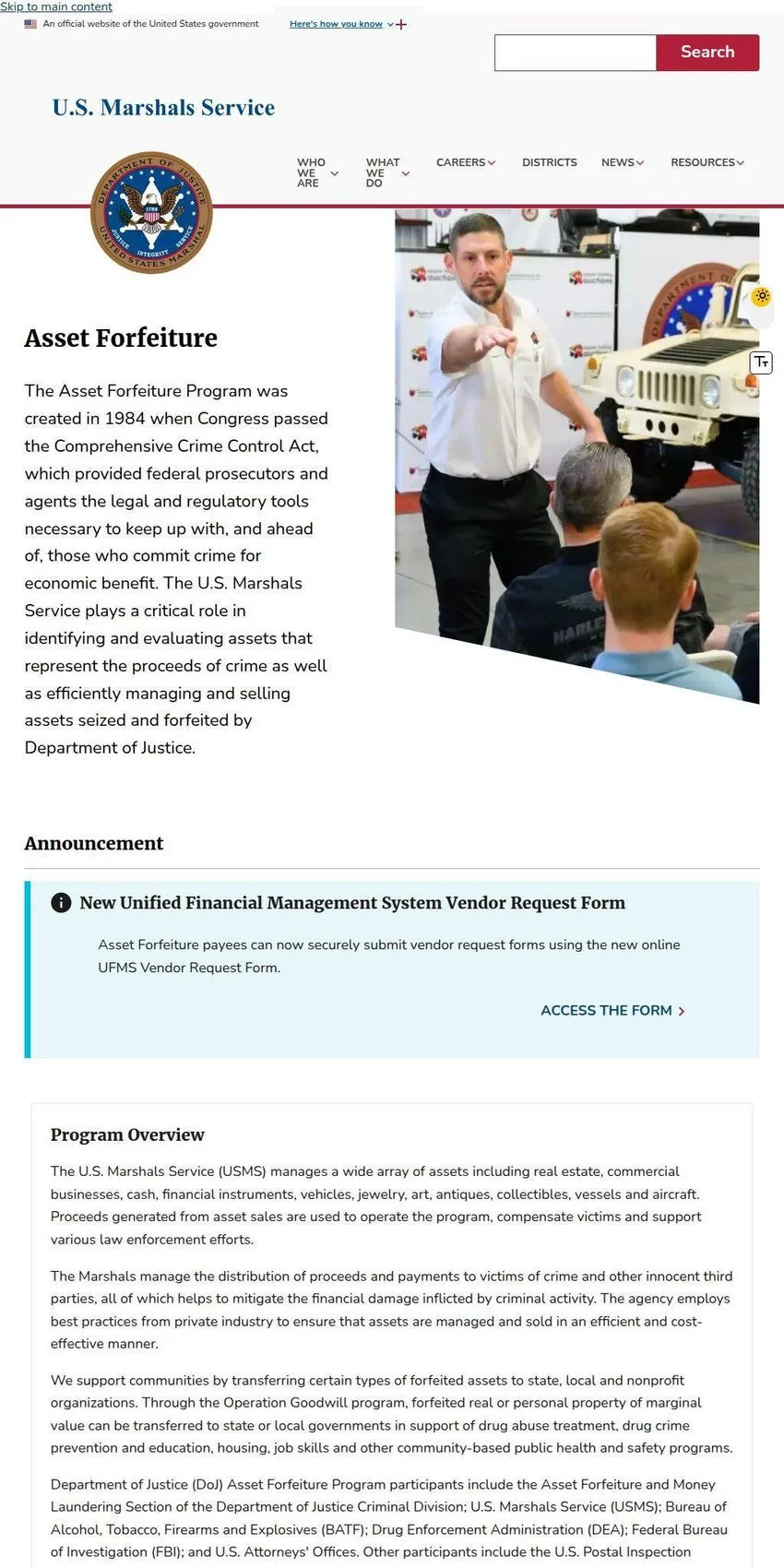
The United States Marshals Service manages and sells property seized and forfeited through federal criminal cases, a duty it has carried since Congress created the Department of Justice asset forfeiture program in 1984. The inventory at any moment can include houses, commercial businesses, cash and financial instruments, vehicles, jewelry, art, antiques, collectibles, vessels, and aircraft, along with intangible holdings such as virtual currency, domain names, and licenses. Selling that property, and doing it at a defensible price, is one of the agency's core assignments within the program.
Other participants in the Justice forfeiture system include the Drug Enforcement Administration, the Federal Bureau of Investigation, the Bureau of Alcohol, Tobacco, Firearms and Explosives, and the United States Attorneys' offices. Their cases produce the assets; the Marshals take custody and handle disposition.
Real estate sales
Forfeited real property is usually sold the way an ordinary private home is sold, not from the courthouse steps. The Marshals list properties with licensed local brokers, price them at fair market value, and advertise them on the consumer real estate sites buyers already browse, along with a dedicated listing site operated by the agency's national real property contractor. A buyer can tour a forfeited house with an agent, make an offer, and close much as with any conventional purchase.
Because pricing follows the local market, deep discounts are not the point. The agency's obligation is full value recovery, and appraisal-based listing prices reflect that.
Personal property auctions
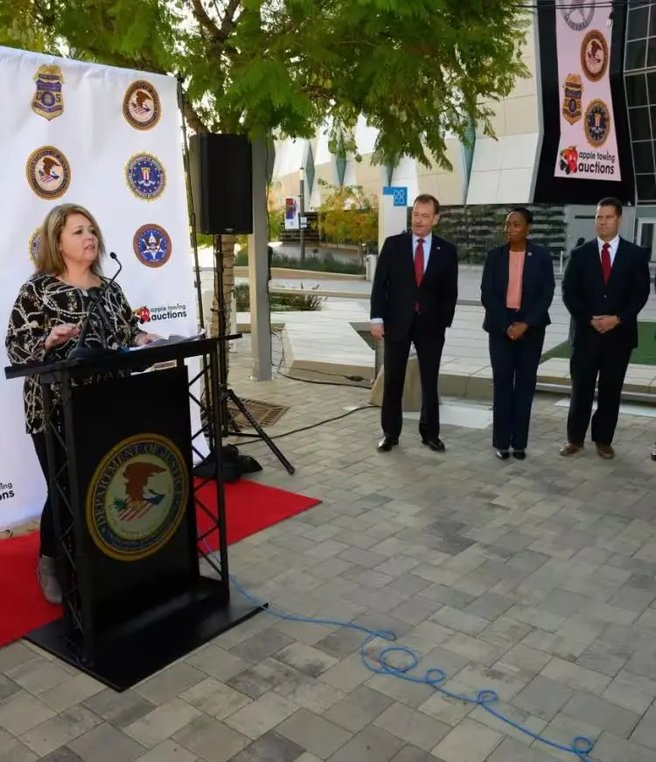
Movable assets sell through hundreds of online and live auctions every year, all open to the public. The agency contracts with commercial auction houses around the country to run the events, and its asset forfeiture pages keep a current list of those firms with their active Marshals sales. The 2026 roster includes general auctioneers in Texas and the Pacific, an Ohio auto auction, marine liquidators, and an aviation recovery firm. Past and current auctions have featured collectible vehicles, certified Rolex watches, diamonds, gold and silver, famous paintings, yachts, and business aircraft, alongside everyday cars and equipment. One 2026 listing offered a Cessna Citation Sovereign business jet through the aviation contractor, with a posted online closing date in July.
Taking part as a buyer
There is no central bidder registry. Each auction firm publishes its own calendar, registration steps, deposit requirements, and payment rules for the sales it conducts, so the practical path for a buyer is to find an upcoming Marshals sale on the agency's list, then register with the specific auctioneer running it. Lots sell in their existing condition, and inspection or preview arrangements are set by the auction house for each event.
The agency has also sold forfeited bitcoin and other digital assets in dedicated sealed-bid and auction events over the years, sales that draw bidders well beyond the usual vehicle and jewelry crowd.
Court ordered sales
Separate from forfeiture work, district offices of the Marshals Service conduct judicial sales of property under civil process, selling real and personal property by court order to satisfy judgments. Those sales follow the orders of the issuing court and are announced by the district handling the case.
Where proceeds go
Money raised through asset sales operates the forfeiture program, compensates victims of crime, and supports law enforcement work. The Marshals Service is the primary disbursing agency for the Justice program, processing more than thirty thousand payments a year that together typically exceed five hundred million dollars. Recipients include victims owed restitution, state and local police agencies receiving equitable sharing payments, and the contractors that manage and sell the property itself.
Payees must submit a vendor request form through the agency's financial system before funds can be released, with review completed within about five business days of a valid submission. Nearly all payments are subject to the Debt Collection Improvement Act of 1996, which lets the government offset money owed to a payee against delinquent debts to the United States or to a state, so a payment can arrive reduced even when the underlying claim is valid.
The agency describes its approach to custody and disposition as borrowing the practices of private industry, with the stated aim of managing and selling assets efficiently and at low cost. Appraisals, contracted brokers, and specialized auctioneers all follow from that model.
Property that has value to a community but little at auction can leave the inventory another way. Under the Operation Goodwill program, forfeited real or personal property of marginal value is transferred to state and local governments or nonprofit organizations for use in drug abuse treatment, drug crime prevention and education, housing, and job skills programs. The agency also supports the placement of dogs recovered from illegal fighting operations, a task it took on as part of its forfeiture role.
Questions about the program go to the agency's asset forfeiture division at its Arlington headquarters, and each auction contractor answers questions about the specific lots it is selling.



Business address
U.S. Marshals Service
1215 South Clark Street,
Arlington,
VA
22202
United States
Contact details
Phone: (202) 307-9100