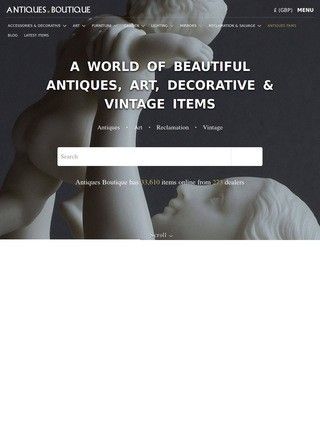
Where do you turn when you need a specific Georgian sideboard and a set of Victorian dining chairs from independent specialists, not a big-box retailer? Antiques Boutique is built for exactly that search: roughly 90,000 pieces from a couple of hundred vetted dealers, organised into seven categories, with the individual dealer behind each item visible and contactable, not hidden behind a single corporate storefront. In a trade where provenance questions follow almost every purchase, that transparency is foundational to how the whole experience works.
Furniture and decorative pieces lead inventory
Accessories and decorative leads by volume at Antiques Boutique, running past twenty thousand pieces: jewelry, ceramics, glass, books, clocks. Furniture is the second anchor at over twelve thousand items, covering tables, chairs, sofas, cabinets, and beds. Someone hunting for a particular piece at a particular price has genuine depth to draw from, with multiple dealers listing comparable options so condition and price variation is visible across listings at once.
Standalone mirror and salvage sections
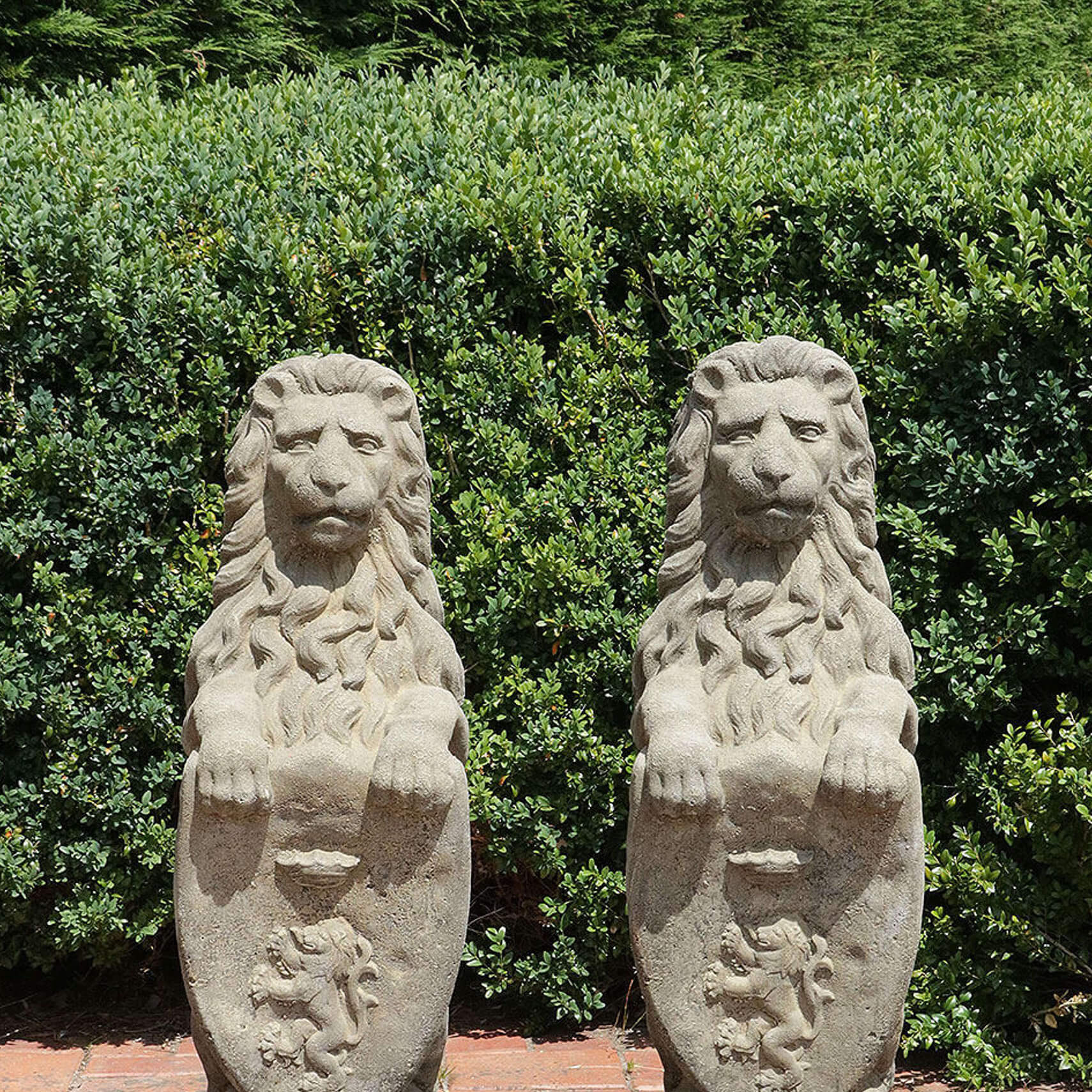
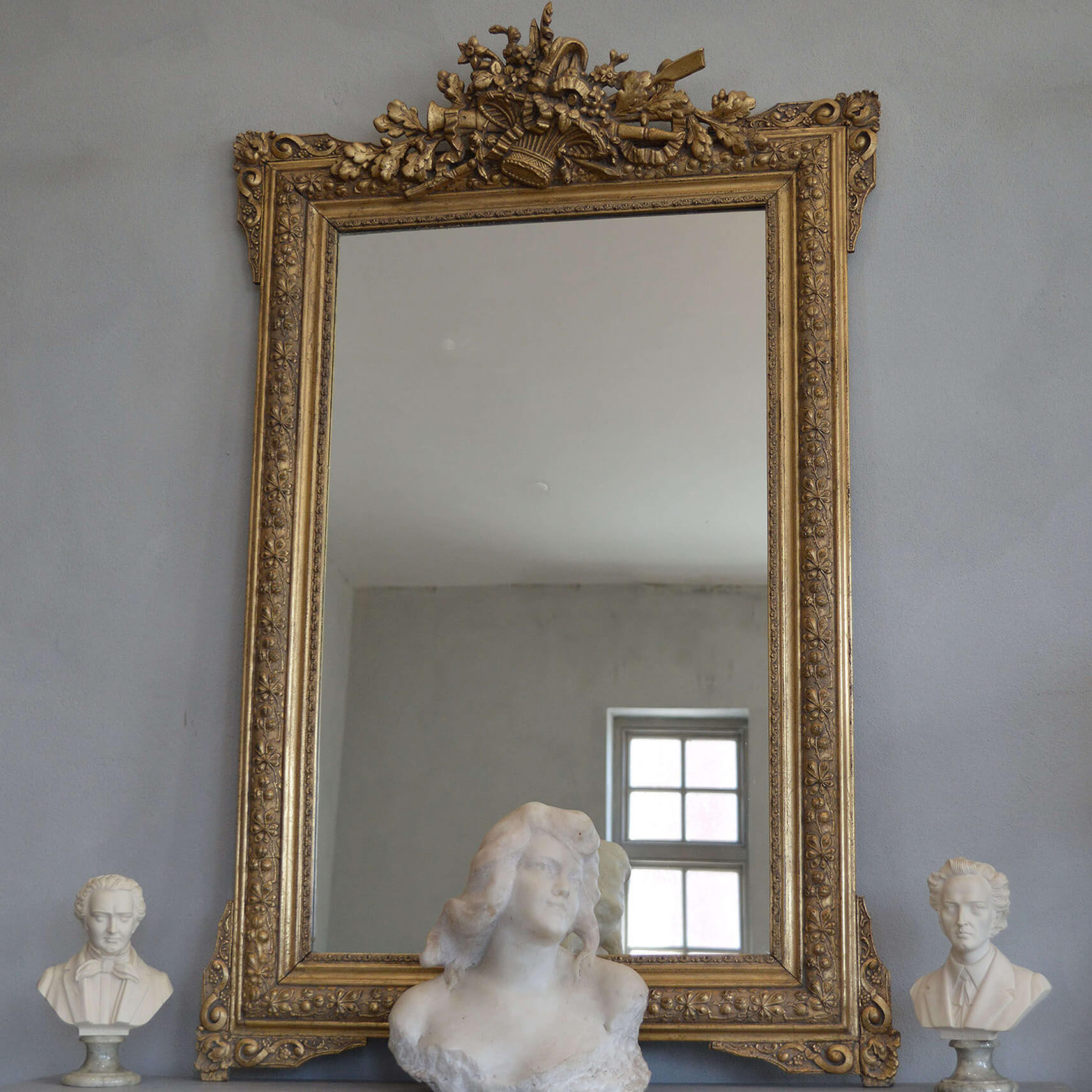
The smaller categories are where Antiques Boutique makes choices worth paying attention to. Mirrors have a standalone section with over a thousand pieces, a practical call given how often a mirror is its own self-contained purchase, disconnected from any furniture hunt. Garden covers statues, urns, benches, and sundials. The reclamation and salvage section stocks architectural features, old doors, and fireplaces. Renovators and restorers chase this material constantly and rarely find it aggregated cleanly in one place; that section alone is enough reason for repeat visits from the right buyer.
New inventory keeps categories current
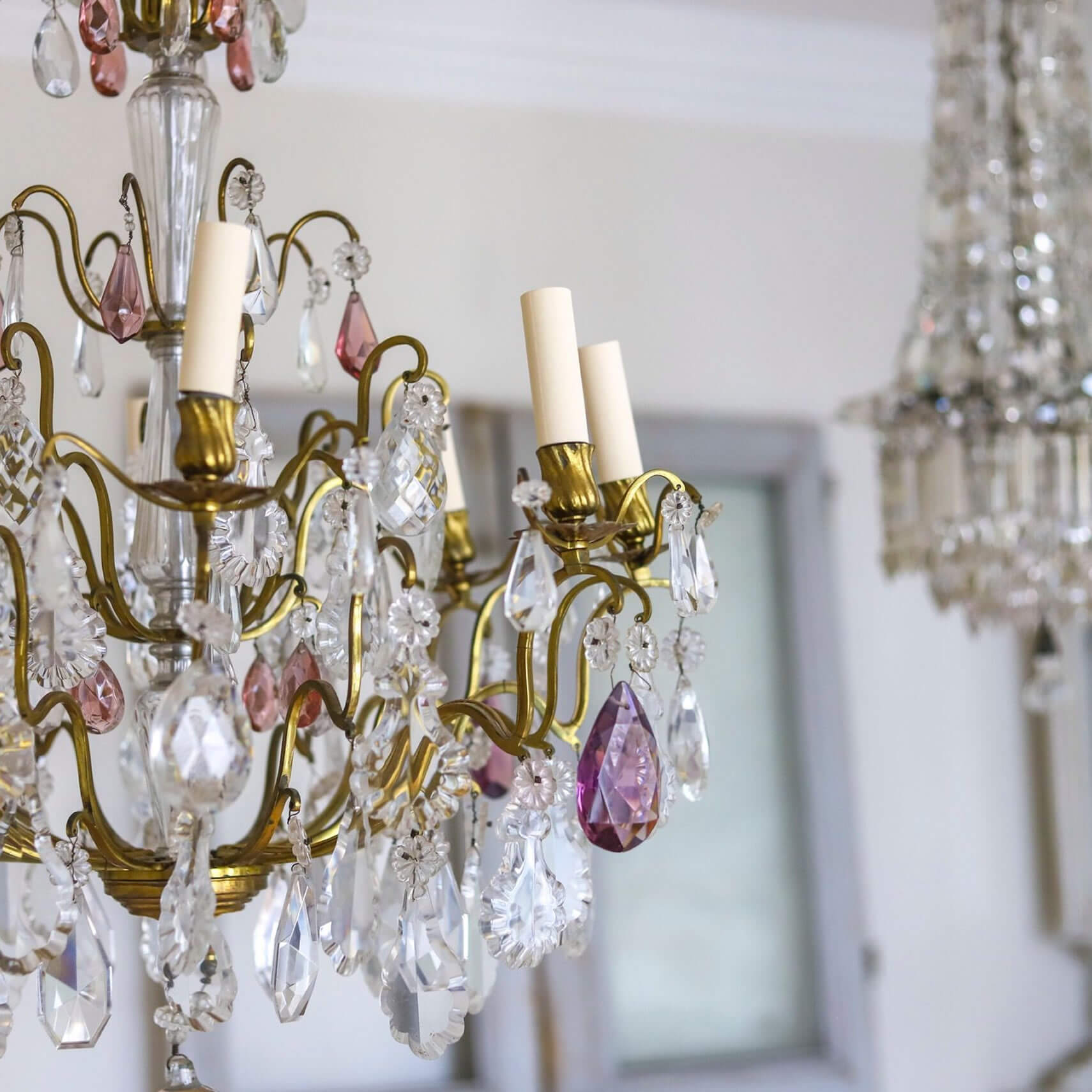
Art runs close to six thousand paintings, prints, sculptures, photographs, and etchings. Lighting covers chandeliers, lamps, and candlesticks across a few thousand listings. New dealer inventory cycles in continuously, which keeps the catalogue alive without requiring a single owner to source and curate everything. That is the structural advantage of a marketplace model over a fixed-stock storefront, and Antiques Boutique leans into it fully.
Fair diary and authenticity blog for buyers
Alongside the marketplace, Antiques Boutique runs an antiques fair diary listing upcoming fairs with dealer details, useful for anyone who wants to inspect a piece in person before spending. There is also an Antiques News blog covering collecting guides and authenticity notes. In a trade where reproductions circulate freely and provenance is contested at every price point, those authenticity resources give a less experienced buyer a way in beyond guesswork. A platform that publishes this kind of editorial alongside commerce is doing something a bare aggregator does not bother with.
Vetting process defines who can sell
The stated audience spans individual collectors, interior designers, and prop buyers working in TV and film production, alongside dealers looking for an established online storefront with an existing buyer base. Dealers with professional reputations at stake are more careful about what they list than sellers on general classifieds boards, and the vetting step at the entry point reinforces that discipline. Applications from new dealers go through an approval process, not an open-door signup, which is a meaningful quality gate at this inventory scale, and it is central to why Antiques Boutique presents itself as a curated marketplace.
External reviews remain thin despite scale
The external review picture is limited without being alarming once you understand the structure. On Facebook, listed as AntiquesBoutiqueMarketplace, Antiques Boutique has around 524 likes and a few dozen people actively engaging, but no star rating attached to the page. No substantial external reviews appear on Google, Trustpilot, Yelp, Tripadvisor, or the BBB. For a platform running close to six figures of inventory, that absence is worth noting. The likeliest explanation is structural: buyer feedback in this kind of marketplace tends to attach to the individual dealer, not to the platform that connected them, so Antiques Boutique may be accumulating credibility it cannot point to in any single place. A first-time user is reasonable to factor that in before parting with money.
Contact options stop at email
An email address is published on the Facebook page and a contact route exists on the site itself. No phone number or postal address surfaces on the homepage. For a platform where individual transactions can reach significant sums, the absence of a visible phone number or physical address creates a friction point that the email form alone does not resolve.
Weighing strengths against remaining gaps
At the catalogue and editorial level, Antiques Boutique is a serious operation. The vetting process, the standalone mirror and salvage categories, the fair diary, and the authenticity blog all go past minimum effort. The external review gap and the homepage contact limitations are genuine shortcomings that a buyer evaluating a first purchase here will need to sit with. One question the site cannot answer directly is whether the vetting process applies uniform standards across all two hundred dealers or varies significantly by category; for high-value purchases, the answer to that would count for a lot.
Business address
Antiques Boutique
3-4 Iron Gate,
Derby,
Derby
DE1 3FJ
United Kingdom