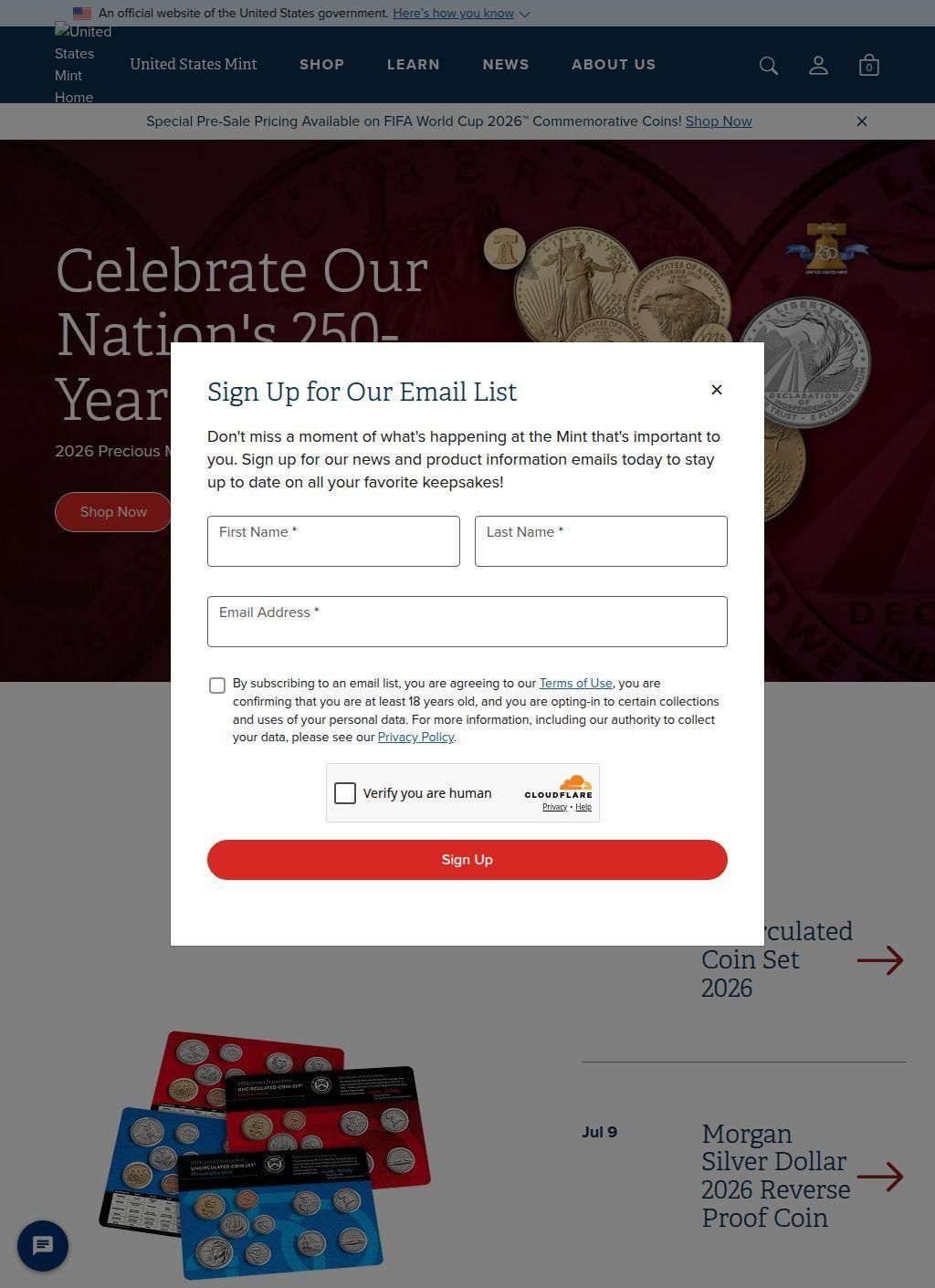
The United States Mint is the federal agency responsible for making the coins Americans carry every day. As a bureau of the Department of the Treasury, it produces the circulating coinage that moves through commerce, and it also strikes bullion coins, commemorative issues, and collector products sold directly to the public. Its work is part manufacturing operation and part public institution, and that dual character is what sets it apart from every private mint and dealer.
Coin production and bullion operations
Coin production is the central job. The Mint converts metal into finished coinage at high volume, supplying the Federal Reserve so that pennies, nickels, dimes, quarters, and dollar coins stay in circulation. Beyond everyday money, it issues bullion coins in gold, silver, platinum, and palladium for investors, and it strikes commemorative coins authorized by Congress to mark people and events. Collector sets, proof coins, and special finishes round out a catalog that the Mint sells through its own ordering channels rather than through middlemen.
Legal authority as the federal issuer
Because it is a government body, the Mint carries a level of authority that no commercial source can claim. The coins it issues are legal tender of the United States, and the specifications, designs, and mintages are matters of public record. This is the source, the actual maker of the nation's coins, which makes its website the primary reference for anyone checking what a current issue looks like, what it is made of, or how many were struck. For a collector trying to confirm a fact, going to the issuer removes a layer of doubt.
Educational resources on American coinage
The Mint also serves an educational and historical purpose. Its public materials explain how coins are designed and manufactured, profile the artists behind the designs, and tell the story of American coinage from the early republic forward. Programs such as the rollout of new quarter designs have drawn fresh attention to collecting, and the agency's online resources give teachers, students, and hobbyists a reliable account of how the country's money is made. This teaching role is offered as public service, not as a sales tactic.
Production facilities and mint marks
Several production facilities sit under the Mint's umbrella, including the plants that strike circulating and numismatic coins and the depository that secures the nation's gold reserves. The mint marks on coins, such as the letters identifying where a piece was struck, connect each coin back to a specific facility, and collectors use those marks to attribute and value their holdings. Understanding the system of facilities and mint marks is part of basic numismatic literacy, and the Mint's own pages lay it out clearly.
Congressional oversight and design review
The Mint operates under a framework set by Congress and the Treasury, and that legal structure shapes what it can make and sell. Commemorative coins, for example, exist only when Congress passes a law authorizing them, often with surcharges directed to a named cause. Circulating designs follow their own review process, with input from advisory committees and from the Commission of Fine Arts before a new coin reaches pockets and tills. This means the agency's output is documented at every stage, from the enabling law to the published mintage, which is useful for collectors who care about why a coin exists and how many were made.
Quality standards for proof coins
Quality and security run through the whole operation. Proof and uncirculated coins are struck to exacting standards and packaged with documentation, while bullion products are sold by precise metal content so that investors know exactly what they are buying. The depository side of the agency, best known through the gold held at Fort Knox, reflects a custodial role that goes beyond making coins. Few institutions combine large-scale manufacturing, retail sales, and the safeguarding of national reserves, and that combination is part of why the Mint is treated as a singular authority rather than one supplier among many.
Ordering directly from the Mint
For buyers, the Mint sells directly. Customers in the United States can order products by telephone or online, and the agency publishes release schedules so that collectors know when a new issue will go on sale. Buying from the source means the coin arrives new from the maker, with the packaging and documentation the Mint provides. This direct channel is one reason the agency appears in a business directory under official institutions rather than among resellers, since it is the originator of the goods rather than a reseller of them.
Contact information and retail location
The Mint's headquarters is at 801 9th Street NW, Washington, DC 20220. General, non-order inquiries can be directed to 202-756-6468 during weekday business hours, while product orders within the United States are handled through the toll-free ordering line published on the agency's website. A coin store at the Washington headquarters is open to the public on weekdays, giving visitors a way to buy current products in person.
Set against the other entries in this directory, the United States Mint occupies a distinct position. It is neither a hobby association nor a research society but the manufacturer and issuer of the country's coinage, and that origin gives its information unusual weight. A collector who wants authoritative specifications, official designs, and products straight from the source will find the Mint to be the foundational reference, the body that every other part of American numismatics ultimately refers back to. Within a business directory's coins category, its entry functions as an anchor point, the official maker against which dealers, graders, and clubs all position themselves.
Business address
United States Mint
801 9th Street NW,
Washington,
DC
20220
United States
Contact details
Phone: 202-756-6468