Origins of the collection
The Victoria and Albert Museum was established in 1852, in the aftermath of the Great Exhibition, as a museum of design and manufacture for the improvement of public taste and industrial skill. It took its present name in 1899, when Queen Victoria laid the foundation stone of the building that now fronts Cromwell Road in South Kensington. Ceramics belonged to its purpose from the beginning, since pottery and porcelain sat at the meeting point of art, industry, and everyday life that the museum was created to address.
Before 1899 the institution was known as the South Kensington Museum, and some of its most important ceramics purchases date from those early decades. The museum describes its present ceramics holdings as encyclopedic and global in scope, and as unrivalled anywhere in the world. The collection runs from about 2500 BC to the present day, which means roughly four and a half thousand years of the potter's craft can be followed under one roof.
What the collection contains
European pottery and porcelain
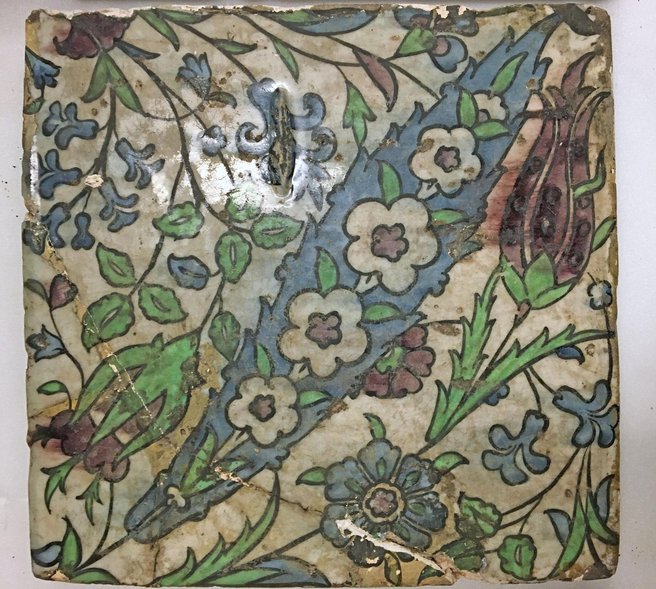
The Italian Renaissance maiolica is the largest such collection in the world, and the museum also preserves Cipriano Piccolpasso's sixteenth century treatise, the unique period account of how maiolica was made. Around this core sit deep holdings of Dutch Delft, British and European porcelain, and the art pottery and exhibition showpieces of the nineteenth century. Tiles form a collection in their own right, from medieval pavements to Victorian schemes. The National Art Library inside the building adds the documentary side, holding factory records, pattern books, and the literature of marks on which attribution work depends.
The building itself carries part of the story. The Ceramic Staircase, decorated in the nineteenth century to display the versatility of decorative ceramics, survives as a period statement of the museum's founding faith in the material.
Asia, the Middle East, and the contemporary field
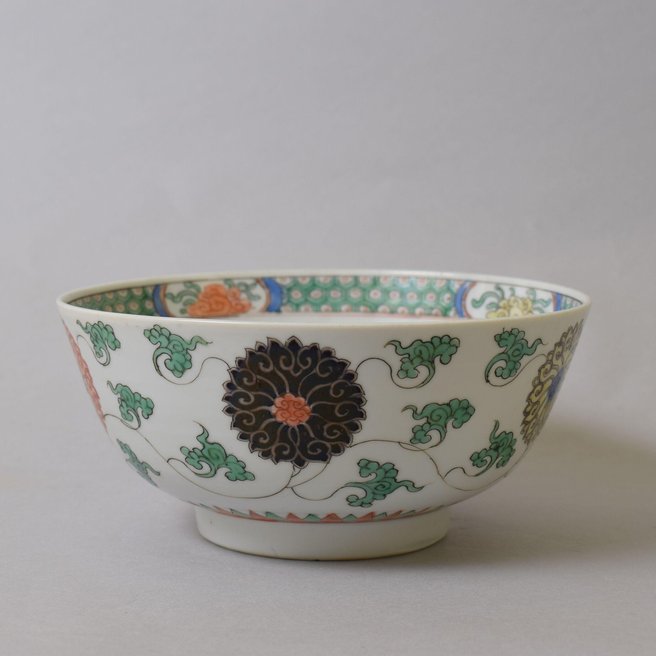
Chinese porcelain has been collected since the museum's early decades, and it is joined by Japanese ceramics and by wares from the Middle East. The collection continues to grow at the other end of the timeline: international contemporary studio ceramics are an acknowledged strength, and new work enters the collection alongside pieces that are five hundred or five thousand years old. Few places allow a Song dynasty glaze, an Iznik dish, and a living potter's work to be compared within a single afternoon.
The ceramics galleries at South Kensington
The ceramics galleries occupy the top floor of the museum, in rooms lit through glazed ceilings above the Aston Webb facade. A renovation carried out by the architects Stanton Williams with OPERA Amsterdam was completed in 2010, and it added Room 146 as a space for temporary displays. The main galleries present the history of the material across cultures, while rooms 136 to 139 operate as study galleries, where dense case displays put thousands of pieces within a few steps of one another.
The study galleries reward slow looking. Because objects are grouped tightly by place and type, a visitor can compare bodies, glazes, and painted decoration across dozens of related pieces at once, which is precisely the kind of looking that builds a collector's eye. The museum also operates study rooms through which researchers can arrange closer access to material, and its curatorial departments have published standard reference works on many of the wares represented.
Using the museum as a collector
General admission is free, which makes repeated visits practical, and repetition is what the ceramics floor rewards. A collector concentrating on English delftware, on Meissen figures, or on twentieth century studio pots can return to the same cases and use them as a standing reference set.
The online collection database extends that reference role beyond the building. Object records, most with photographs, carry dimensions, marks, provenance notes, and curatorial descriptions, so attributions and factory identifications can be checked from anywhere. For dealers and auction buyers, a V and A record is often the quickest published comparison for a piece under consideration.
Several practical points help a ceramics focused visit. The galleries sit at the top of the building, a level many casual visitors never reach, so they are usually quiet even when the ground floor is busy. Temporary displays in Room 146 change regularly and often draw on parts of the reserve collection otherwise out of view. Checking the museum's current opening arrangements before traveling is sensible, as individual galleries close on occasion for rehangs.
The museum stands on Cromwell Road in South Kensington, with its own entrance from the Underground station subway. Telephone enquiries go through the general switchboard. Taken together, the galleries, the study rooms, and the database make the museum a working tool for anyone who buys, sells, or studies ceramics, and its holdings supply the published benchmarks against which much of the trade's cataloguing is written.
Business address
Victoria and Albert Museum
Cromwell Road,
London,
Greater London
SW7 2RL
United Kingdom
Contact details
Phone: +44 (0)20 7942 2000