A statutory college devoted to clay and glass
The New York State College of Ceramics at Alfred University was created by an act of the New York state legislature in 1900, opening as the New York State School of Clay-Working and Ceramics. Alfred University, a private institution in the village of Alfred in Allegany County, was chosen to administer the new state school, and that arrangement has never been interrupted. The university describes it as a public and private partnership in higher education that has run continuously since its first year. The college marked its 125th year in 2025.
Today the college operates as a statutory college within the State University of New York system. New York State provides funding while Alfred University manages academic life, faculty appointments, and day to day operations.
The school's first director, the English born potter Charles Fergus Binns, led it from 1900 until 1931. Binns came to Alfred from the Royal Worcester porcelain works and is closely associated with the beginnings of American studio pottery. The technical grounding he insisted on, in clay bodies, glaze chemistry, and kiln practice, remains a recognizable trait of Alfred training.
Academic structure and degree programs
Two units make up the college. The School of Art and Design offers studio degrees at the undergraduate and graduate level, while the Inamori School of Engineering grants degrees in ceramic engineering, glass engineering science, materials science, and biomaterials engineering. Few institutions anywhere pair a fine arts ceramics faculty with a ceramic engineering faculty on one small campus, and the pairing has defined Alfred since the school's founding.
Ceramic art in the School of Art and Design
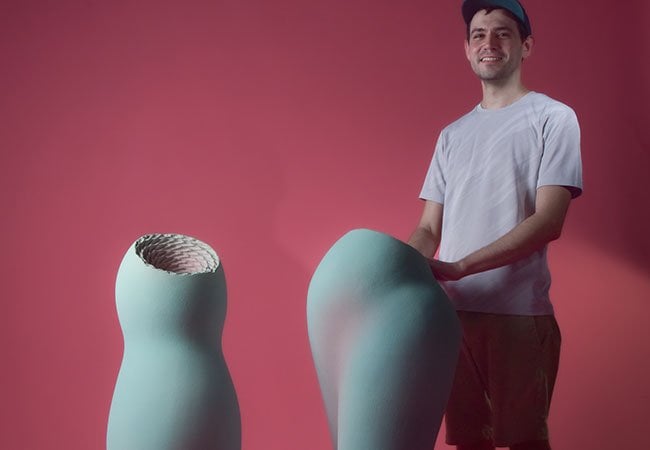
The master of fine arts concentration in ceramic art has been ranked first among programs of its kind in the United States by U.S. News and World Report. Further MFA concentrations cover sculpture, painting, and electronic integrated arts. Undergraduates work toward the bachelor of fine arts through a studio sequence that includes ceramics, glass, and related media.
Engineering and materials science
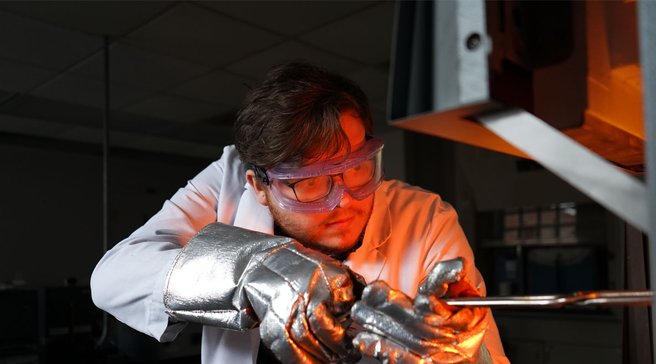
The Inamori School of Engineering continues the technical mission written into the original 1900 charter. Students study the processing and behavior of ceramic and glass materials at both undergraduate and graduate levels, and research activity extends into biomaterials and advanced materials science. For anyone tracing the history of American ceramic manufacturing, the engineering side of the college explains much of Alfred's standing in the field.
Museums and research collections on campus
The campus concentrates an unusual number of ceramics resources within walking distance of one another.
- Alfred Ceramic Art Museum, the university's collecting museum for ceramic art
- Inamori-Kyocera Fine Ceramic Museum, devoted to advanced technical ceramics
- Paul Vickers Gardner Glass Center, covering glass history and science
- Scholes Library, the college's specialized research library
Alfred Ceramic Art Museum
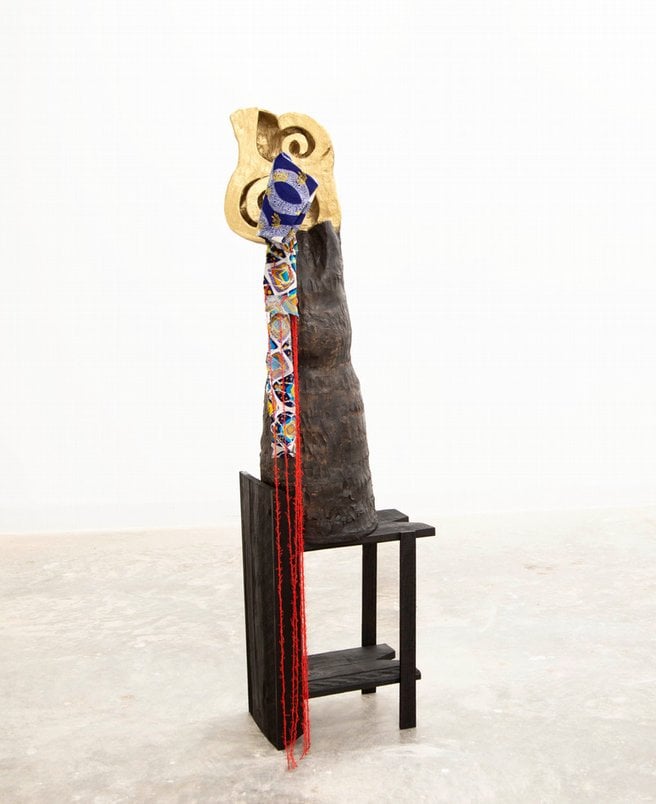
The museum holds nearly 8,000 ceramic objects, ranging from ancient shards to modern and contemporary work. It sits at the northeast corner of Main and Pine Streets on the Alfred University campus. The main second floor gallery is open to the public during exhibitions, and tours of the stored collection can be arranged by appointment. The museum maintains the collection as a research and teaching resource, so objects are documented with study in mind rather than display alone. A scheduled closure for exhibition changes runs from July 20 to September 10, 2026.
Scholes Library supports the whole enterprise with holdings that cover the art, science, technology, and history of ceramics and glass. Researchers use it for glaze literature, factory histories, exhibition records, and technical journals that are hard to find elsewhere in one place.
Notes for collectors and visitors
Collectors of American studio pottery meet the Alfred name constantly in artist biographies, since a large share of twentieth century American potters either studied or taught at the college. Reading a maker's Alfred connection correctly, whether as student, graduate assistant, or faculty member, often matters when judging a pot's place in a career. Potters who taught at the college include Robert Turner, Val Cushing, and Wayne Higby, names that recur in American ceramics auction records. The museum's holdings, which run from early Binns era stoneware through current faculty and alumni work, give a physical timeline against which such attributions can be checked.
The village of Alfred lies in rural western New York, roughly ninety minutes south of Rochester. Alfred University itself dates to 1836, and the campus is compact enough that the museum, the library, and the studio buildings can all be reached on foot within a few minutes. Visits built around an exhibition opening or a scheduled collection tour tend to be the most productive, and the museum's appointment system makes focused study of stored objects possible for serious researchers.
General inquiries route through the Alfred University switchboard, while the museum keeps its own line for tour scheduling. Prospective students apply through Alfred University admissions, with state supported tuition rates applying to the statutory college programs. For collectors, curators, and working potters alike, the college functions as a primary reference point for the study of ceramics in the United States, and its museum and library are open doors into that record.
Business address
New York State College of Ceramics at Alfred University
1 Saxon Drive,
Alfred,
New York
14802
United States
Contact details
Phone: 607-871-2111