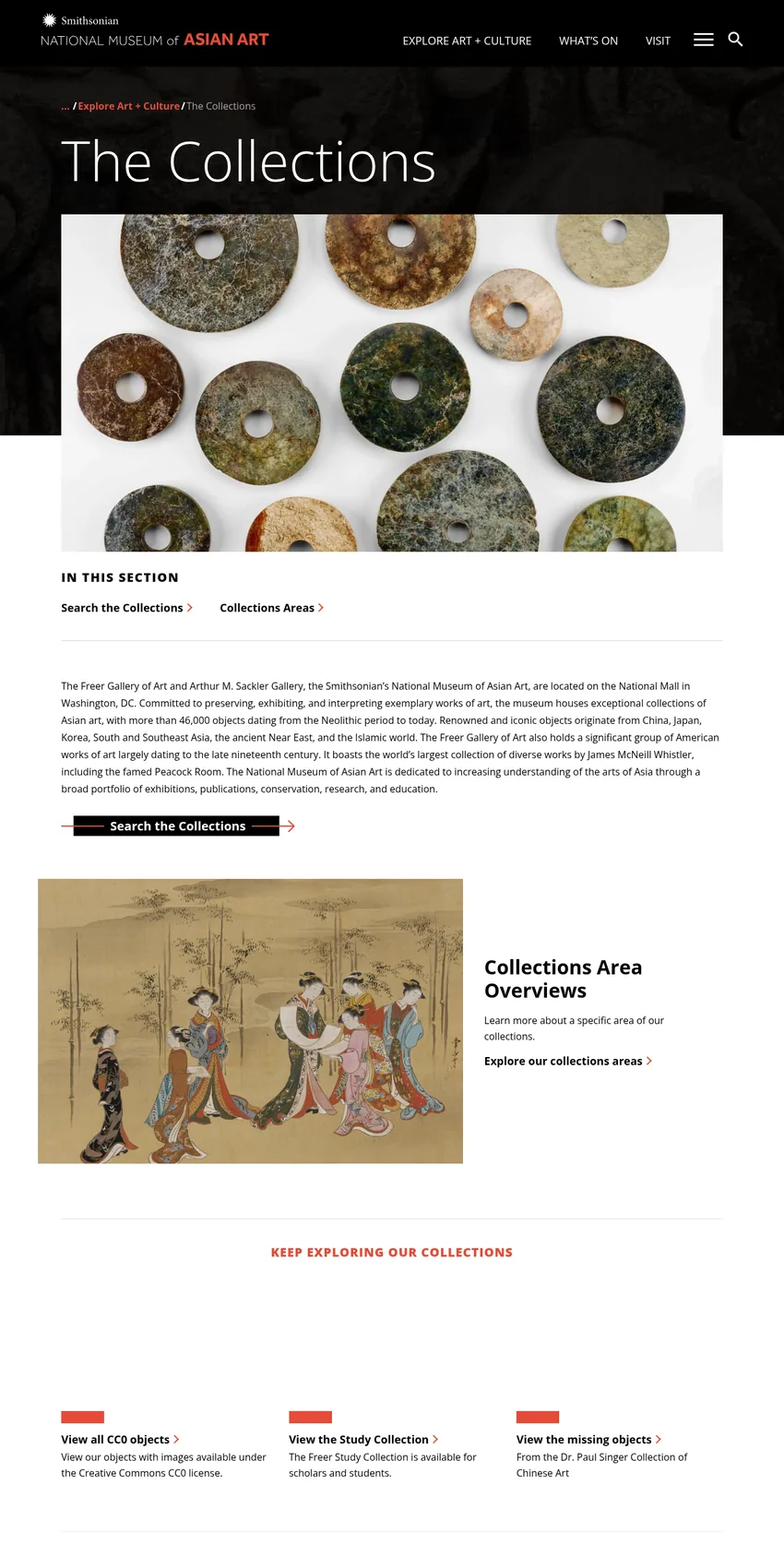
One museum in two connected buildings
The Smithsonian's National Museum of Asian Art occupies two linked buildings on the south side of the National Mall in Washington. The Freer Gallery of Art opened in 1923 as the Smithsonian's first museum devoted to fine art. The Arthur M. Sackler Gallery followed in 1987, built largely underground beside its older neighbor. Since 2019 the two galleries have operated together under the National Museum of Asian Art name.
The founding collection came from Charles Lang Freer, a Detroit industrialist who assembled Asian art on a large scale in the decades around 1900. The Smithsonian accepted his gift in 1906, and Freer also provided the funds for the building that bears his name. Across both galleries the collections now exceed 46,000 objects, dating from the Neolithic period to the present day, and ceramics appear in nearly every collection area.
Ceramics across the collection areas
China, Korea, and Japan
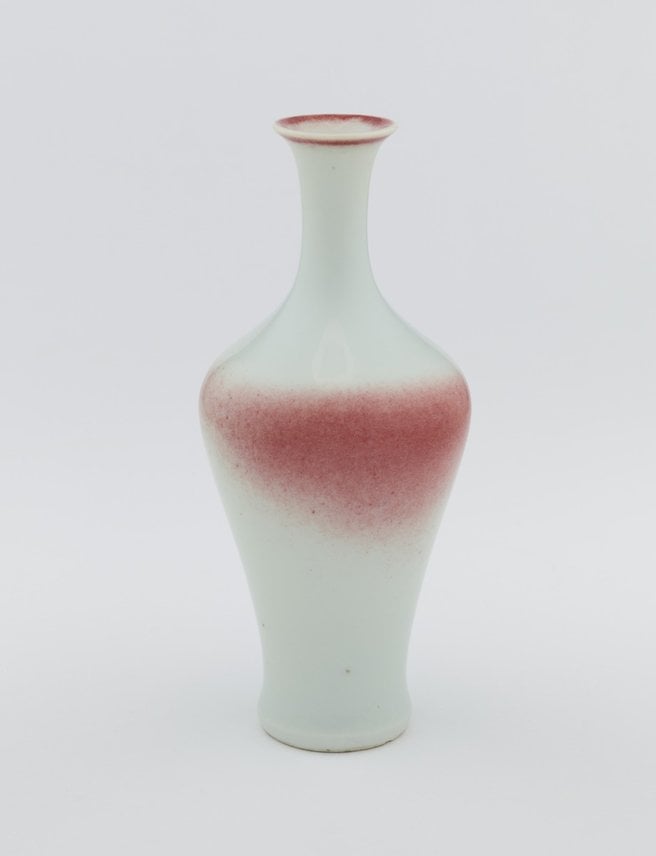
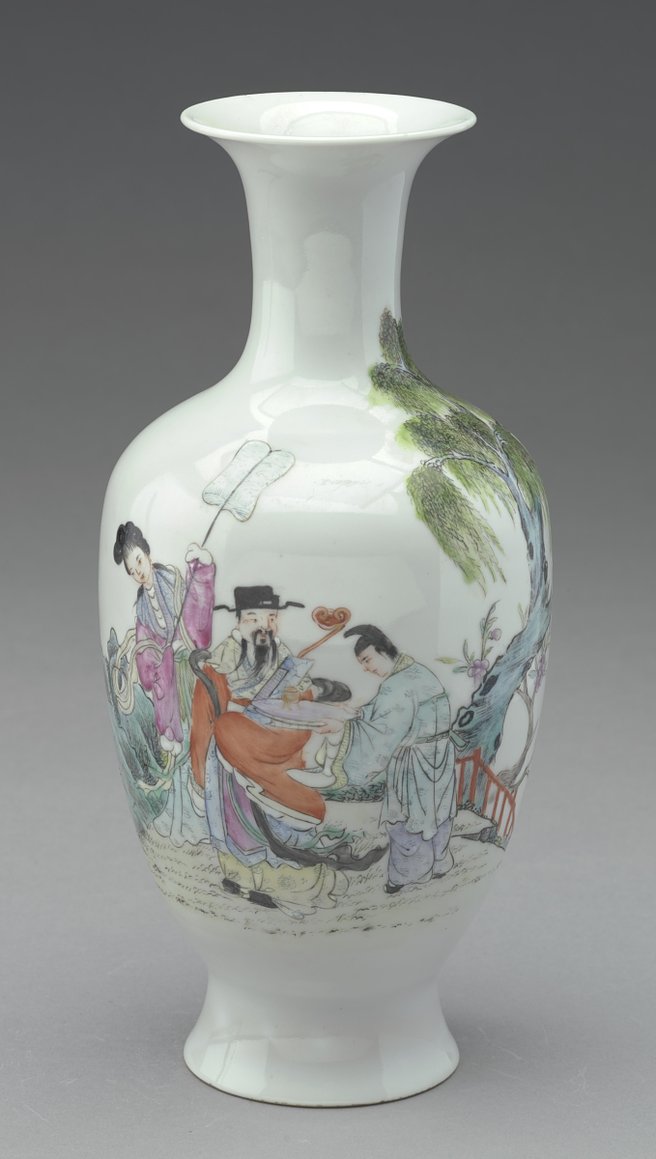
Chinese ceramics form one of the museum's oldest strengths. Song dynasty stonewares document the command of glaze color and texture achieved by potters of the tenth through thirteenth centuries, and later galleries have traced the Yuan period rivalry between celadon glazed vessels from Longquan and the porcelain of Jingdezhen. Dedicated displays drawn from the Freer collection have covered Chinese ceramics century by century, and one such installation presented two dozen pieces made between the tenth and thirteenth centuries as a study in Song glaze technique. For a collector, these tightly dated groupings offer a rare chance to calibrate an eye against securely published examples.
The Korean holdings number nearly three hundred ceramics and span the Three Kingdoms, Unified Silla, Goryeo, and Joseon periods. Celadon wares of the Goryeo period, made between 918 and 1392, and tea bowls produced for the Japanese market during the Joseon period are the recognized strengths. Freer bought many of these pieces himself, and gifts from later collectors have expanded the group since the 1960s. The museum has returned to this material in exhibitions such as Cranes and Clouds: The Korean Art of Ceramic Inlay, which examined the inlaid decoration technique that distinguishes Goryeo celadon.
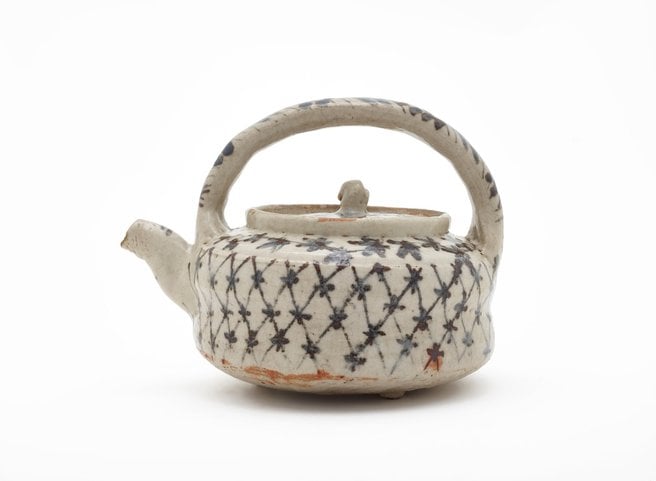
Japanese ceramics center on the tea room. Tea bowls, water containers, and other utensils record how Japanese practitioners first prized antique Chinese and Korean vessels, then turned in the sixteenth century to newly made domestic wares such as Raku. The museum examined this material in the exhibition Knotted Clay: Raku Ceramics and Tea.
Southeast Asia and beyond
The Hauge collection of ceramics from mainland Southeast Asia brings together glazed and decorated wares from Thailand and Vietnam along with storage jars, unglazed stoneware containers, and earthenware cooking pots. The Southeast Asia collection area holds close to nine hundred objects in total. An online catalog published by the museum presents the ceramics with essays on local materials, production techniques, kiln sites, and the trade networks that carried these wares across the region.
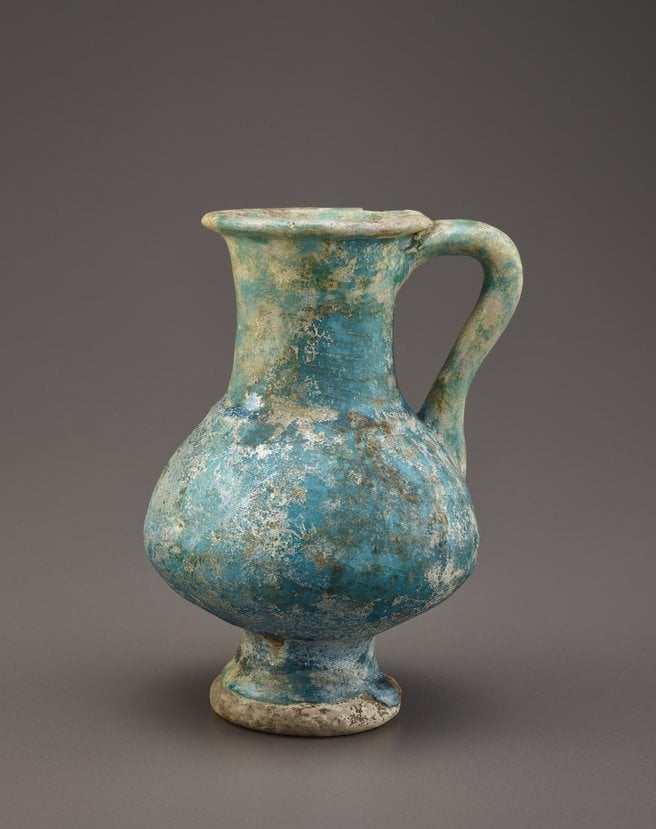
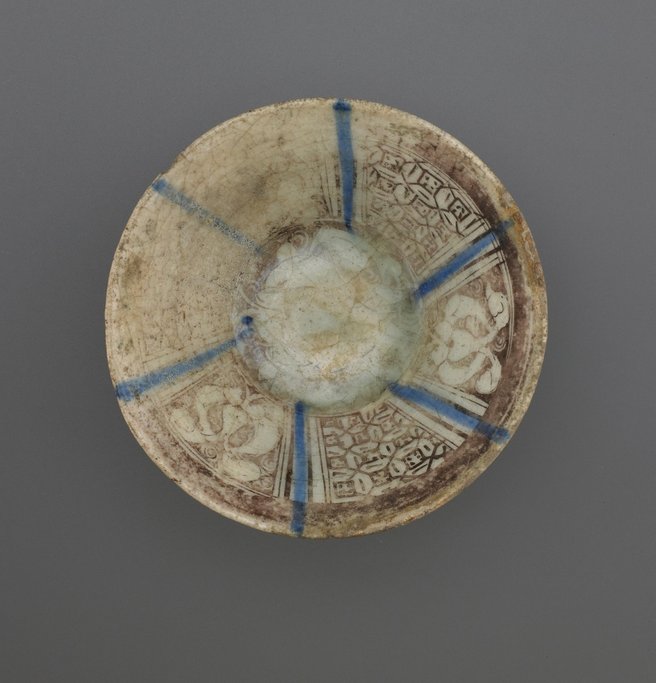
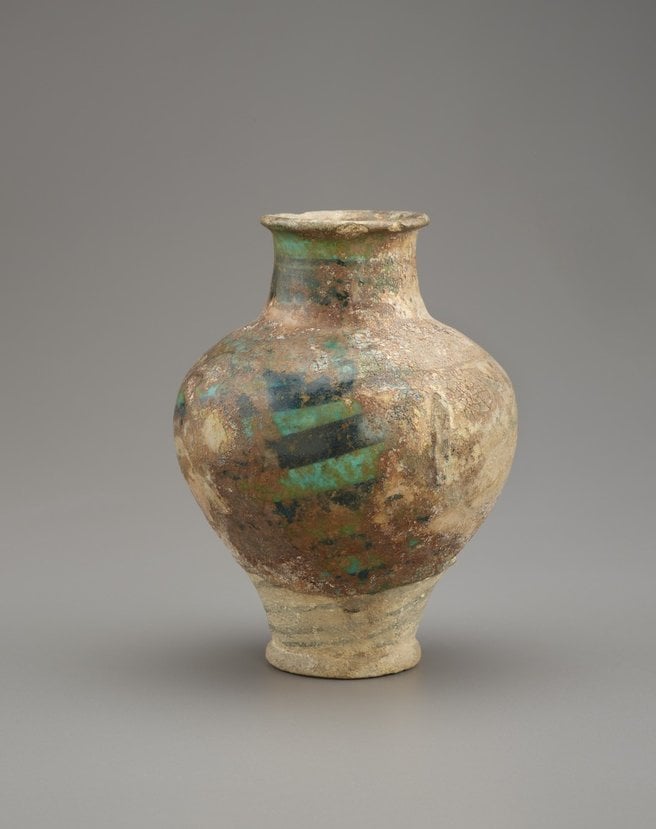
Museum research publications extend the picture further, taking up Seljuq tiles, Myanmar ceramics, Chinese funerary sculpture, and the lead glazed wares of China and Japan.
The Peacock Room and the Freer bequest
The best known ceramics setting in the museum is not a gallery case at all. Harmony in Blue and Gold: The Peacock Room, the London dining room painted by James McNeill Whistler in the 1870s, was designed around shelving for a shipowner's collection of Chinese porcelain. Freer purchased the entire room and had it moved to Detroit; it was later reinstalled in his museum in Washington, where its shelves once again hold ceramics.
Freer attached firm conditions to his gift. Objects from his founding collection are exhibited only at the Freer Gallery and are not lent to other institutions. For students of ceramics this has a practical consequence: the Freer's celadons, tea bowls, and porcelains can be studied in the same building year after year, which is rare among major collections.
Research, access, and visiting
The museum has a long record of technical study of ceramics. The Forbes symposia held at the Freer Gallery brought scientists and curators together over the analysis of historic Asian ceramics, and the proceedings were published by the museum. Topics have included glaze chemistry, kiln archaeology, and the reading of inscriptions on excavated wares. Collection records, most with photographs, are searchable through the museum's online database, a useful comparison tool for anyone weighing an attribution or a date for a piece in hand.
Admission is free and no tickets are required, as at the other Smithsonian museums. The galleries open daily from 10 a.m. to 5:30 p.m., closing only on December 25. Phone inquiries are answered Monday through Saturday during business hours, and the Smithsonian station on the Metro system is the nearest rail stop.
The street entrance to the Freer Gallery faces Jefferson Drive, with the Sackler entrance on Independence Avenue. For collectors of Asian ceramics, the museum offers something few institutions can match: a permanent, freely accessible run of benchmark objects, from Goryeo celadon to Raku tea bowls, against which private pieces can be measured.
Business address
Smithsonian National Museum of Asian Art
1050 Independence Avenue SW,
Washington,
District of Columbia
20013
United States
Contact details
Phone: 202-633-1000