Industrial policy, foreign trade, investment and tourism in Ecuador are grouped under a single portfolio, the Ministerio de Produccion, Comercio Exterior e Inversiones. The ministry works from the Edificio La Previsora on the Guayaquil waterfront and from a second seat in Quito.
Origins and reorganizations
The 2018 merger
Executive Decree 559 of November 14, 2018 folded three institutions into the then Ministry of Foreign Trade and Investment: the Ministry of Industries and Productivity, the Ministry of Aquaculture and Fisheries, and PRO ECUADOR, the institute for the promotion of exports and investment. When the absorption finished, the combined body took the name Ministerio de Produccion, Comercio Exterior, Inversiones y Pesca, shortened in practice to MPCEIP. The merger belonged to an optimization program that thinned out the economic agencies of the central government; trade policy had sat in a dedicated foreign trade ministry only since 2013, while the industries portfolio dated back decades.
The 2025 efficiency plan
A second consolidation came on July 24, 2025, when the government announced an administrative efficiency plan that cut 41 percent of the institutions of the executive branch. The Ministry of Tourism, a separate portfolio for more than three decades, was folded into this ministry. The vice ministry for aquaculture and fisheries moved to the agriculture portfolio at the same time, so the institution dropped Pesca from its name. Decrees signed in August 2025 formalized the changes, and officials framed the plan as part of the fiscal commitments the country had assumed, with thousands of public positions cut across the government in the same round.
Institutional objectives published by the ministry include raising productivity and quality in national industry, widening the strategic presence of Ecuadorian goods in world markets, and drawing national and foreign investment through a better business climate and technology transfer.
Trade, investment and industry
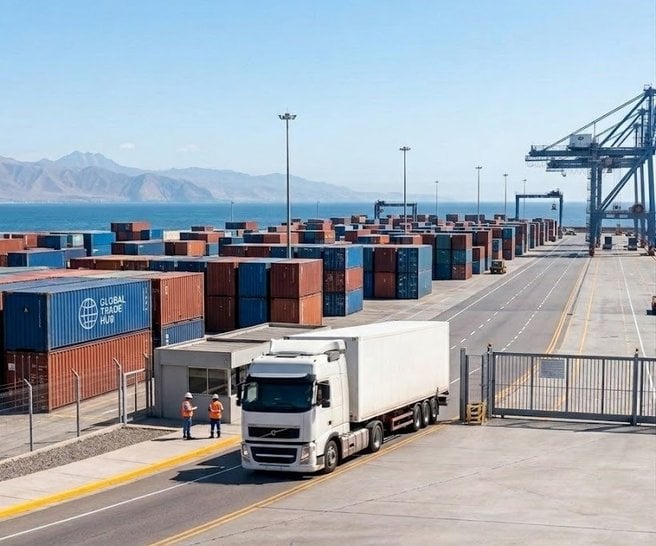
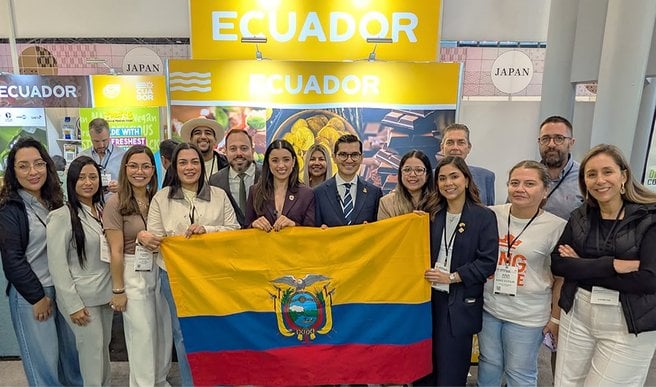
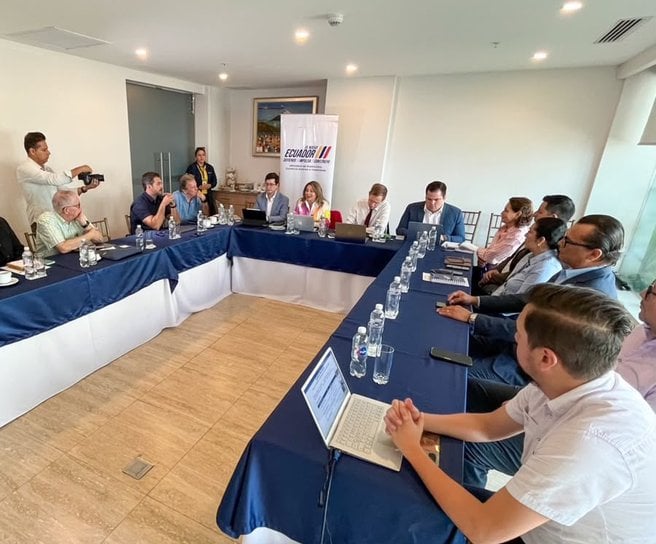
The ministry negotiates trade agreements, administers import and export policy and represents Ecuador before its commercial partners. It also runs programs for micro, small and medium sized enterprises, oversees the quality infrastructure that certifies products, and organizes working tables with individual industries. PRO ECUADOR, the promotion arm gained in 2018, keeps commercial offices abroad that place Ecuadorian exports such as shrimp, cacao, bananas and processed foods in foreign markets. The ministry likewise issues foreign trade permits, certifies origin for exporters and manages the country's participation in the World Trade Organization. A yearly quality week and a program of commercial display spaces for small producers run alongside the sector work.
Two agreements frame the longer trade agenda. Ecuador has traded with the European Union under the multiparty trade agreement since January 2017, a continuity deal keeps access to the United Kingdom on similar terms, and a free trade agreement with China entered into force in May 2024.
The 2026 negotiating round
Ministry communications from 2026 record a busy calendar. In March, Ecuador and the United States concluded a Reciprocal Trade Agreement that, according to the ministry, removes tariffs from 53 percent of the country's non oil exports. Officials reported the first trade surplus with Colombia in more than 25 years, opened talks with the Dominican Republic, and signed a memorandum of understanding with Japan covering commerce, investment and cooperation. Promotion missions presented exporters in New York and investment cases in the United Kingdom and France, and July 2026 brought the first executive productivity table for the tuna industry, one of the country's largest export sectors.
Tourism responsibilities
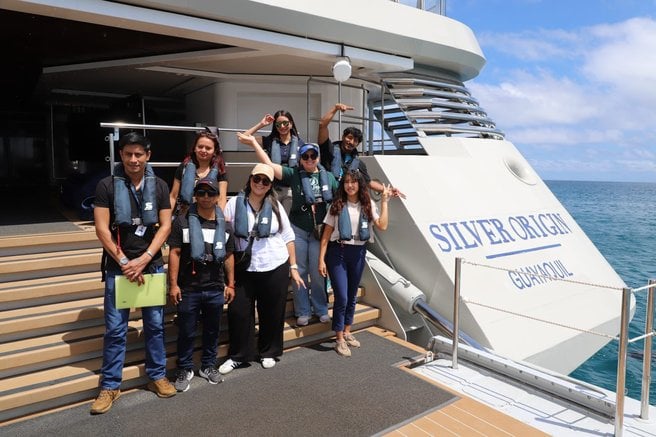
Since the 2025 merger the ministry has carried the functions of the former Ministerio de Turismo. Official promotion presents Ecuador as four regions in one country: the Galapagos Islands, the Amazon basin, the Andean highlands and the Pacific coast. The Galapagos, about a thousand kilometers offshore, pair volcanic terrain with wildlife found nowhere else; the Amazon side includes Yasuni National Park; Quito and Cuenca, both on the UNESCO World Heritage list, anchor the highlands; and beach towns from Salinas to Atacames line the coast.
Recent files give a sense of the portfolio. The ministry opened the 2026 season for watching humpback whales, which gather off the central and southern coast between June and September, and paired the opening with measures to help the towns that sell the tours. It promoted the country at the FIFA World Cup of 2026, financed training for young people entering tourism jobs in Galapagos, and backed agritourism ventures around Naranjal. Ministry figures put visitor spending during the 2026 Carnival holiday near 82 million dollars, and occupancy data released for a later national holiday showed hotel use rising 3.6 percent over the year before. Lodging and travel businesses must appear in the national tourism registry, an obligation the ministry administers since the merger.
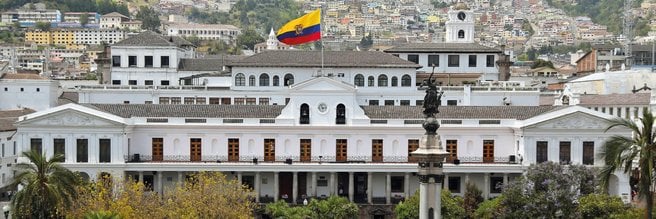
Head offices occupy floors 15 to 19 of the Edificio La Previsora at Malecon 100 and Avenida 9 de Octubre in Guayaquil. Quito staff work in the Plataforma Gubernamental de Gestion Financiera on Avenida Amazonas, and citizen service runs through the contact channels shared by the central government.
Business address
Ministerio de Produccion, Comercio Exterior e Inversiones
Av. Malecon 100 y Av. 9 de Octubre, Edificio La Previsora, pisos 15-19,
Guayaquil,
Guayas
NA
Ecuador
Contact details
Phone: +593 4 259 1370