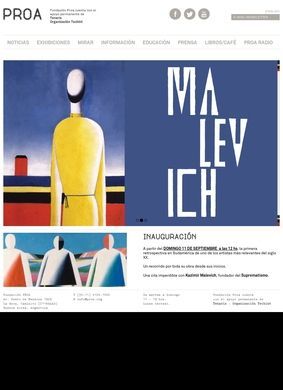
PROA is a contemporary art foundation in the La Boca neighborhood of Buenos Aires, set along the old port where the Riachuelo meets the city. The building itself is the first thing most visitors encounter: a renovated row of brick houses fronting the water, converted into white-walled galleries that host rotating exhibitions of modern and contemporary work. There is no permanent collection on display. Instead the programming turns over, which means a return visit a few months apart rarely shows the same thing twice.
What does PROA exhibit right now?
The exhibitions sit at the center of what Fundacion PROA does, and they range across painting, installation, sculpture and large-scale projects that take over the full floor plan. Anyone trying to decide whether the trip south to La Boca is worth it should check the current show first, because the venue lives or dies by whatever it is hosting at the moment. When the program is strong, the converted industrial space gives the art room to breathe; the high ceilings and river light suit ambitious installations in particular.
Screening film through ProaCine
Beyond the galleries, PROA carries a few arms that extend the visit well past the exhibition rooms. ProaCine handles film programming, screening work that connects to the broader artistic conversation the foundation tends to pursue. This is a real distinction from a standard gallery: the moving image gets its own platform here, not a token side room.
Bookstore and cafe spaces
Then there is Libreria PROA, the bookstore, which leans into art publications, exhibition catalogues and titles you will not easily find in a general shop. The cafe, Cafe PROA, occupies a spot with a view back over the port, and it has a reputation among regulars as a destination in its own right, separate from whatever is hanging on the walls upstairs. Audio and radio content distributed through Spotify and SoundCloud rounds this out, giving people a way to engage with the foundation's thinking when they are nowhere near Buenos Aires.
Education programs and PROA21
Education is the other steady thread. PROA runs workshops and programs aimed at both students and the general public, structured engagement that points to an institution thinking past ticket sales toward an actual relationship with its audience. The scope runs from school groups to adult seminars, and it ties directly into the themes of whichever exhibition is up at the time. There is also PROA21, an associated initiative that operates as a separate cultural project under the same foundation umbrella, broadening what the organization touches.
The site runs in Spanish, with the /esp/ path marking the Spanish-language version, and it does the job a cultural institution's site needs to do. Current and upcoming exhibitions are laid out, visitor information is present, and there are sections for educational content, press resources and news. None of it is flashy, but the information a person needs before heading out is where you would expect to find it.
Plan your visit schedule
Planning a visit means working around the schedule: the foundation operates Wednesday through Sunday, midday to seven in the evening, so a Monday or Tuesday plan will not work. The social channels are kept active across Instagram, Facebook, X and YouTube, which is a more reliable place to catch announcements of a new show or screening than waiting on the site to refresh. The press section of the site is also reasonably stocked, so journalists or researchers after background on past programming will find something useful there.
Corporate funding behind PROA
Funding sits behind all of this in a way worth understanding. PROA receives permanent institutional support from Tenaris and Ternium, the steel and tube manufacturers tied to the Techint group. That backing explains how an independent foundation can mount the scale of exhibition it does and keep the cinema, bookstore and education programs running alongside. It is corporate patronage of the kind that has historically kept a good deal of Latin American contemporary art programming alive, and here it shows in the production values.
The location deserves a closing word. La Boca is a working neighborhood with a long association with Buenos Aires immigrant history and football, and PROA's presence there gives the area a serious art anchor that pulls visitors past the postcard streets near Caminito. The contrast between the polished galleries and the gritty port setting is part of the experience, and a deliberate one. PROA has been doing this long enough to be a fixture of the city's art map, and the breadth of what it offers under one roof makes the journey to the southern edge of the city easier to justify than a single-purpose gallery would. The exhibition calendar is the deciding factor; if the current program interests you, the rest of the visit will fill in around it.