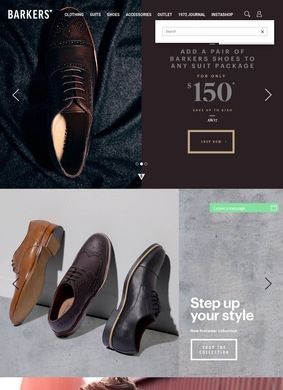
A man needs a suit in three weeks for a wedding, owns nothing that fits, and does not trust the internet to get tailoring right. That is roughly the customer Barkers was built for. The New Zealand menswear label, going back to 1972, runs both an e-commerce site and a network of physical stores, and the combination pays off in a specific way: you can order a two-piece suit online, walk into a branch for the fit, or book a Made to Measure session if the rack version falls short. For the wedding case specifically, Barkers offers dedicated wedding suit packages and a consultation step, which is what separates a clothing site you browse from one you can actually plan around.
Product range and store network
The catalogue is broad without feeling padded. Shirts are split sensibly into long sleeve, short sleeve, business, casual, and polo, so a man shopping for office wear is not wading through weekend gear. Pants cover jeans, chinos, dress pants, and track pants. Outerwear runs to jackets, coats, knitwear, and hoodies, and footwear includes dress shoes, sneakers, and boots. Accessories fill in the gaps a wardrobe always has: belts, wallets, ties, socks, hats, scarves. None of that is unusual for a menswear retailer, but the depth in each line shows this is the main business and not a sideline bolted onto something else. Barkers does not sell women's clothes or children's ranges or homewares. It is a focused menswear operation, and that focus shows in how the product pages are organised.
Organized categories for menswear shopping
The specialty services are where Barkers goes further than a stock-and-ship operation. Made to Measure tailoring is offered alongside the off-the-rack suits and blazers, which gives a shopper an upgrade path when the standard sizing falls short. The wedding packages sit in the same area, bundling the suit with a consultation so a groom and groomsmen can be dressed consistently. A corporate uniform service rounds this out, aimed at businesses kitting out staff rather than individuals, and that range of clientele is worth noting: Barkers has positioned itself across the occasions where fit and presentation matter, well beyond the weekend shopper.
Made to measure and wedding services
Gift vouchers are available, and a loyalty programme called Barkers & Co is referenced for repeat customers. Loyalty schemes can be a way of harvesting email addresses and little else, but paired with a store network and a proper returns process, this one at least sits inside a fuller customer relationship. Fulfilment options are practical: online ordering with shipping, click-and-collect for anyone who would rather grab the order in person, and a returns and exchange process for the inevitable wrong size. Those options together reduce the friction that stops people buying clothes online.
Loyalty programme and fulfillment options
The site keeps current promotions visible, and they are concrete enough to assess. Long sleeve shirts sit at NZ$99, two-piece suits at NZ$499, and there are discounts running on outerwear. Sections for Best Sellers, New Arrivals, Promotions, and an Outlet give a returning shopper somewhere obvious to start, and the curated Ranges group product into collections for anyone who wants editorial direction over a search box. A suit at NZ$499 is not bargain-bin pricing, but for a tailored two-piece from an established label it is a reasonable middle ground, and the headline shirt price is the kind that pulls a first-time buyer in.
Pricing aligned with customer needs
The promotions are tied to product lines a man would genuinely need, not random clearance. Someone arriving for the wedding suit will find the suit deal sitting right where they are looking, and someone topping up shirts for work has a price worth acting on. That alignment between what is discounted and what Barkers does well is a decent indicator of a retailer that understands its own customer.
Customer support across channels
Contact is handled sensibly. There is a phone number, a customer services email, live chat for quick questions, and a help and support portal run through Zendesk, which usually means proper ticketing rather than a form that vanishes. A store locator points to the physical branches, so a shopper who wants to try things on can find the nearest one. For an online clothing purchase, where sizing doubts are the main reason people hesitate, having a real route to a person and a real store to visit removes much of the risk.
What does the online reputation show?
The outside reputation is more modest than the brand's longevity might lead you to expect. On Trustpilot there are only two reviews averaging 3.0 out of 5, which is too small a sample to mean much in either direction. Indeed carries several employee reviews without a visible aggregate score. The Facebook page is the strongest social proof, with just over forty thousand likes and around a hundred and sixty-five people engaged, which fits a label that has been around since the early seventies and built a local following over decades.
A RateMe NZ listing exists but carries no reviews, and no Google or Yelp counts surfaced. That picture is a recognised name with a modest formal review trail; a cautious buyer is going to lean more on the store network and the support options than on a stack of star ratings, and that is probably how Barkers prefers to be judged anyway.
Comparing Barkers to Hallenstein Brothers
Measured against Hallenstein Brothers, the other obvious New Zealand menswear chain, Barkers is the more tailoring-focused of the two. Hallensteins competes harder on price and fast-moving casual basics; if pure value is the goal it is a fair rival. Where Barkers pulls ahead is the Made to Measure service, the wedding consultation, and the corporate uniform side, which give it reach into occasions a budget chain does not really serve. The price points keep it accessible while doing so, and a man who has been burned by an off-the-shelf suit that did not quite fit will find the upgrade options at Barkers worth the extra outlay.