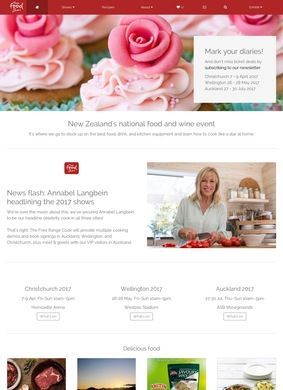
The Food Show is a touring culinary exhibition that moves between New Zealand cities, and its Auckland edition takes over Auckland Showgrounds for four days. The pitch is simple: more than 200 exhibitors under one roof, selling and sampling food, drink and lifestyle products to anyone who walks in with a ticket.
Scale is the first thing the site leans on. Two hundred stalls is a lot of ground to cover in an afternoon, and the format is built around that, cramming tastings, live cooking, street food and masterclasses into a single hall so a visitor is rarely standing still.
It is a travelling event by design, billed as coming to a city near you, so the Auckland dates are one stop on a wider circuit. The audience it courts is broad: food enthusiasts, home cooks, and ordinary shoppers who want to try before they buy and stumble onto a brand they have never heard of.
What fills the show floor
The space is broken into zones, which is where The Food Show becomes something more than a plain trade hall. Each area has its own draw, and the ticket you choose decides how much of it you can reach. The Food Show sorts the day into a few distinct experiences, and it helps to know what each one is before you pay for it.
Exhibitors and the tasting tables
The core is the exhibitor floor: 200 or more brands handing out samples of food and beverage, plus lifestyle products that widen the mix past the kitchen. For a home cook hunting new sauces, cheeses or small-batch drinks, the sampling is the whole appeal, and a lap of the floor can turn up beverages, condiments and pantry finds that never reach a supermarket shelf.
Even the Reddit crowd that grumbles about value concedes that discovering new products is worth something. This is also the side of The Food Show that pays for the exhibitors, who put a taste of their range straight into a shopper's hand and hope a sample turns into a sale.
Street Food Alley and the themed zones
Beyond the stalls, the event carves out named districts. Street Food Alley handles the hot, cooked-to-order eating for people who came for an actual lunch rather than a toothpick of cheese.
The Artisan Village and the Kitchen Project hand smaller makers and hands-on activity their own corners. It is a sensible way to break up a big shed, and it gives a returning visitor a reason to wander past stalls they would otherwise walk straight past.
Demonstrations, masterclasses and the Winter Cake Off
Programming fills the rest of the day. Live cooking demonstrations and celebrity chef appearances run on a rolling schedule, and paid masterclasses go deeper on cocktails, wine or matcha for anyone who books them as add-ons. Competitions such as the Winter Cake Off supply the spectacle, and the cooking demonstrations rotate through the day so there is usually something on stage.
A VIP ticket buys lounge access, and a Preview Day option lets the keenest attendees get in ahead of the main crowd. Between General, Senior and Child entry, The Food Show spreads its base pricing across families, older visitors and committed enthusiasts, then layers the masterclasses on top as separate purchases for anyone who wants the hands-on sessions.
All of that is a genuinely full program, and it explains how The Food Show pulls the numbers it does. The question is what it costs to reach the good parts, since the demos are free but the masterclasses and the VIP perks are not.
Reputation is where the picture clouds over. The Food Show does not carry the structured star ratings you would check on Google or Trustpilot; none turned up. What exists is social reach. The Auckland Facebook page counts 34,714 likes and 5,489 check-ins, though no star score sits behind those figures, and Tradefest.io lists the event with no reviews yet.
Word of mouth is sharper, and less flattering. On Reddit's r/aucklandeats, attendees have called a recent edition very average, and more than one questioned whether the entry cost matches the food a visitor actually walks away with, even while granting that seeing new brands has its own value. That is a real crack in an event whose entire promise rests on tasting and value, and it is the sort of complaint The Food Show cannot answer with exhibitor counts alone. A big Facebook following tells you people show up; it does not tell you they left satisfied.
Getting in is straightforward. The Food Show has a page for general enquiries, and ticketing runs through a separate portal it links out to, so buying a pass is a couple of clicks. A phone number and street address are not printed on the front page itself, but for a fixed-venue event with a set date and an online booking flow, that gap is a small one compared to what it would be for a service a person needed to phone before handing over money.
So the offer is clear and the doubt is specific. The Food Show gives you a crowded hall of samples, cooked street food and chef demonstrations for a set ticket price, and tens of thousands of people plainly keep coming. Whether the haul of tastes and finds justifies what you pay at the gate is the exact thing its own past visitors keep arguing about, and nothing on the site settles that for you.