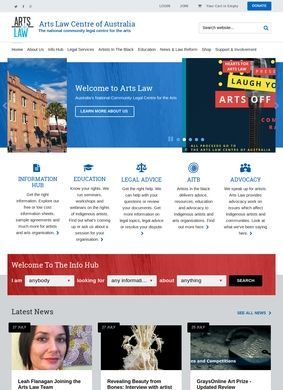
Where does a musician turn when she has a recording agreement in front of her, a deadline tomorrow, and no money for a lawyer? The Arts Law Centre Of Australia is built for exactly that moment. It offers free or low-cost legal advice, reviews contracts and agreements, and supports dispute resolution, and it does so specifically for creative people who would otherwise sign blind. The verdict up front: this is a coherent, genuinely useful service whose value is plain from what it publishes, with a couple of honest trade-offs that come with being one lean body covering a whole country.
Contract review for creative professionals
Start with the core. The documentary maker hit with a takedown threat over thirty seconds of archival footage, the sculptor whose design turns up on merchandise she never licensed, the songwriter staring at a sync licence she had no hand in drafting. The Arts Law Centre Of Australia describes itself as the country's only national community legal centre for the arts, and the contract-review service is where that promise gets tested. An artist can submit a document and get a professional read before they commit. Commission terms, gallery consignment deals, publishing contracts, exhibition agreements, so much of a creative working life runs through paperwork someone else wrote. A sober second opinion on those pages shifts the balance in a way that abstract legal information never quite does.
How legal queries are submitted
The advice comes through legal consultations, and the Arts Law Centre Of Australia is strict about how they start. Queries arrive only through an online form on the site. The Arts Law Centre Of Australia takes no legal queries by email, post, or social media. At first glance that looks like a wall. It is actually triage. A single intake channel lets a small specialist team sort each matter, route it to the right adviser, and avoid losing requests across five different inboxes. For an outfit serving artists in every discipline and every state, that discipline is what keeps the model standing.
Workshops on artists legal rights
The teaching side is where the service shows its reach without anyone needing to pick up a phone. The Arts Law Centre Of Australia runs seminars, workshops, and webinars on artists' legal rights, intellectual property, and related topics. The thinking is simple. A painter who understands the basics of copyright assignment is less likely to give rights away by accident. A band that grasps how performance royalties work is harder to short-change. For the Arts Law Centre Of Australia, education functions here as prevention, and prevention is cheaper for everyone than cleaning up a dispute after the fact.
Templates and information sheets
The published material is the part you can judge straight away. The Arts Law Centre Of Australia produces information sheets, sample contract templates, and FAQs covering copyright, contracts, defamation, and other areas that touch creative practice directly. The templates earn special mention. A freelance illustrator who cannot pay for a bespoke contract can start from a vetted template and adapt it, a real middle ground between full legal fees and a handshake deal. The information sheets hand artists the vocabulary to follow what they are reading. Including defamation guidance is a sharp call, given how often writers, comedians, and visual artists run into it.
Tying the stream together is the newsletter, art+LAW, which keeps the information moving instead of letting it harden into a static archive. Law around AI, streaming, and reproduction rights keeps shifting under working artists' feet, and a regular publication that tracks those shifts has real worth, both to the artists and to the lawyers advising them. Back issues exist, and the format has carried on across changing policy landscapes.
Inside the Artists in the Black program
One strand of the work stands apart from the rest, and it is the one that does the most to earn trust. Artists in the Black is a specialist program serving Aboriginal and Torres Strait Islander artists and communities, with dedicated advocacy on Indigenous art and cultural rights. This is legal terrain all its own. Cultural authority, fake art passed off as Indigenous, the protection of traditional designs, the rights of whole communities rather than single creators, none of it maps cleanly onto ordinary copyright law. Running a standalone program for it, instead of tucking it into the general service, is the kind of thing the Arts Law Centre Of Australia does only when it has built genuine capacity, not added a page to the site.
Support for artists with disabilities
There is also separate provision for artists with disabilities, with resources and support shaped to their circumstances. Pairing a universal service with these targeted arms separates an organisation that claims to serve everyone from one that has thought hard about who a one-size-fits-all approach leaves out. The general intake form is the front door, but the Arts Law Centre Of Australia has clearly built side paths for groups a generic invitation would strand.
The reach goes past individual creators, too. The Arts Law Centre Of Australia serves arts organisations, funding bodies, and legal professionals alongside individual artists. That broad client base puts the centre at a junction in the sector, hearing from galleries and grant-givers as well as the people making the work. The view from that junction feeds the advocacy role directly.
Advocacy for sector wide policy change
The Arts Law Centre Of Australia does not stop at one artist's problem at a time. It takes on systemic advocacy on policy issues affecting the arts sector, working to change the rules so fewer people need rescuing in the first place. An organisation handling thousands of individual matters builds a detailed map of where the law fails creative workers, and that evidence is worth far more in a policy submission than abstract argument. Casework and advocacy feed each other. The advice line shows where the system breaks, and the Arts Law Centre Of Australia tries to mend it upstream.
Step back and the whole offering hangs together in a way most outfits promising to help artists never manage. Direct advice and contract review handle the immediate crisis. Education and templates cut how often the crisis arrives. Specialist programs reach the people most likely to be overlooked. Advocacy goes after the structural problem. Each layer answers a different timescale of the same underlying fact: creative people are routinely outmatched in legal situations they cannot navigate alone, and the Arts Law Centre Of Australia has a response built for every stage of it.
Limits of a national legal service
Now the honest limits. The single online intake means no quick phone answer for a panicked artist, and a national free-or-low-cost service will run into capacity constraints. Neither dents the core offering. Both are the trade-offs of a lean specialist body covering an entire country. Star-rating aggregators hold no meaningful record of the centre, so that yardstick is simply unavailable. Here, though, you do not need it.
The standing of the Arts Law Centre Of Australia rests on its publication record and its policy submissions, which for a legal education and advice body tells you more than a row of stars ever would, and most of that record is open on the site to read for yourself. What the Arts Law Centre Of Australia has assembled in one place, practical help next to plain-language resources next to specialist programs, is genuinely hard to find gathered anywhere else.