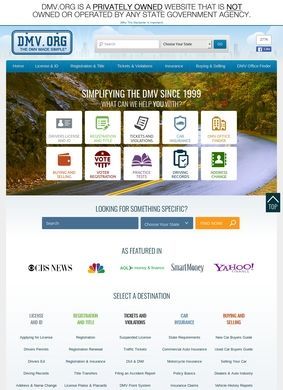
Your license expires in two weeks, you cannot remember which documents the counter will demand, and a quick search for how to renew it drops you onto DMV.org. That is the exact moment this site is built to catch. It gathers the paperwork rules, renewal steps, and local office details for motor-vehicle errands across all fifty states into one place, so a reader can work out what a trip to the counter will involve before wasting a morning on it.
There is a catch, and it is a real one. DMV.org is a private company, not a government agency, and plenty of people land here without registering that difference.
What a driver can look up before the counter
The core of DMV.org is reference material for the dull but unavoidable side of owning a car. Guides walk through renewing or replacing a driver's license, registering a vehicle, and transferring a title, with the state-by-state variation spelled out, since the rule in Ohio rarely matches the one in Georgia and the fees never do.
For most people a state motor-vehicle office is somewhere you turn up once every few years and never quite remember the procedure for. That gap is the opening the site works in.
Licenses, titles, and registration in plain terms
Where the site helps most is translation. State agency pages tend to be written in bureaucratic shorthand, and this one rewrites the same requirements into steps a person can follow, names the proofs of identity to bring, and flags the fees to expect. For a first-time registrant, or someone who just moved across a state line and has a narrow window to sort out a new plate, that saved trip is the whole point.
It also covers the errands people forget until they need them: ordering a copy of a driving record, making sense of a traffic ticket and the options for fighting or paying it, and pulling a vehicle history report before handing money to a private seller. None of this is exotic. Having it gathered in one predictable format still has clear value, especially when the alternative is bouncing between a dozen official pages that each assume you already know the vocabulary.
A person who reads the right guide first tends to walk into the counter with the correct forms and the correct payment, which is most of what a smooth visit takes.
Practice tests, locators, and insurance quotes
Two features stand out beyond the articles. The practice tests aim at learners studying for a written permit exam, the sort of thing a teenager and a nervous parent grind through the night before. The office locator points to the nearest state DMV branch, and each entry reads like a line in a business directory: address, phone number where it exists, and hours, which is genuinely useful when a reader only needs to know whether the office is open on a Saturday.
That locator is the closest DMV.org comes to doing the government's own job of telling you where to show up and when.
The site also carries auto-insurance quote comparison, and that is worth naming plainly, because it is where a free reference site turns into a business. Insurance leads and advertising are how a free site like DMV.org pays for itself, and that model colors how some pages are framed, nudging a reader toward a quote form while they were only trying to learn about registration. A reader who keeps that in mind can still take the useful part and leave the sales pitch.
A private site wearing a public errand
The single most important thing to understand about DMV.org is what it is not. It cannot issue a license, it does not process a registration, and it has no counter of its own. It is an ad-supported information site that sits beside the real agencies and explains them, which is a legitimate thing to be.
Most readers grasp that within a screen or two. Some do not, and the confusion is half-built into the name. When a site called DMV.org ranks above the actual .gov page in a search, a hurried person can believe they are transacting with the state when they are reading a commercial guide. The research on this listing notes that mix-up surfacing again and again across outside sources, and it is the thing any honest reviewer has to flag.
The audience is broad by design. New residents facing an unfamiliar state's rules, used-car buyers checking a title, learners cramming for a permit test, drivers contesting a ticket: each arrives with one narrow question, and the site is organized to answer narrow questions quickly. That is a fair use of a private guide, provided the reader keeps straight who they are actually dealing with.
Where the unexpected charges bite
The sharpest complaints, drawn from customer reviews on the site's Better Business Bureau profile, are about unexpected charges. People believed they were paying an official fee and met a separate cost, or signed up for something adjacent while trying to finish a state task.
Whether that reflects genuine sharp practice or readers misjudging a private site as their government is hard to settle from the outside. The pattern is consistent enough that it belongs in any careful look at DMV.org, and it is the sort of thing worth naming before a reader reaches for a payment field on a page they assumed was official.
What the numbers say, and what stayed behind a wall
The reputation record is genuinely split, and the split is the interesting part. On Trustpilot, DMV.org carries roughly twenty-three thousand reviews at a low average, somewhere around two and a half stars out of five depending on which source you read. That is a great many unhappy people.
Against it, the Better Business Bureau lists the company as accredited with an A-plus grade, and Scamadviser assesses the domain as legitimate and safe, a long-registered and heavily trafficked site rather than a fly-by-night operation.
The reviews that pile up on Trustpilot
Reconciling those two readings takes a moment. A low Trustpilot average built from tens of thousands of ratings, sitting next to an A-plus accreditation, usually describes a high-volume site that does something useful for millions while irritating a steady minority, often the ones who felt tricked by the private-versus-government line. The BBB grade reflects how the company handles complaints once they arrive. The Trustpilot score reflects how the average visitor felt walking away. Both can be true at once, and a reader is right to weigh them together instead of trusting either one alone.
Honesty forces one more admission. I could not load the live site to check any of this firsthand, since repeated attempts to reach DMV.org came back blocked, so the account above leans on outside summaries of what DMV.org publishes instead of a walk through the pages themselves. A corporate address in Irvine, California sits on file through the BBB, though on-site contact routes could not be confirmed directly, and that gap is worth stating rather than papering over.
So the doubt that lingers is not about whether DMV.org holds useful information. It plainly does, and for a lot of people it saves a wasted morning at a government counter. The doubt is whether that value survives the friction around it: the twenty-three thousand middling verdicts, the steady reports of charges nobody expected, and the plain structural problem that a private site dressed in an official-sounding name will keep pulling in visitors who never meant to leave the real DMV at all.