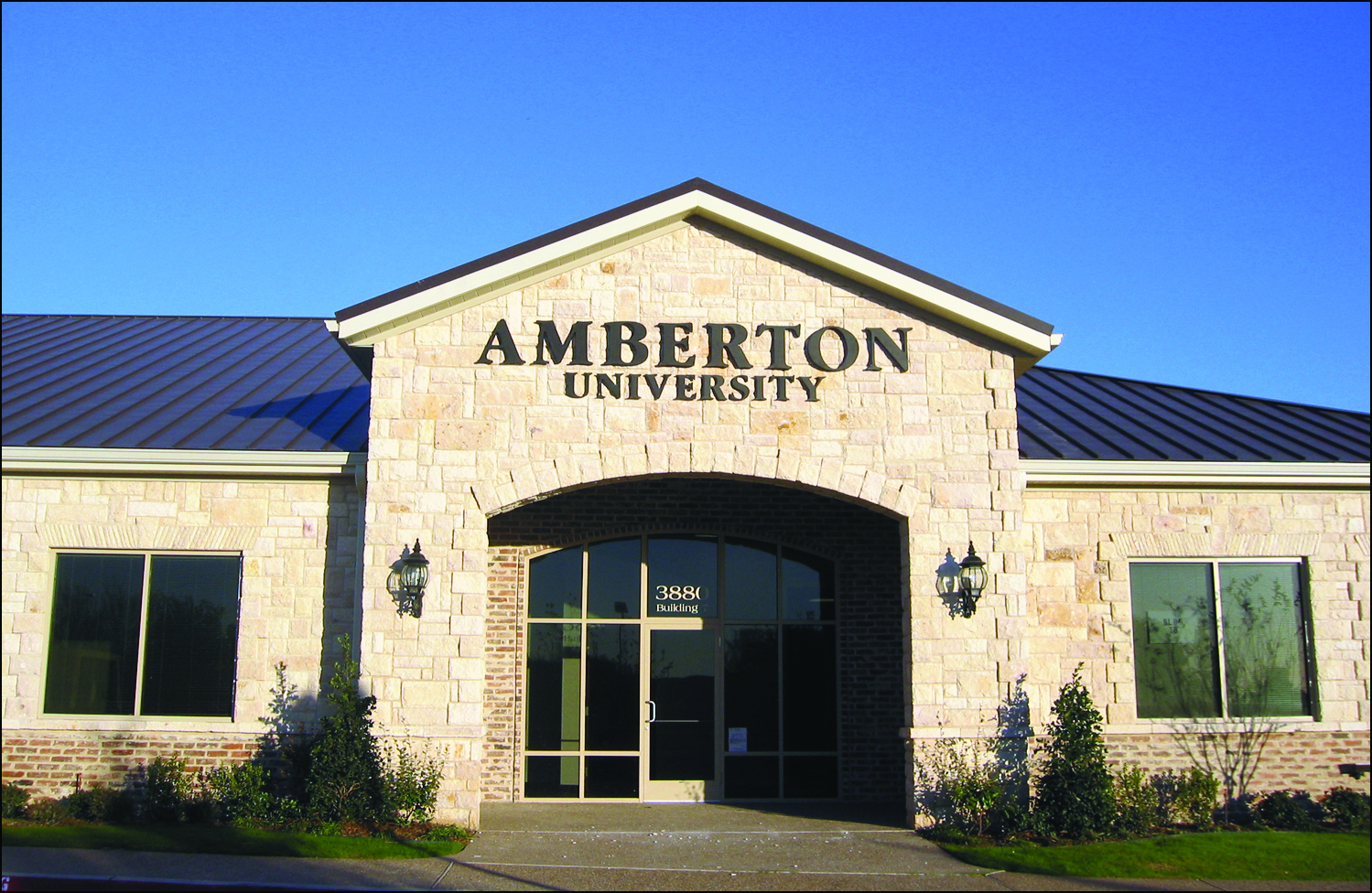
Private, accredited, and built for adults with jobs: that is the clearest description of Amberton University. The school operates two campuses in Texas, one in Garland and one in Frisco, alongside a full online track, and it runs on four ten-week sessions per year instead of the traditional long semesters. That calendar is not incidental. Short, repeating terms let a working student take two courses, finish them, and decide whether to continue without locking into a six-month evening commitment. Everything else at Amberton University flows from that starting premise, including how fast someone can accumulate credits and what it costs per term.
Tuition and financial aid options
Tuition is posted openly: $325 per credit hour for undergraduate and graduate work, $625 per credit hour for doctoral study. A prospective student can calculate the cost of a full degree before speaking to anyone, which is less common in higher education than it ought to be. Financial aid and flexible payment arrangements exist too, so the posted rate is a real starting figure. Amberton University does not bury the numbers behind an inquiry form, and that transparency is one of the more useful things about the site.
Business programs from bachelor to doctorate
The catalog at Amberton University reaches from undergraduate through doctoral level and is wider than the school's size would suggest. Business programs include bachelor's and master's degrees in accounting, entrepreneurship, management, project management, finance, and strategic leadership, plus an MBA in finance and a master's in data analytics. That last program is worth pausing on: data analytics is precisely what mid-career professionals return to school to learn, and offering it as a full degree, at $325 per credit hour, puts Amberton University in a competitive position that the institution's profile does not always get credit for.
Counseling degrees with vertical pathways
Counseling is the second major pillar. Master's programs cover clinical mental health counseling, marriage and family therapy, and school counseling, and the ladder extends to a Doctor of Education in Counseling. For someone aiming at licensure, having graduate and doctoral steps under one roof removes a genuine complication. Transferring between schools mid-track is where many counseling students lose credits and time, and the vertical structure at Amberton University sidesteps that problem.
From human resources to applied artificial intelligence
A third cluster sits outside the two main categories: master's degrees in human resource management, training and development, and applied artificial intelligence. The applied AI program is the real surprise. It addresses a current, in-demand field at a school charging less than many community colleges charge per credit. Certificate options in project management, change management, and data analytics round things out for people who want a credential without enrolling in a full degree program.
Instructors with active industry experience
Amberton University describes its instructors as practicing professionals who bring active industry experience into the classroom. That framing fits the adult-learner mission quite closely. A finance manager teaching finance, or a licensed counselor teaching counseling, tends to keep the material close to real work, and students who are already employed in those fields get more from class time when the instructor has done the same job. The match between who enrolls and who teaches is sensible.
Administrative systems for working students
The administrative infrastructure is in reasonable shape. Enrollment portals, published academic calendars, a bookstore, library access, and transcript request services are all reachable online. That sounds routine, but anyone who has tried to track down a transcript from an institution that buried the process knows it is not. For working students managing competing deadlines, friction in basic administrative tasks is where enrollment quietly ends. Amberton University also holds a Military Friendly Silver designation for 2025-26, a concrete marker for service members and veterans assessing whether an institution's structure accommodates deployment-shaped schedules and benefit transfers.
What Amberton University does not offer is worth naming directly: no sprawling campus culture, no residential undergraduate life, no division athletics, and no research-university breadth. The school does not pretend to offer these things. Two campuses, online delivery, ten-week terms, and a catalog tilted toward business, counseling, HR, and applied technical fields add up to a focused institution. That is a design choice, not a deficiency. Amberton University has drawn a clear boundary around what it is, and the structure inside that boundary is coherent.
The accreditation is solid, the pricing is transparent, the calendar is built around employment, and the program list covers fields with real labor market demand. The qualification is that the appeal is narrow by design: Amberton University works well for working adults in or near Dallas, or anywhere with reliable internet, who want an accredited credential in a field the school teaches at a price they can compute in advance. Outside that profile, Amberton University was never trying to compete, and its site does not pretend otherwise. That clarity is itself a form of institutional honesty, and the overall picture is consistent and coherent across everything the site puts in front of a prospective student.



Business address
Amberton University
13601 Lyndon B Johnson Fwy,
Garland,
Texas
75041
United States
Contact details
Phone: 9722796511